jmmodernpublishers.ijmaes.org
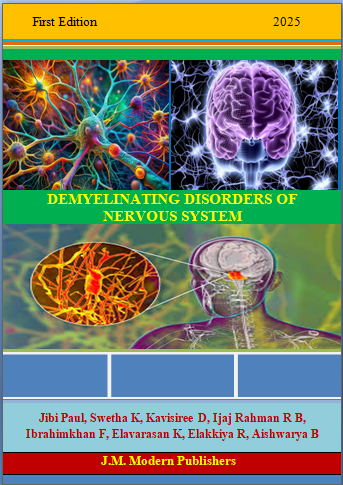
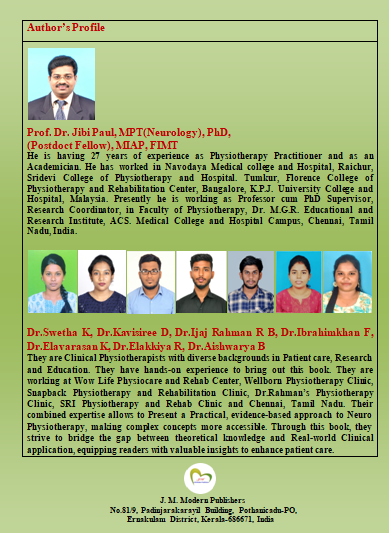
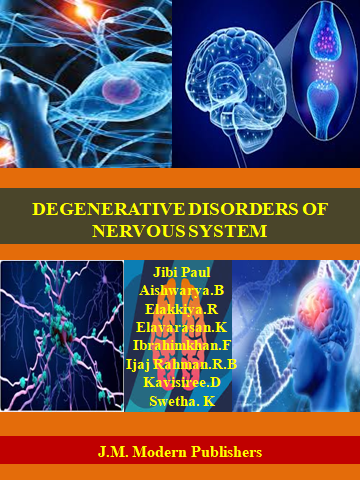
Jibi Paul, Aishwarya.B, Elakkiya.R, Elavarasan.K, Ibrahimkhan.F, Ijaj Rahman.R.B, Kavisiree.D, Swetha. K
Faculty of Physiotherapy, Dr. M.G.R. Educational and Research Institute, ACS Medical College and Hospital Campus, Chennai, Tamil Nadu, India
ISBN: 978-93-93478-46-7
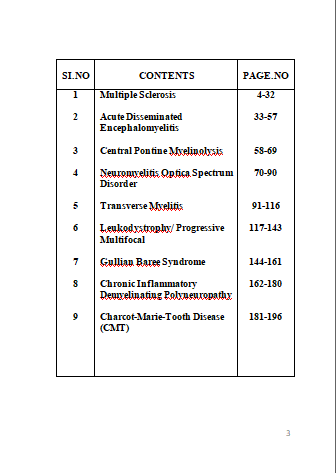
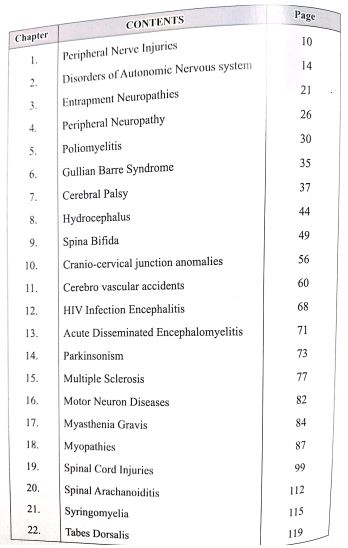
Contents Page
| SI.NO | Contents | Page. No |
| 1 2 3 4 5 6 7 8 9 10 11 | Alzheimer’s Disease Dementia Wilson Disease Hunting ‘s Disease Epilepsy Motor Neuron Disease Multiple Sclerosis Parkinson Disease Multiple System Atrophy Cervical Spondylosis Lumbar Spondylosis | 4 22 58 81 103 125 144 170 188 208 226 |
Sony George1*, Jibi Paul2, Ayana V S3
Authors:
2Professor, Faculty of Physiotherapy, Dr.MGR. Educational and Research Institute, Chennai, Tamil Nadu, India
3Consultant Physiotherapist, P.N.N.M Hospital, Anchalumoodu, Perinadu, Kollam, Kerala, India
Corresponding Author:
1*Chief Physiotherapist, P.N.N.M Hospital, Anchalumoodu, Perinadu, Kollam, Kerala, India Mail id: sonyvinujee80@gmail.com
ABSTRACT
Introduction: Thoracic outlet syndrome (TOS) comprises a group of disorders that result in compression of the neuro vasculature exiting the thoracic outlet and was first described in 1956. TOS is usually subclassified into neurogenic TOS (nTOS), venous TOS (vTOS), and arterial TOS (aTOS), depending on the appropriate etiology upon presentation. It has been classified as Venous thoracic outlet syndrome and Neurogenic thoracic outlet syndrome.
Causes: Sometimes, a congenital (from birth) abnormality can cause thoracic outlet syndrome, but it is more likely to occur after injury or bodybuilding. A cervical rib is an extra rib that grows from the cervical spine. Abnormal muscle or first rib formation, some people may have an extra or aberrant scalene muscle his condition is related to abnormalities of bony and soft tissue in the lower neck region.
Symptoms: Patients with thoracic outlet syndrome will most likely present pain anywhere between the neck, face and occipital region or into the chest, shoulder and upper extremity and paresthesia in the upper extremity. The patient may also complain of altered or absent sensation, weakness, fatigue, a feeling of heaviness in the arm and hand. The skin can also be blotchy or discolored. A different temperature can also be observed.
Management: Medical Management include Thrombolytic medications are given to dissolve blood clots. Anticoagulant medications decrease the blood’s ability to clot. Surgical Management include chest (thoracic surgery or blood vessel (vascular) surgery perform the procedure. Thoracic outlet syndrome surgery has risks of complications, such as injury to the brachial plexus. Physiotherapymanagementcan decrease symptoms of pain and increase muscle strength, improve Postural correction and return to near normal function of upper limb.
Keywords: Thoracic- Venous thoracic outlet syndrome; Neurogenic thoracic outlet syndrome; Thrombolytic and Anticoagulant medications; Postural correction.
Pushpam.J. Chundamalai*1, Siby Thomas 2
Authors:
2Professor and HOD, Department of Hospital Administration, Division of Health Management, School of Medical Education, Centre for Professional and Advanced studies, Gandhinagar P.O., Kottayam, Kerala, India
Corresponding Author:
*1Assistant Professor, Department of hospital administration, Division of health management, School of Medical Education, Centre for Professional and Advanced studies, Gandhinagar P.O., Kottayam, Kerala, India. Mail Id: pjnasha55@gmail.com
ABSTRACT
Background of the study: American Medical Association first recommended in 1958 that hospital set up Infection Control Committee. Though not widely accepted with modification of original policy in 1976, Infection Control Committee functions effectively to reduce the spread of infectious diseases. Infection control reduces mortality and morbidity due to nosocomial infection. It helps to maintain employee health and morale. Objectives of Study was to analyse the effectiveness of Infection Control Committee of Pushpa Giri Medical College Hospital Tiruvalla and also to study the function and importance and functions of hospital infection control committee.
Methodology: The study was conducted at Pushpa Giri Medical College Hospital Tiruvalla. The population selected was 2 set of populations which consist of all Infection control committee members and all ward in charge Pushpa Giri Medical College Hospital Tiruvalla as sample. A pre tested questionnaire was used to collect the data and distributed among 15 hospital infection control committee members and 35 wards in charge. The period of study was 45 days from 6-5-2019 to 28-6-2019. The filled in questionnaires were collected, classified and analysed.
Results: The study revealed that the infection control committee is effective. It is vital in rendering service to the patients. The infection control committee functions efficiently and follows the international guidelines.
Conclusion: The observations revealed that the policies and procedures of this hospital is based on CDC and WHO guidelines. There are too many factors influencing the effectives functioning of Hospital Infection Control Committee.
Keywords: Infection Control Committee; Infectious diseases; Nosocomial infection
Pushpam. J. Chundamalai*1, Siby Thomas 2, Thasni S3
Authors:
2Professor and HOD, Department of Hospital Administration, Division of Health Management, School of Medical Education, Centre for Professional and Advanced studies, Gandhinagar P.O., Kottayam, Kerala, India 3Student, Department of hospital administration, Division of health management, School of Medical Education, Centre for Professional and Advanced studies, Gandhinagar P.O., Kottayam, Kerala, India
Corresponding Author:
*1Assistant Professor, Department of hospital administration, Division of health management, School of Medical Education, Centre for Professional and Advanced studies, Gandhinagar P.O., Kottayam, Kerala, India. Mail Id: pjnasha55@gmail.com
ABSTRACT
Background of the Study: The aim of this project is to comprehensively identify the extent of workplace violence against nurses from patients in the emergency department. And analyze the prevalence and pattern of workplace violence against nurses, and also identify the effective and supporting management in the hospital. Objective of the study was to study the extent of workplace violence against nurses from patients in the emergency department last 12 months.
Methods: Research design of this study was descriptive. Descriptive research is used to describe characteristic of a population or phenomenon being studied. Purposive sampling is used to select sample from the population. Primary and secondary data were collected from observation and questionnaire were used to collect the data.
Result: A 15 days project study reveals the workplace violence against nurses from patients in the emergency department at Indira Gandhi co-operative hospital Kadavanthara. The study clearly shows that 22% of the nurses are facing verbal workplace violence from patients in the emergency department. The pattern of workplace violence which is mainly verbal was identified. It was also identified that the management was supportive and effective.
Conclusion: Collected data from nurses based on workplace violence through questionnaires represented in tabular columns and drawn graphically. According to this study 22% of nurses are facing the workplace violence, among the all the nurses in the Indira Gandhi co- operative hospital, Kadavanthara.
Keywords: Workplace Violence; Nurses; Emergency Department
Yuni Crissa1, Beriman Rahmansyah2*, Lucky Anggiat3
Authors:
1,2,3Faculty of Vocational Studies, Physiotherapy Program, Universitas Kristen Indonesia, Jakarta, Indonesia.
Corresponding Author:
*2Faculty of Vocational Studies, Physiotherapy Program, Universitas Kristen Indonesia, Jakarta, Indonesia. Mail Id: Beriman.rahmansyah@uki.ac.id
ABSTRACT
Background of study: ACL injury is a commonly concerning injury in sports. When an athlete suffers an ACL injury, it can prevent them from returning to their sport and even diminish their performance. Physiotherapists must follow a clear and structured rehabilitation program to track the progress of their patients. This study describes the second phase of an exercise rehabilitation program in one patient after ACL reconstruction surgery with a focus on increasing muscle strength and flexibility.
Methods: This study presents a case report design of a female basketball player who suffered a grade 3 ACL tear. Patients were willing to provide informed consent for their data to be used in a 2-week research study that included 4 physiotherapy sessions.
Result: After four session physiotherapy programs, the pain level of active knee movement decreased 20 mm also increase the range of motion of knee joint with 100 in flexion. The results of the muscle strength measurements also showed an increase in muscle strength and functional ability score with Knee Injury and Osteoarthritis Outcome Score (KOOS) was increase 30%.
Conclusion: Implementation of phase two sports injury rehabilitation guidelines for post-ACL reconstruction conditions leads to positive patient outcomes, including reduced pain, increased range of motion, muscle strength, and functional ability.
Keywords: Sports; Injury; Rehabilitation; Physiotherapy; ACL
CONTACT: 9061470448 for full text book