The changes of functional disability in non-specific low back pain among University population after proprioceptive neuromuscular facilitation and Mckenzie method

Lucky Anggiat1, Wan Hazmy Che Hon2, Siti Nur Baait binti Mohd Sokran3, Nurul Mawaddah Binti Mohammad3
Author:
1Faculty of Vocational Studies, Physiotherapy Program, Universitas Kristen Indonesia, Jakarta, Indonesia
3School of Health Sciences, KPJ Healthcare University College, Nilai, Malaysia
Corresponding Author:
2Consultant Orthopaedic Surgeon, KPJ Seremban Specialist Hospital and KPJ Healthcare University College, Jalan Toman 1, Kemayan Square, 70200 Seremban. Email address: whazmy@hotmail.com

ABSTRACT

Background of study: Non-specific low back pain (LBP) becomes the most common cases in University population. Prolonged sitting has been identified as one of the factors leading to non-specific LBP among University population. The purpose of the study is to identify the change of functional disability in non-specific LBP among university population after PNF and McKenzie method.

Methods:  A quasi-experimental study involving 36 subjects (students and office workers) from the university population. The study population were selected from students and office worker of KPJ Healthcare University College (KPJUC) who met the inclusion criteria. The subjects were divided into three treatment groups: PNF group, McKenzie group and control group (hot pack and educational home exercise sheet) which underwent 12 treatment sessions distributed over three times in a week for four weeks duration. Subjects were measured on functional disability by Oswestry Disability Index (ODI). Measurement was performed at pre-test, mid-test and post-test. Repeated measures ANOVA was used to analyse the effectiveness of PNF and McKenzie treatments based on the measurement time.

Result: This study showed that the PNF and McKenzie gave effect in improving ODI score in within group analysis. However, the results of PNF showed that it has more effect than McKenzie method on functional disability score (p <0.05) after 4 weeks. 

Conclusion: There was a change in functional disability on non-specific LBP after PNF and McKenzie method. Furthermore, the study findings showed that the PNF exercise has more effect in improving functional disability compared to McKenzie method on non-specific LBP among university population.

Keywords: Functional Disability; Mckenzie; Non-Specific LBP; PNF

Received on 10th February  2020, Revised on 19th February  2020, Accepted on 24th February 2020

DOI:10.36678/ijmaes.2020.v06i01.001

INTRODUCTION

Low back pain (LBP) consists of two types, which is specific and non-specific LBP. Specific back pain can further be divided into LBP which that is related with vertebrae and non-vertebrae. The non-specific LBP is developed from the soft tissue, which is poorly localised 1. In addition, non-specific LBP is further classified into LBP, which is not related to the neurological problem and degenerative syndrome. Prolonged sitting led to increased body discomfortness in the neck, shoulder, upper back, low back, and buttock while prolonged slumped sitting may be related to Internal Oblique or Transverse Abdominis muscle fatigues—compromising the stability of the spine, making it vulnerable to injury 2.

University population mainly consists of students, office workers and academicians, which have similar habit to experience prolonged sitting. Students usually attend the classroom session for learning theories and at the same time working in front of computer to browse some resources. They experience prolonged sitting in most of their daily activities. A previous study conducted by Nordin, Devinder, and Kanglun reported 31% of students usually sat in the classroom or worked daily in front of the computers everyday for 6 to 8 hours 3.

Similarly, majority of the office workers working in the university, sit more than 4 hours daily with 90.8% prevalence while other office workers who sit in the same working position usually leave their office chair only for 10 minutes or less each day have scored about 65.8% prevalence. Prolonged sitting is one of the factors causing musculoskeletal pain among university population, which are student and office worker, who experienced from having LBP (LBP), which commonly reported 4.

A study conducted by University in Columbia found that 45% of the university population were having severe chronic pain specifically in the lower back region. A study by Nordin, Devinder, and Kanglun; also revealed similar results which stated that 64.6% of students had LBP and it was found that the students also sat in the classroom or worked in front of the computers everyday between 6 to 8 hours 5,6.

Some anatomical condition related to those factors can be contributed to the incidence of LBP. Low back pain may developed by some factors which increase lumbar lordosis, reduce abdominal muscle length and strength, and decrease back extensor muscle endurance, back extensor muscle flexibility, length of iliopsoas, hamstring muscle flexibility, body composition and others 7,8.

A study by Casas et al. found that the prevalence of limitation for academic activities was almost 30% and it affected to both office workers and students on their daily life activities. It caused potential effects to the life quality of both the office workers and the students. The limitation in academic activities due to pain was 29.8%. The researchers concluded that there was moderate disability due to LBP among physiotherapy students in Mumbai 9.

The similar potential risk happened to office workers who were suffering from LBP. An employee with LBP usually took a day off from his work for medical check-up would decrease the company’s productivity if it had a significant number of employees who were absent from work due to having LBP. The impact of LBP on physical activities does not only depend on the pain but also on some functional disability, which is inter-related one to another 10,11.

There are several options and suggestions on the treatment to reduce LBP in the population . Exercise is also one of the physiotherapy treatments that can strengthen the muscle that supports the spine 12,13.  

Theraphy exercise was found to be the best choice to reduce LBP and to increase body functions in adult people who experienced LBP. The therapeutic exercise for LBP uncommonly performed by physiotherapist called Proprioceptive Neuromuscular Facilitation (PNF), however; this treatment is commonly used for neurological conditions 16,17.

PNF has been recommended for sensory-motor control training, as well as for stimulating lumbar muscle proprioception. Kofotolis and Kellis stated in their study that PNF significantly improve the muscle endurances. They defined that the Rhytmical Stabilization (RS) exercise provided  the trunk static endurance and Combination of Isotonic (COI) provided dynamic muscle endurance 18,19.

 In other studies, in comparing modalities of therapy exercises, PNF was shown to have better result than manual therapy, core stability exercise and ball exercise for LBP which was commonly used for the trunk muscle, pelvic stability, and core muscle 20, 21.

A common therapy exercise used for LBP was developed by Brian McKenzie, which was recognised as McKenzie method. A systematic review study has shown that McKenzie therapy is more effective than the comparred treatment at short-term follow up for spinal pain. The comparative treatments in these trials include Non-Steroid Anti Inflammation Drugs (NSAIDs), educational booklet, back massage with back care advice, strength training and spinal mobilization and general mobility exercises. McKenzie method can be a familiar treatment and it is one of the common choices used by most physiotherapists for treating LBP 22,23.

There were several studies that performed the specific exercises to treat LBP, such as McKenzie method, PNF, ball exercise, yoga, spinal stabilization exercise, Mat based Pilates and ordinary exercise that is aerobic exercise which is effective and it has a good result for LBP. However, these previous studies did not conduct any comparison between PNF exercise and McKenzie method to verify the effect of each treatment. Therefore, this study carried out the changes of functional disability among university population after the PNF exercise and McKenzie method and specifically comparing the effects of those treatments 24,25.

METHODOLOGY

This was an experimental study using quasi-experimental study. Quasi-experimental study is defined as study comparing the effect and value of intervention in between three groups at their pre-test, mid-test and post-test design in which subjects are equally differentiated on the treatment given and on the control group. All subjects that included in this study were assigned to three groups. Upon selection, subjects were given written and verbal study information and informed consent, which states that they are willing to be the subject of this research. Informed concent received from all subjects then physiotherapist assessed the subject based on the measurements called disability score using Oswestry Disability Index (ODI). In addition, the information about age, gender, occupation and years of working or studying were collected and presented as socio-demographic data of the subjects.

The three groups of subjects, who had been managed with PNF exercise, McKenzie method and control group respectively, were compared. The assessment point was performed at three points; pre-test as the baseline measurement, mid-test was given two weeks after treatment and post-test as the last measurement after four weeks treatment. The subjects had to undergo 12 sessions of treatment, 3 sessions in each week of four-week-treatment. This study was conducted in a private academic institute and the ethical approval has be obtained from School of Health Sciences, Research Management Centre, KPJ Healthcare University College (KPJUC), in Nilai, Negeri Sembilan, Malaysia before starting the study.

The inclusion criteria were the subjectssuffering from chronic non-specific LBP. Chronic non-specific low back pain was determined based on the subjects’ report. The physiotherapist conducted the assessment to make sure the low back pain was non-specific in nature 3, 4. All subjects were also asked about their duration of sitting in a typical working day because prolonged sitting is one of the contributing factors for non-specific low back pain with age ≥ 18 to 45 years old 26, 27.

 Participants were excluded in this study according to the exclusion criteria, which are subjects with any history of pathological conditions or diagnosed with disk herniation, spinal stenosis, spondylolisthesis, spondylitis, radiculopathy, vertebral fracture, surgery to lumbar spine, reported with pregnancy and reported with other medical illnesses such as tumour, kidney disease, and visceral disease 28.

The subjects were 36 subjects and the office workers

of KPJUC who met the selection criteria prior to sample screening. The determination of the sample size was done using G*power 3. The three groups used F test, the effect size f was 0.25 and power was 0.8. Based on the data, the calculated total sample size is thirty and as additional subject is 20% from total sample size, which is six and therefore, the total sample size were thirty-six with twelve subjects for each group. The sample size was determined based on a previous study.The timing for the implement-tation of data collection and testing of the research subjects was from August 2017, December 2017.

Three of the physiotherapists participating in this study were trained by the principal physiotherapist to perform the specific PNF exercise and McKenzie method used as experimental treatment in this study. The training includedwith visual demonstrations, hands-on experience and technique evaluation. The training was continued until all physiotherapists had successfully mastered each technique. Physiotherapists performing the PNF exercise and McKenzie method reached the training criteria within two-week period. In addition, these three physiotherapists were closely supervised by the principal physiotherapist in charge in KPJUC Rehab Centre to assure proper performance of PNF exercise and McKenzie method for the techniques and the assessment of the subjects.

Measuring Tools: The Oswestry Disability Index (ODI) was used to assess the subject’s disability that caused by the non-specific LBP. The questionnaire contains 10 sections, with six statements for each section. The questionnaire can be self-administered by the patient or assessed by the physiotherapist; it is usually completed in less than five minutes and scored in less than one minute 29.

Each subject was asked to select one statement in each section of the questionnaire which best represents his or her perceived ability to perform a function and a quantity of pain experienced on the assessment day. Each statement is scored on a 6-point scale (0-5), where a score of “0” is awarded if the client selects the first statement of the section and a score of “5” is awarded if the client selects the last statement. The section scores are tallied to produce a total raw score. Total raw scores can vary from 0 to 50 and the percentage ranges from 0-100 30.

Intervention Procedures: Subjects in the group I received the PNF exercise intervention. The PNF technique was performed on the trunk movement. The patient was in a sitting position. First, the physiotherapist conducted the Rhythmic Stabilisation (RS). The RS exercise consisted of alternating (trunk flexion-extension) isometric contractions against resistance for 10 seconds, with no motion intended. The subjects performed three sets of 10 repetitions at maximal resistance provided by the same physiotherapist. The resting intervals of 30 seconds and 60 seconds were provided after the completion of 10 repetitions for each pattern and between sets, respectively. Secondly, the physiotherapist conducted combination of isotonic technique with flexion or extension for lumbar, depending on the patient condition. The combination of isotonic technique consists of alternating concentric and eccentric contractions of agonists without relaxation. The resisted active concentric contraction for 5 seconds, resisted eccentric contraction for 5 seconds, and resisted maintained during contraction for 5 seconds (trunk flexion-extension). The combination of isotonic performed three set of 10 repetitions with resting intervals of 30 second and 60 second were provided after completion of 10 repetitions for each pattern and between sets, respectively. Then, all PNF exercises will be held for 30-45 minutes 31.

The subjects in the group II received the McKenzie method treatment. The physiotherapist guided the subject to conduct four extension exercises and three flexion exercises. The extension exercise started with these following stages. Firstly, the subjects laid their face down for one until two minutes. Secondly, they laid their faces down with extension. The subject were  asked to start laying their faces into down position followed by the extension of the trunk on the elbow and held on for five seconds and went back to the first position as a relaxation. Thirdly, extension on lying, the subjects were instructed to start lying their faces into down position, followed by the extension of the trunk with elbow extension (push-up position) for ten seconds, then the subject were asked to relax by going back to the first position. Forthly, extension on standing, the subjects were instructed to get standing position and then they were asked to do the extension of the trunk and to hold for five seconds with hands of the back and the fingers pointing backwards, followed by a relaxation by going back to the standing position. All extension exercise were repeated for ten repetitions in two sets.

The flexion exercise was started by these following steps. Firstly, flexion on lying, the subjects wereasked to get a lying position and asked to flex the trunk with both knees to the chest and to hold with both hands. Subjects were instructed to hold that position for five seconds and get a relaxation by going back to the first lying position. Secondly, flexion on sitting, the subject were asked to sit on the edge of a chair and instructed to bend the trunk forward and to grasp the ankle or to touch the floor with both hands. This position was maintained for five seconds and it was followed by a relaxation to the first position. Thirdly, flexion on standing, the subjects wereasked to get a standing position, then instructed to bend forward or to flex the trunk with fingers down to the legs as far as the subjects comfortably reach them. The subjects wereasked to hold on the last position for five seconds and asked to go back to a standing position as a relaxation. Then, all flexion exercise was also repeated for ten repetitions in two sets. There were three minutes for resting intervals in every set. The McKenzie treatment lasted for 20-40 minutes 30.

The subjects in the group III were treated using hot pack for 15 minutes as a basic treatment for non-specific LBP. The physiotherapist gave them some home exercises guided by educational exercise sheet and teach the subjects how to use it. A narrative review, written by Bardin, King and Maher , revealed that a hot pack considered as the first line of care for non-specific LBP along with self-management with home exercise. The exercise based on the educational exercise sheet lasted for 7-10 minutes that can be done at home or the office. All of the subject in each group underwent 12 sessions of treatment, 3 sessions in each week of a four-week-treatment.

Data analysis: All data analysed were performed by using IBM SPSS Statistics for Windows, Version 22.0. Repeated measures ANOVA analysis were used to determine the result of differences before and after treatment given in every group. Repeated measure ANOVA within-between groups analysis were applied to determine the effect between three treatment groups based on time measurement. Bonferroni adjustment were applied for multiple comparison.

RESULT

The total number of subjects of 36 was divided into 3 treatment groups, and each group consisted of 12 subjects. Most of the participants were 18-25 year-old subjects (75%), female (63.9%), and students (61.1%) who had been studying or working for 1-3 years (75%). The socio-demographic details such as age, gender and occupation are tabulated in Table 1.
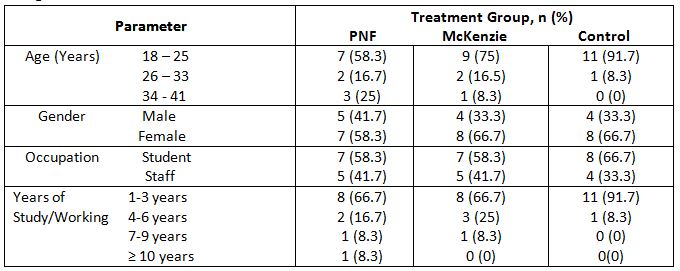
 Table 1. Socio-demographic distribution of the subjects (n=36)

Table 2 described the within group result of PNF exercise, McKenzie and Control group using Oswestry Disability Index (ODI) in terms of Mean Difference (MD) and Confidence Interval (CI). There was a significant effect of time on ODI F = 97.91, p = 0.001.
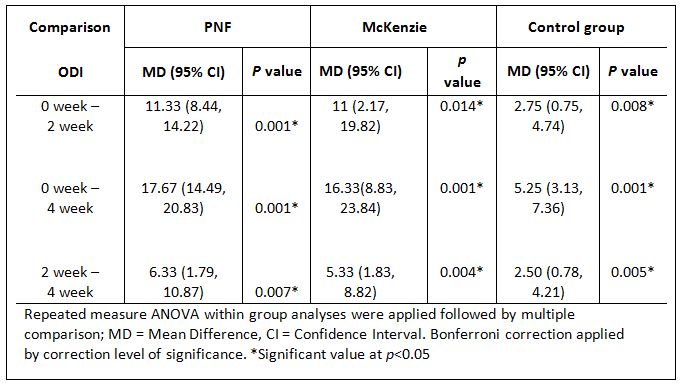
Table 2. Comparison of Oswestry Disability Index (ODI) for each treatment group based on time (n=36)

Table 3 below describes between group result of PNF exercise, McKenzie and Control group in Oswestry Disability Index (ODI) in terms of Mean Difference (MD) and Confidence Interval (CI). There was significant difference of ODI score between the group (F= 6.19, p = 0.005).
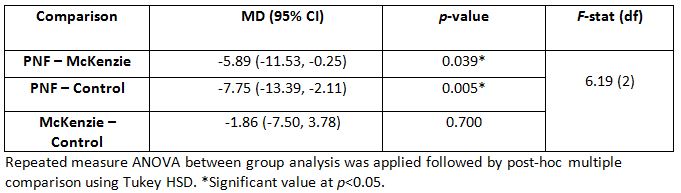
Table 3. Overall mean difference of ODI among three treatment group based on treatment effect) (n=36)

Table 4 describe the comparison between PNF exercise with Control group, McKenzie method and Control group treatment on ODI in terms of Mean difference and p-value for every comparison group. The Multivariate test for ODI-treatment interaction result based on F-test showed the p < 0.005.
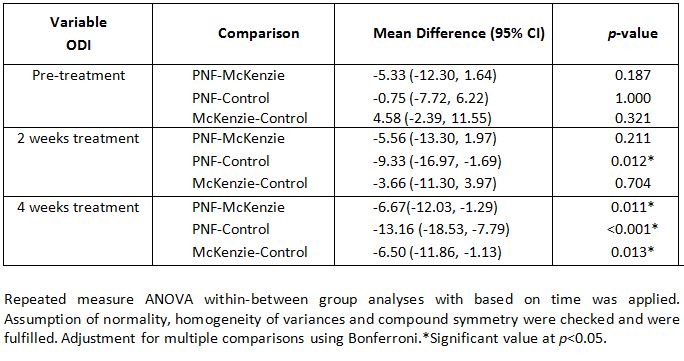
Table 4. Comparison of ODI among three treatment group based on time

DISCUSSION      

The findings of the present study showed that there was a good improvement in functional disability that was assessed by using Oswestry Disability Index (ODI) in within group analysis. Those three treatments showed significant result in reducing the ODI score after treatments both after 2 weeks and after 4 weeks. This implied that all the three treatments were successful in reducing the ODI score. In between groups and time-treatment interaction, showed there was significant difference result in increasing ODI score by PNF than control group treatment after 2 weeks of treatment, however, comparison between PNF and McKenzie showed no significant difference so as between McKenzie and control group comparison. After 4 weeks treatment, PNF showed more statistically significant difference in reducing the ODI score than the McKenzie group and extremely significant difference than the control group. Although, the McKenzie also showed significant difference in reducing the ODI score than control group, it could be implied that the PNF exercise was superior to the McKenzie and control group 31.

The result of this present study was also supported with the findings of the study by Kumar, Zutshi and Narang, who reported that PNF showed significant improvement in ODI score compared with conventional exercise for LBP that consist of knee to chest, pelvic bridging, pelvic rolling and alternate arm leg extension after 4 weeks. This study also revealed that PNF showed better result in muscle endurance test, which can be concluded the improvement in muscle endurance test can contribute in reducing the ODI score result after the PNF exercise. Thus, prolonged sitting activity which was one of the habits in the present study population contributed to reduction in trunk muscle endurance 32.

Sawant and Ghodey studied on PNF functional ability and trunk muscle endurance which confirmed that PNF has shown significant improvement in trunk muscle endurance and functional ability with ODI on chronic mechanical LBP patient. The study on the effectiveness of PNF for LBP done by Franklin et al. reported that the PNF showed highly significant difference to improve the ODI score compared with core stability exercise. The PNF exercise in this previous study underwent 4 weeks session at the same period with core stabilisation exercise 33.

Similar study conducted by Dhaliwal et al. [36] regarding to PNF program versus core stabilisation exercise for decreasing pain and improving function on patient with LBP, reported that the PNF significantly decrease the ODI score among patient with LBP. Thus, those previous studies strengthened the facts that PNF is better in strengthening of the core muscle than the core stability exercise, with further improvement in the functional ability outcomes of LBP. The results from previous studies also implied that the PNF, compared with core stabilisation exercise, were better in reducing the ODI score and supported the present study result. Another study comparing the PNF with conventional strengthening exercise, which consist of exercise for transversus abdominis muscle and multifidus showed that PNF gave better improvement in ODI score than the conventional exercise 34.

The exercise period in their study was only for 3 weeks, which can be implied that the PNF could be improving the ODI score even before 4 weeks. As McKenzie focusing more on postural correction and not on providing the core strength exercise, it can be concluded that the PNF was more superior in reducing the ODI score with improved trunk muscle endurance than McKenzie method.

This study had several limitations. Firstly, the sample size was small, leading to reduced statistical power. Secondly, even though the result revealed there are statistically significant, the difference score of ODI did not meet the minimal clinically important. Future study is required to meet minimal clinically important score of ODI. The McKenzie method was followed the Treat your Own back booklet from McKenzie which not the proper Mechanical Diagnosis and Treatment (MDT), however, the results showed the McKenzie method have a good effect to subjects. Future study also needed to compare the MDT with PNF properly.

Since this study was conducted to determine the direct impact of the treatment, it could not be guaranteed for the treatment to produce better effects if the follow-up sessions are extended, which the present study does not assess on the long-term effects. This present study used a quasi-experimental design, thus the development of study design for future study is also suggested in improving the level of other studies.

The researchers recommended using PNF exercise for the physiotherapist in order to get better outcome for non-specific LBP patient. Furthermore, as a prevention and self-management for the patients which are engaged in a prolonged sitting, the physiotherapist can provide them with educational exercise sheet and McKenzie method for home exercise program besides their regular treatment with physiotherapist.

Ethical Clearance: Received approval letter from the Research Ethics Committee, School of Health Sciences, KPJ Healthcare University College  with reference number: KPJUC/RMC/ MPT/ EC/ 2017 /89 dated 02/08/2017.

Fund for the study: Research Management Center, Department of Physiotherapy, School of Health Sciences, KPJ Healthcare University College, Malasia.

Conflict of Interest: All authors have no conflict of interest to declare on conduct of this study. 

CONCLUSION

This study revealed that the three treatments made change on ODI score in each group analysis. However, further comparison between PNF exercise and McKenzie method showed that PNF exercise has more effect in improving the functional disability score than McKenzie method on patient with Non-specific LBP.

Acknowledgement: We would like to thank the Research Management Center, Department of Physiotherapy, School of Health Sciences, KPJ Healthcare University College, for all the physiotherapists and all the facilitators. Lastly, we extend our gratitude to all those who participated in this study.

REFERENCES

  1. Taguchi, T. (2003).  Low back pain in young and middle-aged people, Journal of Japan Medical Association; 46(10); 417–423.
  2. Waongenngarm, P., Rajaratnam, B. S., & Janwantanakul, P. (2016). Internal Oblique and Transversus Abdominis Muscle Fatigue Induced by Slumped Sitting Posture after 1 Hour of Sitting in Office Workers. Safety and Health at Work; 7(1); 49-54.
  3. Nordin, N. A., Devinder, A. S., & Kanglun, L.(2014). Low Back Pain and Associated Risk Factors among Health Science Undergraduates. Sains Malaysiana 43(3); 423-428.
  4. Janwantanakul, P., Sihawong R., Sitthipornvorakul E., Paksaichol, A.(2015). A screening tool for non-specific low back pain with disability in office worker : a 1 year prospective cohort study. BMC Musculoskeletal Disorders; 16 : 298.
  5. Mozafari, A., Vahedian, M., Mohebi, S., Najafi M. (2015). Work-related Musculo-skeletal disorder in truck drivers and office worker. Acta medica Iranica; 53: 7.
  6. Koley S, Kaur J, Sandhu JS.(2010). Biological risk indicators for non-specific low back pain in young adults of Amritsar, Punjab, India. Journal of Life Sciences; 2: 43-48.
  7. Koley S, Sharma L, Kaur S.(2010). Effects of occupational exposure to whole body vibration in tractor drivers with low back pain in Punjab. Anthropologist; 12: 183-187.
  8. Patil, V.S., Master, M.F., Naik, R.V.(2016). A cross-sectional observational study on the prevalence of mechanical low back pain in physiotherapy students. National Journal of Intergrated Research Medicine; 7(6): 9-12
  9. Castellini, G., Gianola, S., Banfi, G., Bonovas, S., & Moja, L.(2016). Mechanical low back pain: Secular trend and intervention topics of randomized controlled trials. Physiotherapy Canada; 68(1): 61-63.
  10. Koes B, W., van Tulder M., Lin, C., Macedo, L, G., McAuley J., Maher C. (2010). An update overview of clinical guidelines for the management of non-specific low back pain in primary care. European Spine Journal; 19; 2075-2094.
  11. Gordon, R., Bloxham,  S. (2016). A Sytematic review of the effects of exercise and physical activity on non-specific cronic low back pain, Healtcare journal; 4 : 22; 10.3390.
  12. Scharrer M, Ebenbichler G, Peiber K, Crevenna, Gruther W, Zorn C, Grimm- Steiger, Herceg M, Keilani M, Ammer K.(2012). A systematic review on the effectiveness of medical training therapy for subacute and chronic low back pain. European Journal Phyhsical Rehabilitation  Medicine; 48: 361-70.
  13. Westwater-Wood, S., Adam N., Kerry, R. (2010). The use of proprioceptive neuromuscular facilitation in physio-therapy practice. Physical Therapy Reviews; 15(1).
  14. Lee YJ.(2009). The effects of the PNF Techniques on lumbar stability and the functional activity in chronic low back pain patients. Department of Physical Therapy Graduate School of Dongshin University,; pp 1–60.
  15. Kofotolis, N., Kellis, E.(2006). Effect of two 4-week proprioceptive neuromuscular facilitation programs on muscle endurance, flexibility, and functional outcomes performance in women with chronic low back pain. Physical Therapy; 86 (7): 1001-1012.
  16. Park, S. E., Wang, J.S.(2006). Effect of joint mobilization KEOMT and PNF on a patient with CLBP and a lumbar transitional vertebra : a case study, Journal of Physical Therapy Sciences, 2015; 27 : 1629-1632.
  17. Lee, C.-W., Hwangbo, K., & Lee, I.-S.( 2014). The effects of combination patterns of proprioceptive neuromuscular facilitation and ball exercise on pain and muscle activity of chronic low back pain patients. Journal of Physical Therapy Science; 26(1): 93-6.
  18. Kumar A., Zutshi K,. Narang N. (2011). Efficiacy of Trunk Propioceptive Neuromuscular Facilitation Training on Chronic Low Back Pain. International Journal of Sports Science and Engineering; 5 (3): 174-180
  19. Johnson GS., Johnson VS. (2002). The application of the principles and procedures of PNF for the care of lumbar spinal disabilities. The journal of manual and manipulative therapy; 10(2); 83-105
  20. Clare H, Adams R and Maher CG.(2004). A systematic review of efficacy of McKenzie therapy for spinal pain. Australian Journal of Physiotherapy; 50; 209-216.
  21. Garcia, A.N., Gondo, F.L.B., Costa, R.A., Cyrillo, F.N., Costa, L.O.P.(2011). Effects of two physical therapy interventions in patients with chronic non-specific low back pain : feasibility of a randomized controlled trial. Revista Brasileira Fisioterapia, Sao Carlos; 15(5): p.420-7
  22. Young, K. J., Je, C. W., & Hwa, S. T. (2015). Effect of proprioceptive neuromuscular facilitation integration pattern and swiss ball training on pain and balance in elderly patients with chronic back pain. Journal of Physical Therapy Science; 27(10): 3237–40.
  23. Casser HR, Seddigh S, Rauschmann M. (2016). Acute lumbar back pain-investigation, differential diagnosis and treatment. Deutsches Ärzteblatt International; 113: 223 34.
  24. Issa LF,. Seleem NA,. Bakheit AM,. Baky AA,. Alotaibi AF.(2016). Low back pain among undergraduate student at Taif University- Saudi Arabia. International Journal of Public Health and Epidemiology ; 5(6), pp 275-284.
  25. Maher, C., Underwood, M., Butchbindee, R.(2017). Non-specific low back pain. Seminar, Lancet; 389: 736-47.
  26. Sihawong, R., Janwantanakul, P., & Jiamjarasrangsi, W.(2014). A prospective, cluster-randomized controlled trial of exercise program to prevent low back pain in office workers. European Spine Journal; 23(4); 786–793.
  27. Hasanpour-Dehkordi, A., Dehghani, A., Solati, K. (2017). A comparison of the effects of Pilates and McKenzie training on pain and general health in men with chronic low back pain: A randomized trial. Indian Journal of Palliative Care; 23: 36-40.
  28. Longo G, Loppini M, Denaro L, Maffulli N, Denaro V. (2010). Rating scales for low back pain. British Medical Bulletin 98; 81-144.
  29. Jadeja, T., Vyas, N., Sheth, M. (2015). To Study the effect of proprioceptive neuromuscular facilitation on back muscle strength, pain, and quality of life in subjects with chronic low back pain-an experimental study. International Journal of Physiotherapy; 2(5); 778 -785.
  30. Aziz, S., Ilyas, S., Imran S., Yamin F., Zakir A., Rehman A., Adnan S., Khanzada S. (2016). Effectivenes of Mc. Kenzie Exercise in Reducing Neck and Back Pain Among Madrassa Student. International Journal Physiotherapy; 3 (1): 78-85.
  31. Paatelma, M., Kiplikoski, S., Simonen, R., Heinonen, A., Alen, M., Videman, T. (2008). Orthopedic manual therapy, McKenzie method or advice only for low back pain in working adults : A Randomised controlled trial with one year follow-up. Journal of Rehabilitation Medicine; 40; 858-863.
  32. Sawant, R., Ghodey S. (2017). Added effect of proprioceptive neuromuscular facilitation on functional ability and trunk endurance in chronic low back pain patients. International Journal of Allied Medical Sciences and Clinical Research; 5(2): 480-486.
  33. Franklin, C.V.J., Kalirathinam, D., Palekar T., Nathani N. (2013). Effectiveness of PNF Training for Cronic Low Back Pain. IOSR Journal of Nursing and Health Science (IOSR-JNHS); 2: 41-52.
  34. George, A, J., Kumar D, K,    U., Nikhil N.P. (2013). Effectiveness of trunk proprioceptive neuromuscular facilitation training in mechanical low back pain. International Journal of Current Research; 5(7); pp.1965-1968.
Citation:  

Lucky Anggiat, Wan Hazmy Che Hon, et al (2020).The changes of functional disability in non-specific low back pain among university population after proprioceptive neuromuscular facilitation and mckenzie method , International Journal of Medical and Exercise Science, 6 (1): 656-667.
The outcome of physiotherapy rehabilitation following ACL Reconstruction at KPJ Seremban Specialist Hospital

Izham Zain1, Nabilah Ahmad2, Nanthenii M.K2, Asyiqin3
Authors:
2Physiotherapy Department, School of Health Sciences, KPJ Healthcare University College, 71800 Nilai, Negeri Sembilan, Malaysia. 3Physiotherapy Department, KPJ Seremban Specialist Hospital, Seremban, Malaysia.
Corresponding Author:
1Physiotherapy Department, School of HealthSciences, KPJ Healthcare University College, 71800 Nilai, Negeri Sembilan, Malaysia. Email: izham@kpjuc.edu.my
ABSTRACT

Background and objectives:The Anterior cruciate ligament (ACL) is one of a pair of ligaments in knee which provides stabilization and guiding of joints. There are varieties of graft sources have been used for ACL reconstruction over the past 30 years. Studies shows that ACL reconstruction and rehabilitation is widely conducted in other Asia countries and none were done in KPJ Seremban Specialist Hospital. Hence, this study is to determine the outcome of physiotherapy rehabilitation on ROM, pain level and muscle strength following ACL reconstruction patient in KPJ Seremban Specialist Hospital.Methods: Cross-sectional retrospective study, secondary data collection whereby studies are carried out at one time point or over a short period.Checklist form was used to determine the physiotherapy assessment and interventions. Results: A total of 122 subject were involved in this study. 88.3% male and 11.7% females undergone ACL reconstruction. Most common physiotherapy intervention used are IT and cryotherapy (90%) and combination of strengthening and mobility exercises (94.5%) and there is no significant difference in both intervention groups (p>0.05). Conclusion: Studies conducted shows there is no significant difference in the evaluation of range of motion of knee, pain scale and muscle strength could be due to the intervention used were not particular and commonly used.

Keywords: Anterior Cruciate Ligament, Physiotherapy Rehabilitation.

Received on 23rd November  2019, Revised on 30th November 2019, Accepted on 9th December 2019

DOI:10.36678/ijmaes.2019.v05i04.005

INTRODUCTION

The anterior cruciate ligament (ACL) is a key structure in the knee joint, as it resists anterior tibial translation and rotational loads1. It is one of the most frequently injured structures during high impact or sporting activities. The ACL does not heal when torn, and surgical reconstruction is the standard treatment especially in the field of sports medicine2. The ligament is inserted medially to the anterior intercondylar of the tibia attaching partially with anterior lateral meniscus way up posteriorly, twisting on itself and spreading out to posterior medial aspect of the lateral femoral condyle1,3.Injuries to the ACL is one of the most common and annihilating knee injuries primarily derived as the result of sports involvement apart from normal lifestyle. Studies reported, 50 to 80% of ACL injury are non-contact type are divided into four categories, namely the environmental, anatomical, hormonal as well as the biomechanical4.These injuries usually lead to excess accumulation of synovial fluid in or around the knee joint which commonly known as joint effusion. Based on previous study,ACL injury also contributes in weakness of quadriceps muscle and reduce functional performance. Evidence shows that surgically advances in fixationmethods and graft construction techniques have dramatically improved the outcomes of anterior cruciate ligament (ACL) reconstruction.Success rate of primary ACL reconstruction has been reported to range from 75% to 93% with excellent results on relief symptoms, restoration of functional stability, and early return to normal activity levels5,6,7,8. Assortment of graft sources like autografts, allografts and synthetic have been used for ACL reconstruction to improve function and ACL deficient knee4,7,8. Physiotherapy rehabilitation on post operative ACL reconstruction is vital and crucial in order to regain functional abilities. Restore joint range of motion, regain muscle strength and reduce pain are the physiotherapy objectives on post operative ACL reconstruction5,6,8. There are numerous intervention used to ensure the successful of post operative rehabilitation. Electro physical agents were used to manage the pain and active muscle contraction were introduced immediately in order to gain muscle strength, restore knee function and gaining maximum capabilities. The interventions usedmay be adapted depending on the equipment availability at each facility, the progression outcomes of an individual’s. Therefore, the plan of treatmentis best to be individualized for optimal return to activity. Hence, the objective of this study is to determine the outcome of physiotherapy rehabilitation on ROM, pain level and muscle strength of patients following ACL reconstruction.

METHODOLOGY

This was a cross-sectional study assessing secondary data kept at the Record Department of KPJ Seremban Specialist Hospital. The data collection is using a set of structure checklist consists of 3 section. Section A is about the demographic data includes age, gender and race.Section B, pertaining to physiotherapy pre and post assessment on Range ofMotion (ROM) of knee in a numerical form (0 degree to 135 degree), pain score using Numerical Rating Scale (NRS of 0 to 10) and Manual Muscle Testing (MMT grade 0 to 5)10,11,12. Section C is regarding types of physiotherapy intervention that used in managing post operative ACLpatients. The data was descriptively analyzed to determine the frequency of demographic data, types of physiotherapy intervention. The one way ANOVA was used to determine any significant difference between physiotherapy outcomes and treatment interventions. This study obtained the approval of study ethics from KPJ Healthcare University Research &Ethical Committee and KPJ Seremban HospitalResearch & Quality Innovation Committee.

RESULTS

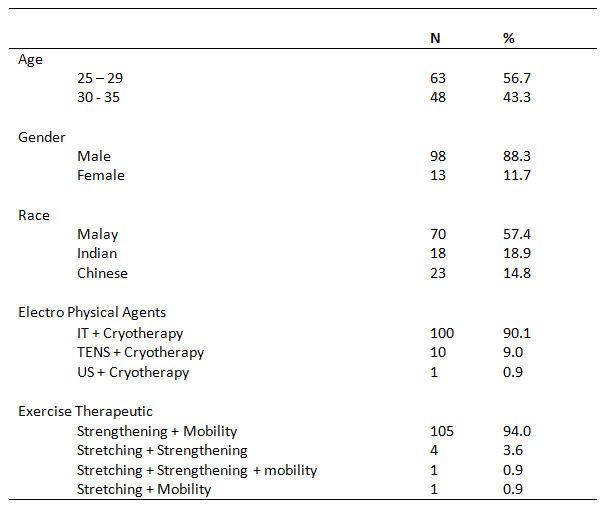
A total of 111treatment card were involved in this study. Most of treatment card assessed were male (88.3%) and the remaining 11.7% was females. The highest number of subject underwent ACL reconstruction were between 25 – 29 years old (56.7%) and 43.3% were 30 – 35 years of age category (Table 1).

Table 1: Descriptive Data for demographic, electro physical agents and Exercise Therapeutic

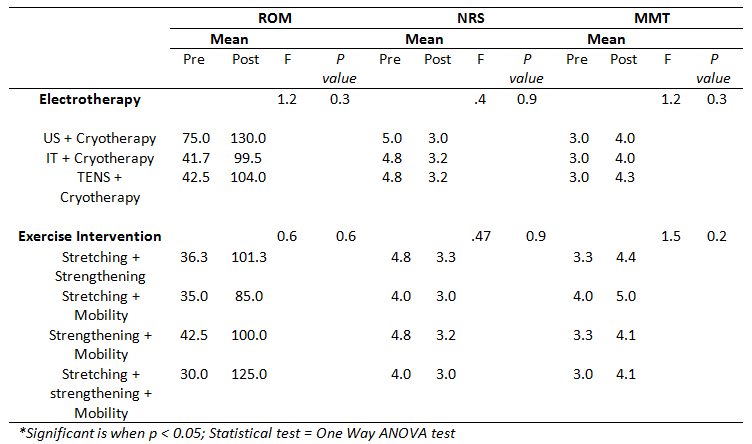
Most of the evidence available on usage of electro physical in post ACL reconstruction was inconclusive5,10. However, the utilization of electro physical agents in managing the post surgery pain indicate a positive outcome 5,10. An increase in local blood circulation has beneficial effects of electrotherapy on post-surgical acute pain and swelling10. The choice of type electro physical agents was merely on therapist clinical experience and availability of equipment. The types of electro physical agents used varies and the utmost choice of treatment were a combination of Interferential Therapy (IT) & Cryotherapy, TENS & Cryotherapy, Ultra Sound (US)& Cryotherapy representing 90.1%, 9.0% and 0.9% respectively. There is no statically difference between all electro physical agent groups but relatively, there is an improvement of post intervention pain score regardless the type of electro physical agents used (Table 2).

Table 2: Comparison of pre and post ROM, NRS, and MMT of electrotherapy and exercise intervention.

The usage of electro physical agents and exercise intervention has been in tandem for post ACL surgery5. There were numerous available evidence suggest such combination and it offered comfort and faster recovery. The combination of strengthening and mobility exercises werethe commonest (94.5%) active approach used in KPJ Seremban Specialist Hospital. Statically, there’s no significant difference between exercise groups but relatively all groups indicate an increase of strength and joint range motion at post surgery (Table 2).

DISCUSSION

Anterior Cruciate Ligament (ACL) injury occurs not only among athletes but also among sedentary adults and reconstruction has been evolved over the pass thirty years recommended for patients with functional instability either with sporting activity or activities of daily living. Interventions used in treating post-operative ACL patient in KPJ Seremban Specialist Hospital are electro physical agents and exercise therapy.Electro physical agents has an important role in physiotherapy interventions.

The basic principles on which electrotherapy function is remain simple through a wide range of applications that can be derived in acute patient care.Previous study has proven that the application of an external energy to the tissues can result in the activation, stimulation or enhancement of physiological activity in particular tissues and seems suitable to be used for acute condition5,10.Exercise interventions are widely used and belief able to restore functional capabilities and ensure faster return to work. The current ACL rehabilitation emphasizeson the importance of immediate muscle contraction, gaining joint motion and early weight bearing in order to ensure early return to functional abilities.Most of the available evidence indicate significantresults of exercise intervention following early reconstruction procedure conducted 5,6,9,10,. The appropriate graft choice for ACL reconstruction remains controversial however it has no significant effects on the rehabilitation outcomes. An early active rehabilitation seems crucial and aides the faster recovery and shorten the duration return to daily life6,7,8.

The tools used to measure the outcomes seems to be subjective in nature but the reliability of such measurement is acceptable and appropriate10,11,12. The results of this study were not comparable in gender due to small number of ACL reconstruction among female. Furthermore, it is not the scope of study to determine the difference of outcome among gender group.

Ethical Clearance: An initial application was addressed to Research Ethics Committee, KPJ Healthcare University College, Nilai, Malaysia and approval received for conduct of this study with reference number KPJUC/RMC/BPT/EC/ 2018/139, Dated 21/05/2018.

Conflict of interest: There was no conflict of interest on conduct of this study.

Fund for the study: The fund for the study was granted by KPJ Healthcare University College, Nilai, Malaysia.

CONCLUSION

The rehabilitation intervention conducted by rehabilitation department of KPJ Seremban Specialist Hospital is consistent with previous available evidence. A standardized outcome measured with more objective measurement should be introduced in order to have a more accurate reading. Future study using clinical trial should be conducted in order to determine the effectiveness of physiotherapy rehabilitation on ACL reconstruction.

REFERENCE

  1. Kiapour, A., & Murray, M. (2014). Instructional Review : Knee Basic science of anterior cruciate ligament injury and repair ;3(2) : 20-31.
  2. Duthon, V. B., Barea, C., Abrassart, S., Fasel, J. H., Fritschy, D., & Menetrey, J. (2006). Anatomy of the anterior cruciate ligament. Knee Surgery, Sports Traumatology, Arthroscopy ; 14 (3) : 204 – 213.
  3. Markatos, K., Kaseta, M., Lallos, S., Korres, D., & Efstathopoulos, N. (2013). The anatomy of the ACL and its importance in ACL reconstruction : 747 – 7.
  4. Allen F. Anderson, MD, Robert B. Snyder, MD, and A. Brant Lipscomb, Jr., MD. (2001).     A Prospective Randomized Study of Three Surgical Methods. The American Journal of Sports Medicine; 29 (3): 272 – 279.
  5. Tovin, B. J., Wolf, S. L., Greenfield, B. H., Crouse, J., & Woodfin, B. A. (1994). Comparison of the effects of exercise in water and on land on the rehabilitation of patients with intra-articular anterior cruciate ligament reconstructions. Physical Therapy ; 74 (8) : 710 – 719.
  6. Heijne, A. & Werner, S. (2010). A 2-year follow-up of rehabilitation after ACL reconstruction using patellar tendon or hamstring tendon grafts: a prospective randomized outcome study. Knee Surg Sports Traumatol Arthrosc : 18: 805.
  7. Allen F. Anderson, MD, Robert B. Snyder, MD, and A. Brant Lipscomb, Jr., MD. (2001).     A Prospective Randomized Study of Three Surgical Methods. The American Journal of Sports Medicine; 29 (3): 272 – 279.
  8. Freedman K.B., Damato M.J., Nedeff D. (2003). Arthroscopic Anterior Cruciate Ligament Reconstruction: A Meta analysis Comparing Patellar Tendon and Hamstring Tendon Autografts. The Americal Journal of Sports Medicine: 13 (1); 2 – 11.
  9. Holsgaard-Larsen, A., Jensen, C., Mortensen, N. H. M., & Aagaard, P. (2014). Concurrent assessments of lower limb loading patterns, mechanical muscle strength and functional performance in ACL-patients – A cross-sectional study. Knee; 21(1) : 66 -73.
  10. Reid, A., Birmingham, T. B., Stratford, P. W., Alcock, G. K., & Giffin, J. R. (2007). Hop Testing Provides a Reliable and Valid Outcome   Measure   During  Rehabilitation After Anterior Cruciate Ligament Reconstruction. Physical Therapy ; 87 (3) :  337 – 349.
  11. Hartrick, C. T., Kovan, J. P., & Shapiro, S. (2003). The Numeric Rating Scale for Clinical Pain Measurement: A Ratio Measure? Pain Practice;  3(4) :  310 – 316.
  12. Moisala  A.S., Jarvela T., Kannus P., Jarvinen M. (2007). Muscle Strength Evaluations after ACL Reconstruction. Int J Sports Med; 28(10) : 868 – 872.
Citation:  

Izham Zain, Nabilah Ahmad, Nanthenii M.K, Asyiqin  (2019).  The outcome of physiotherapy rehabilitation following ACL reconstruction at KPJ Seremban Specialist Hospital , International Journal of Medical and Exercise Science, 5 (4); 651-655.

Comparative effect of core muscles strength training with supine bridging over prone bridging in patients with non specific low back pain

Jibi Paul1,  P. Vijayalakshmi2
Author:
2B.P.T. Graduate,Faculty of Physiotherapy, Dr.MGR. Deemed to be University, Chennai, Tamilnadu, India.
Corresponding Author: 1Professor, Faculty of Physiotherapy, Dr.MGR.Deemed to be University, Chennai, Tamilnadu, India. Mail id:  physiojibi@gmail.com  
ABSTRACT

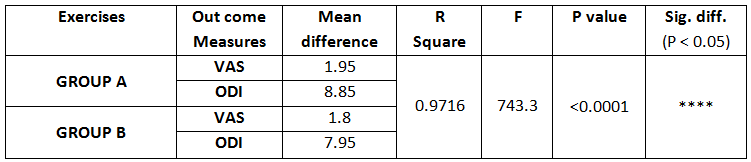
Background of the study: Core  muscle strength  training program is to prevent low back pain, to initiate limb movement for proper utilization of the muscle force and to enhance performance. This study was to compare the  effectiveness of core muscles strength training with supine bridging over prone bridging in patients with non specific low back pain. Methodology: This was an experimental study of comparative type with 40 subjects.  They were equally divided into two groups (20 in each group) by random sampling method. Study was carried out at Physiotherapy department, A.C.S Medical college and hospital, Chennai -77  for duration of 4 weeks. Subjects with the age group between 20 to 35 years with non specific low back pain were included in this study. Group  A with Prone bridging exercise received elbow plank and extended plank exercises. Group B with Supine bridging exercise received traditional bridge and alternate single leg bridge exercises. Non specific low back pain and functional disability were outcome measures of the study. VAS and ODI were used as an outcome measurement tools. Result: On comparing the mean values of Group A and Group B on Visual Analogue Scale and Oswestry Disability Index Questionnarie Group A with Prone bridging exercise showed  a mean difference of 1.95 and 8.85 on VAS and ODI respectively, which is more effective than Group B with supine bridging exercise with mean difference of  1.8 and 7.95 respectively on VAS and ODI  with significant difference at P<0.0001. Conclusion: This study concluded that prone bridging  exercise is more effective in improvement of functional activities and reducing pain than supine bridging exercise program in non specific low back pain.

Keywords: Prone bridging, Supine bridging, Low back pain, Functional disability.

Received on 28th October 2019, Revised on 24th November 2019, Accepted on 30th November 2019

DOI:10.36678/ijmaes.2019.v05i04.004

INTRODUCTION

Non-specific low back pain means, the pain is not due to any specific or underlying disease that can be found. There may be other minor problems in the structures and tissues of the lower back that result in pain. Typically the pain is in one area of the lower back, but sometimes it spreads to one or both buttocks or thighs. The pain is usually eased by lying flat. So, non-specific low back pain is ‘mechanical’ in the sense that it varies with posture or activity 1,2.

Core strength is the muscular control required around the lumbar spine to maintain function stability. core stability refers to ability to stabilize the spine as a result of muscle activity, with core strength referring to the ability of  the musculature to then produce force through contractile forces and intra-abdominal pressure 3,4.

The core stabilization exercises include the so-called  quadruped, pelvic tilt,  and bridging exercises.The bridging exercise is commonly used for improving lumbo pelvic stabilization. It is a comfortable and typically painless posture for improving the coordination of the core Muscles 5,6.

Stability of the core play roles in the elderly and individuals with disabilities, not only in maintaining an upright bodyposture, but also in helping to change positions when sitting, standing, and walking. The bridge exercise was widely used in the clinic to train large muscles and local muscles to coordinate in an appropriate ratio.The bridge exercise, increases the muscular strength of the hip joint extensor group and improves trunk stability7,8.

Aim of the study: The aim of the study was to compare the  effectiveness of core muscles strength training with supine bridging over prone bridging in patients with non specific low back pain.

Need for the study: Core  muscle strength  training program is to prevent low back pain, to initiate limb movement for proper utilization of the muscle force and to enhance performance. There was  lack  of literature support in normal  subjects of core endurance in daily activities.

METHODOLOGY                  

This was an experimental study of comparative type with 40 subjects.  They were equally divided into two groups (20 in each group) by random sampling method. Study was carried out at Physiotherapy department, A.C.S Medical college and hospital, Chennai -77  for duration of 4 weeks. Subjects with the age group between 20 to 35 years with mechanical low back pain were included in this study.

Group  A  with Prone bridging exercise  received elbow plank and extended plank exercises. Group B with Supine bridgingexercise received traditional bridge and alternate single leg bridge exercises. Subjects with spinal and disc pathologies,past history of abdominal surgery,any previous or current experience in core strengthening, any heart disease were excluded from this study. Mechanical low back pain and functional disability were outcome measures of the study. VAS and ODI were used as an outcome measurement tools.

Procedure: Subjects with clinical diagnosis of non specific low back pain were randomly allocated to two groups.Group A prone bridging exercise was received elbow plank and extended plank exercise and Group B supine bridging exercise was received traditional bridge and alternate single leg bridge exercise done with repetition of 6 times in 1st week, 9 times in 2nd week,12 times in third week, 15 times in fourth week, with holding time 10 seconds. Pain and functional disability were assisted before and after the intervention session using the measurement tool.

Group A: Prone Bridging Exercise

Received elbow plank and extended plank exercises done with repetition of 6 times in 1st week, 9 times in 2nd week,12 times in third week, 15 times in fourth week, with holding time 10 seconds.

Group B: Supine Bridging Exercise:

Received traditional bridging and alternate single bridging exercises done with repetition of 6 times in 1st week, 9 times in 2nd week,12 times in third week, 15 times in fourth week, with holding time 10 second.

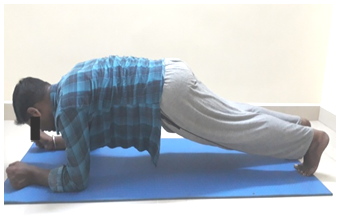
Elbow Plank:

Assume a front support position resting on your fore arm with your shoulders directly over your elbows.Straighten your legs out behind you and lift up your hips to form a dead straight line from your shoulders to your ankles. You should be balanced on your forearms and toes with your abdomen and back working to keep your body straight and hold for 10 second.

Figure 1: Elbow Plank

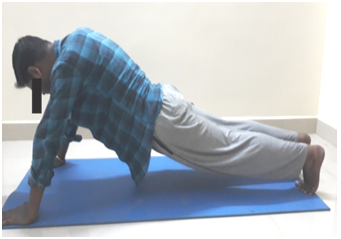
Extended Plank:

Performing the exercise with the arms further away from the body will progessively increase the difficulty assume a pushup position with hands about 8 in front of your shoulder your body should form a straight line from ankles to shoulder hold for 10 sec.

Figure 2: Extended Plank

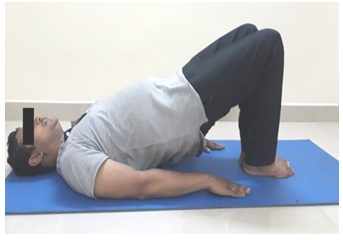
Traditional  Bridging:

Lie face up on the floor with your knees bend and feet flat on the ground keep your arms at your side with your palms down lift your hips of the ground until your knees hips and shouldrs forms a straight line. Contract your glute muscles and abdomen  hold the bridged position for 10 second  before easing back down.

Figure 3: Traditional Bridging

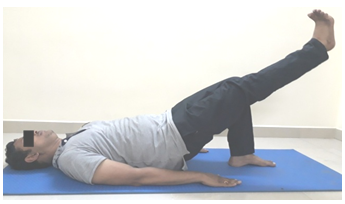
Alternate single leg bridge:

Lie on your back with your knees bent and your feet flat on the floor lift your pelvis so that youform a bridge  position with a straight line running from your shoulder to your knees.lift your right leg off the floor and extend it so that it continues the straight line. You should be able to feel your left buttock, your back and lower abdomen working to keep the positionhold for 10 seconds then repeat on the other leg.

Figure.4: Alternate single leg bridge

RESULT

Group A: Prone  Bridging Exercise

Table 1: Paired t test on VAS and ODI within Group A.

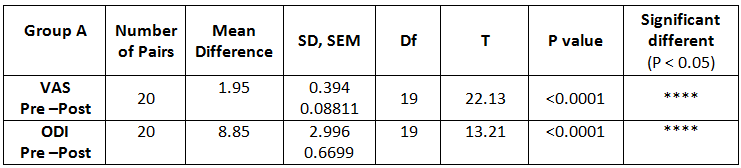
The above table 1 shows significant difference on VAS and ODI within Group Awith P value <0.0001.

Group B: Supine Bridging Exercises

Table 2: Paired t test on VAS and ODI within Group B with Supine Bridging Exercises.

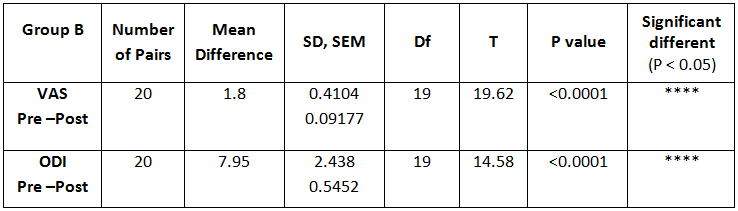
The above table 2 shows significant difference on VAS and ODI within group B with P value <0.0001.

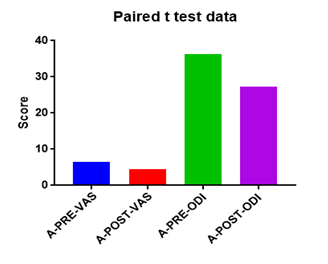
Graph 1: Presentation of VAS and ODI within Group A  withProne Bridging Exercise

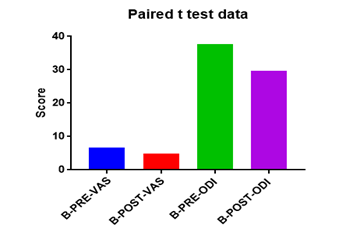
Graph: 2  Presentation of  VAS and ODI within Group B withSupine Bridging Exercise

Comparative Study

Table 3: ANOVA to compareVAS and ODI between Group A and Group B.

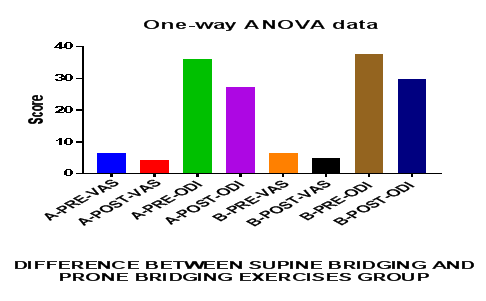
The above table 3 shows significant difference on VAS and ODI between Supine bridging over prone bridging Exercise groupwith P value <0.0001.

Group A Intervention is more effective with mean difference 1.95 and 8.85 of compare to mean difference of 1.8 and 7.95 in Group B.

Graph 3: Represents the difference on VAS and ODI between Group A and B.

Total 20 samples were participated in  each group. Group A  (Prone bridging)  received elbow plank and extended plank exercises and Group B (Supine bridging) received traditional bridging and alternate single leg bridge exercise.

Low back Pain (VAS Scale) has been decreased in both the groups with significant difference P<0.0001. Mean difference in outcome was  1.95 and 8.85 within Group A  and  1.8 and 7.95 within  Group B  rspectively on VAS and ODI.  

On comparing the mean values of Group A and Group B on pain (VAS) and Functional disability (ODI) of both  groups showed significant difference with p<0.0001. Group A (prone bridging exercise) shows 1.95 and 8.85 which is higher mean difference value than Group B (supine bridging exercise) 1.8 and 7.95 respectively.

DISCUSSION

A Total samples of  40  with the  age group of 20-35  were participated in the study. On comparing the mean values of Group A and Group B on Oswestry Disability Questionnaire  and VAS, both the groups showed significant difference with P<0.0001.

A Oswestry disability index (ODI) is a self reported based outcome measure used to quantify extend of disability related to low back pain. The ODI tool has been adapted for use by patients in several non-english speaking nations 9,10.

The prone bridge (plank) is one of the most frequently used exercises to strengthen the abdominal muscles. However, in the prone bridge, the muscle action is isometric, working in co-contraction to control the pelvis. During the prone bridge exercise,the external oblique demonstrated greater muscle activation.

Studies have reported that prone bridging exercise can improve postural control and can reduce low back pain. Smaller base of support in prone bridg exercise need more muscle effort, which can improve muscle strength and low back stability inturn can reduce low back pain. Prone bridge exercise can also improve coordination of low back and pelvic floor muscles 11,12.

Prone bridge exercise have shown more effect on joint reposition sense and improved joint proprioception than conventional bridge exercise on securing the stability of the body trunk. It has also proved more higher level effect on balance and motor control than a conventional bridge exercise 13, 14.

Ethical Clearance:  Clearance was obtained from the Institutional ethical committee ofFaculty of Physiotherapy, Dr MGR Deemed to be University, Chennai with Ref No.A-58/ PHYSIO/IRB/2018-2019, Dated: 07/01/2019.

Conflict of Interest: No conflict of interest to conduct this study.

Source of Fund: It was aSelf financed study.

CONCLUSION

This study concluded that the subjects in group A performed prone bridging  exercise have shown more improvement in reducing pain and improving functional activities than in Group B (supine bridging exercise) program in non specific low back pain.

The study shows Group A and group B with prone and supine bridging exercise has effective approach in reducing pain and improving functional activities and bring back them to the normal.

REFERENCE

  1. Rebecca J. Guthrie et al (2012).The effect of traditional bridging or suspension exercise bridging on lateral abdominal thickness in individuals with low back pain, journal of sport rehabilitation,21;151-160.
  2. Crystian B. Oliveira et al (2018). Clinical practice guidelines for the management of non specific low back pain in primary care: an updated overview Eur spine journal 27:2791-2803.
  3. Akuthota V. Nadler et al (2009). Motor Control exercise for chronic low back pain: a randomized placebocontrolled trial. Phy ther.,89: 1275-1286.
  4. Angela E. Hibbs et al (2008). Optimizing perfomance by improving core stability and core strength. Sports med. 38(12): 995-1008.
  5. Paul W. Hodges et al (2003). Core stability exercise in chronic low back pain. Orthop clin N Am 34,245-254.
  6. Wen-Dien Chang, PhD, Hung-Yu Lin, PhD et al (2015).Core strength training for patients with chronic low back pain J. Phys. Ther. Sci. 27: 619–622.
  7. Shih-Lin Hsu, PTS, Harumi Oda, PTS et al (2018). Effects of core strength training on core stability J. Phys. Ther. Sci. 30: 1014–1018.
  8. Wontae Gong, PhD, PT et al (2018). The effects of the continuous bridge exercise on the thickness of abdominal muscles in normal adults, J.Phys.Ther.Sci. 30: 921-925.
  9. Min Yong Eom, MPH, PT, Sin Ho Chung, PhD et al (2013). Effects of Bridging Exercise on Different Support Surfaces on the Transverse Abdominis J. Phys. Ther. Sci. 25: 1343–1346.
  10. Gregory J Lehman, Wajid Hoda et al (2005).Trunk muscle activity during bridging exercises on and off a Swissball Chiropractic & Osteopathy, 13:14.
  11. Roland van den Tillaar, Atle Hole Saeterbakken et al (2018). Comparison of Core Muscle Activation Between a Prone Bridge and 6-RM Back Squats Journal of Human Kinetics volume, 62; 43-53.
  12. Yong Soo Kong et al (2015). The effects of prone bridge exercise on trunk muscle thickness in chronic low back pain patients J. Phys. Ther. Sci. 27: 2073–2076.
  13. Yong Soo Kong et al (2013). Changes in the Activities of the Trunk Muscles in Different Kinds of Bridging Exercises J. Phys. Ther. Sci. 25: 1609-1612.
  14. Yong Soo Kong et al (2015). The effects of prone bridge exercise on the Oswestry disability index and proprioception of patients with chronic low back pain J. Phys. Ther. Sci. 27: 2749-2752.
Citation:  

Jibi Paul, P. Vijayalakshmi (2019).Comparative effect of core muscles strength  training with supine bridging over prone bridging in patients with non specific low back pain, International Journal of Medical and Exercise Science; 5 (4): 644-650.

Effect of pelvic core exercise training on gluteus strength among college level Cricketers

Jibi Paul1, Prabakaran.P2
Author: 2B.P.T. Graduate,Faculty of Physiotherapy, Dr.MGR. Deemed to be University, Chennai, Tamilnadu, India.
Corresponding Author: 1Pofessor, Faculty of Physiotherapy, Dr.MGR. Deemed to be University, Chennai, Tamilnadu, India. Mail id:  physiojibi@gmail.com  

ABSTRACT

Background of the study: The core musculature in concludes the muscle of the trunk and pelvis that are responsible for the maintenance of stability of spine and pelvis help in generation and transfer of energy from large to small body parts during for the cricket players in cricket. Objective of the study was to determine the effect of pelvic core exercise training on gluteus strength among college level cricketers. Methodology: This was an observational study with convenient sampling of pre and post experimental study design. Forty male cricket players were recruited from the students at Dr.MGR Deemed University with the age group of 18 to 25 years. Cricket players were included after specific selection criteria for the study. Pelvic core exercise was given to the participants for 6 weeks. Single leg pelvic bridging test used to measure the strength of gluteus muscle before and after the training. The core exercise training will give to all cricketers. The prescribed exercise performed for 4 days in a week for 30 minutes and this were followed for 6 weeks. At the end, they were assed with single leg pelvic Bridging test. Paired T-test analysis used to find the significant difference between pre and post test measurement. Results: Pelvic core exercise training found significant effect on improving the strength of gluteus muscles among college level cricketers with mean difference of 6.68 and P<0.0001. Conclusion: This study concluded that Pelvic core exercise training can improve the strength of gluteus muscles among college level cricketers.

Keywords: Cricketers, Pelvic core exercise, Gluteus strength, Single leg pelvic bridging test

Received on 26th October 2019, Revised on 22th November 2019, Accepted on 29th November 2019

DOI: 10.36678/ijmaes.2019.v05i04.003

INTRODUCTION

Cricket is an international game. This game was played by many people professionally and non-professionally. In a team there are 10 players with batsman, keeper and fielder. Mostly running, throwing and forceful trunk rotation occurs. Therefore core muscles play an important role on cricket players1,2.

The core musculature in concludes the muscle trunk and pelvis that are responsible for maintenance of stability of spine and pelvis. The core strengthening required for cricket, throwing, bowling, batting events in cricketers. Some of the core muscles they are thoracolumbar fascia, paraspinalis, abdominalis, hip gridle musculature, diaphragm and pelvic floor muscles they are mostly involved in sports activities of cricketers3,4.

Spines and pelvis are centrally located to be able to perform many of the stabilizing functions that body will require in order for the distal segments. To do specific function providing the proximal stability for distal mobility and function of limbs 5,6.

Core muscle strengthening training is widely practised by professionals with the goals entrancing core stability and increase core muscular strength there by improves performance of cricketers7,8.

Pylometric and isometric core strengthening is widely used as a method of developing explosive strength capacity in those sports that require jumping ability such as athletics, basketball and volley ball.

Aim of the study: The aim of the study is to determine the effect of pelvic core exercise training on gluteus strength among college level cricketers.

 Need of the study: Core muscles play an important role in cricket players. According to that, plyometric and isometrics are used to improve explosive power and agility by core strengthening. Advanced technique such as plyometric training protocol has proven more effect on sports events. But not many studies did to assess its effectiveness on events such as on cricketers.

METHODOLOGY

This was a study with Quasi experimental design and  a cross sectional pre-post study. Study was conducted in physiotherapy department of A.C.S. Medical College and Hospital, Chennai. Total 40 Subjects were selected for this study. Convenient Sampling Method used to select the samples. Total duration of the study was 6 Weeks. Male subjects with 18-25 Years of age and Collegiate Cricket players were included for this study. Patients with any neurological disorder, Systemic disease, Stopwatch, Single leg pelvic bridging test, Strength of Gluteus muscle, Couch were ecluded from the study.

Procedure: Players volunteered to participate in the training program were selected from Dr. M.G.R. Educational and Research Institute, Chennai. A total of 40 players were selected and explained about the study. Informed consent was obtained from the subjects.

Exercises such as abdominal crunch, reverse crunch, single leg crunch, double leg crunch were given to the cricket players. The pre and post test values were measured using single leg pelvic bridging test.

The Single Leg: Step 1: Lay on your back with your knees bent. Step 2: Kick one leg out straight. Step 3: Pick your hips up and hold this bridge for 10 seconds.

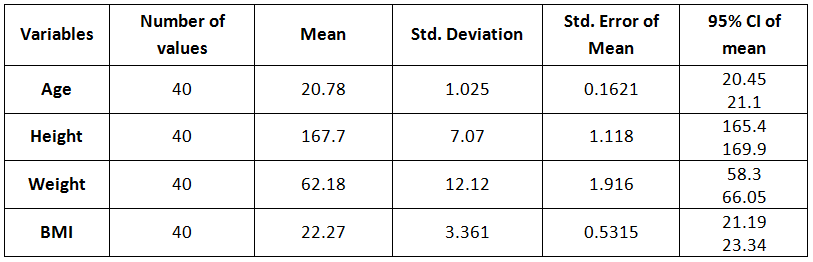
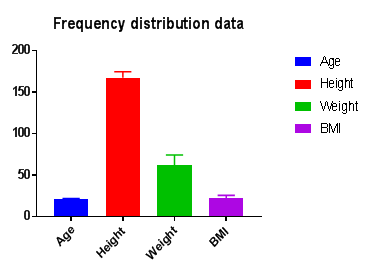
Table 1: Frequency distribution of Age, Height, Weight and BMI among pelvic core exercise training cricketers

The above table 1 shows the mean value ofAge, Height, Weight and BMI with 20.78, 167.7, 62.18 and 22.27 respectively.

Bridge test

Abdominal crunch: Abdominal crunches are simple to perform. Begin flat on your back with your knees bent and the heels of your feet only a few inches from your buttocks.

Reverse crunch: Lie down on the floor with your legs fully extended and the arms to the side of your torso with the palms on the floor. While inhaling, legs are moved towards the torso as you roll the pelvis backwards. At the end of this movement your knees should touch the chest.

Single leg crunch: While keeping abdomen tense lean backwards and bring the raised knee towards the chest. Bring raised knees back down and switch to the other leg to complete one repetition.

Double leg crunch: Lie flat on your back and place your hands behind your head. Bring your feet close to your glutes so your knees are bent and place your flat on the ground.

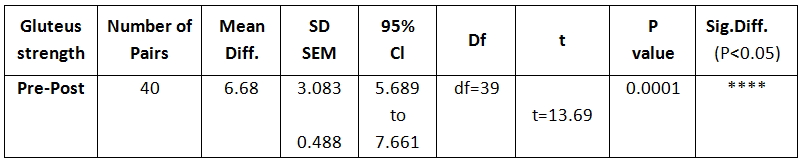
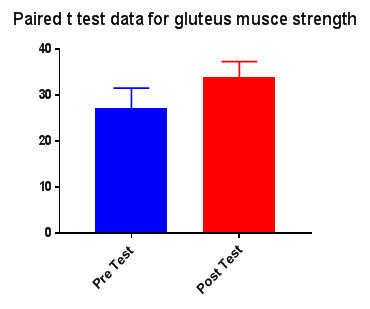
RESULTS The above table 1 shows the mean value ofAge, Height, Weight and BMI with 20.78, 167.7, 62.18 and 22.27 respectively. The above table 2 shows the Paired t Test for pelvic core exercise training on gluteus strength among college level cricketers. Pelvic core exercise training found significant effect on improving the strength of gluteus muscles among college level cricketers with mean difference of 6.68 and P<0.0001.

Table 2: Paired t Test for pelvic core exercise training on gluteus strength among  college level cricketers

The above table 2 shows significant difference in pelvic core exercise training on gluteus strength among college level cricketers with mean difference of 6.68 and P<0.0001 

Graph1: Graphical representation of frequency distribution of Age, Height, Weight and BMI among pelvic core exercise training cricketers.

Graph 2: Graphical representation on effect of pelvic core exercise training on gluteus strength among college level cricketer.

DISCUSSION

The above table 1 shows the mean value of Age, Height, Weight and BMI with 20.78, 167.7, 62.18 and 22.27 respectively

The above table 2 shows the Paired t Test for pelvic core exercise training on gluteus strength among college level cricketers with mean difference of 6.68 and p<0.0001 .

Proximal stability is important for distal mobility, a proximal to distal patterning of generation of force, and the creation of interactive moments that move and protect distal joints9.

Marshall And Murphy core stability is a generic description for the training of the abdominal and lumbopelvic region. Local stability refers to the deep intrinsic muscles of the abdominal wall, such as transverse abdominus, and multifidus. These muscles are associated with segmental stability of the lumbar spine during gross whole body movements10.

Core stabilization training for middle and long distance runners’’ discussed the theory behind the core training for injury prevention and improving a distance runners efficiency and performance. For runners whose event involve balance and powerful movements of the body11,12.

In this study the pelvic core exercise training found significant effect on improving the strength of gluteus muscles among college level cricketers with mean difference of 6.68 and P<0.0001. Sothe study rejecting the null hypothesis and accepting the alternative hypothesis.

Ethical Clearance:  Clearance was obtained from the Institutional ethical committee ofFaculty of Physiotherapy, Dr MGR Deemed to be University, Chennai with Ref. No. IV C-030/ PHYSIO/IRB/2017-2018, Dated: 08/01/2018.

Conflict of Interest: No conflict of interest to conduct this study.

Source of Fund: It was aSelf financed study.

CONCLUSSION

The study concluded that there is significant improvement in strength of gluteus muscles among college level cricketers. Hence  the study rejects the null hypothesis and accepts the alternate hypothesis.

REFERENCES

  1. Brain wilt, steven WC. (2001).The effects of plyometric circuit training on strength on muscle capalities of trunk; 28(5)1145.
  2. Adams and Throgmartin D. (1992). An investigation of selected demands of plyometric training on exercise on muscular leg strength and power.Track and Field Quarterly Review. 84(1):36-40.
  3. Rimmer k and Sleivert (2008).Effects of plyometric intervention program on splint performance; journal of strength and conditioning research 14;295-301.
  4. Micheal G, Twist G. (1997). Agility training methods and preventing techniques of injury. Vol 129; issue 5.
  5. Lachance P F. (1995). Plyometric exercise. Journal of strength and conditioning Research, 8:16-23.
  6. Shea, cristopher D. (2013). Principles of agility training and preventive measures, 471- 492.
  7. Terese A Stone. (2006). Sports injuries mechanisms prevention and treatment, 1st edition: 17-21.
  8. Parson, Miller, Erdman (1998). Principle of plyometric training and technique  vol7, p 55-64.
  9. Nalk.V., Patil, P.& Chikaraddi, V. (2013). Action event retrieval from cricket video using audio energy for event summarization. International Journals of computer engineering & technology, 4(4), pp.267-274.
  10. Rolf, S. and Rhondda, J. (2012). The effect of core and lower limb exercises on trunk Strength and lower limb stability on Australian soldiers. Journal of Military and Veterans’ Health, 20, pp. 4.
  11. Kim, H. Y. (2012). Effects of plyometric training on ankle joint motion and jump Performance. Korean Journal of Sports Medicine, 30, pp. 47-54.
  12. Athanasios, K. and Eleftherio, K. (2009). Effects of small-sided games on physical Conditioning and performance in young soccer players. Journal of Sports Science And Medicine.,8, pp.374-380.
Citation:  

Jibi Paul, Prabakaran.P (2019).  Effect of pelvic core exercise training on gluteus strength among college level cricketers , International Journal of Medical and Exercise Science; 5 (4): 639-643.

Normative values of Moberg pickup test in young adults

Dhanalakshmi.M.R1, Prashanth V Mangalvedhe2, Jibi Paul3
Authors:
1B.P.T. Graduate,  JSS College of Physiotherapy, JSS Hospital Campus, Mysuru, Karnataka,India.   
3Professor,Faculty of Physiotherapy, Dr.MGR. Deemed to be University, Chennai, Tamilnadu, India.
Corresponding Author:
2Lecturer, JSS College of Physiotherapy, JSS Hospital Campus, Mysuru, Karnataka,India.
Mail id:  dhanuphysio7@gmail.com  

ABSTRACT

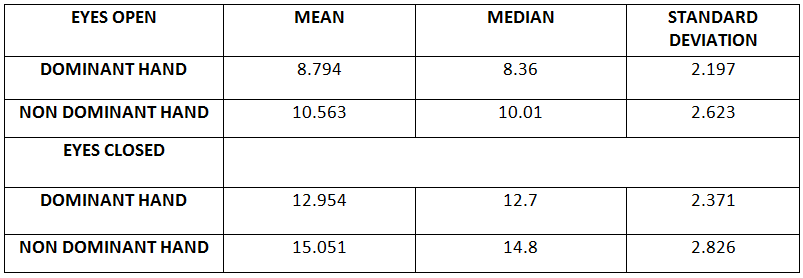
Introduction: Moberg pickup test (MPUT) is a standardized test for hand dexterity developed by Erik Moberg, in 1958. This test also assesses cognition, stereognosis, and comprehension. Aim of the study was to find the normative values for the Moberg pickup test and to find the  impact of gender and handedness on hand dexterity among carpel tunnel syndrome patients. Method: This was aCross-sectional study, conducted at JSS College of physiotherapy, Mysuru, Karnataka for a duration of 2 months. This study was done on a population of 171 typical young adults comprising of 37 males and 134 females with an age group between 17 and 25 years. Test objects were placed on the table on the same side of right and left hands being tested with eyes open and closed, whereas the container was placed on the opposite side of the hand being tested. Three trials were done and the best out of the three was taken for analysis to obtain the normative values for Mobergpickup test. Result: The results show that the hand dexterity of the subjects was significantly good. Eyes open and close on dominant hand and Non dominant hand with mean values of 7.735, 12.806 and 9.206, 14.327 respectively. Conclusion: Females performed the test faster than males, and task performance with the dominant hand was faster than the non-dominant hand.

Keywords: Hand dexterity, Moberg Pick-Up Test, Carpel tunnel syndrome, Normative values

Received on 26th October 2019, Revised on 22th November 2019,Accepted on 27th November 2019

DOI: 10.36678/ijmaes.2019.v05i04.002

INTRODUCTION

Dexterity is usually defined as a function of control, the coordination of muscle movements usually in synchronization with the eyes, and it can also be defined as the quality of motor skills of hands and fingers.  Dexterity in each person is qualitatively different and unique1,2.

Moberg pickup test (MPUT) is a standardized test for hand dexterity developed by Erik Moberg, in 1958. This test also assesses cognition, stereognosis, and comprehension. Moberg defines functional sensation as tactile gnosis, specifically sensiti­vity present at the fingertips, which allows a significant awareness of the external object3,4.

Need For the Study

Normative value for Moberg Pick-Up Test is important to check hand dexterity. Present available are from western population. Characteristics of Indian population may differ from the western population.

Hence, the need of this study was to establish the normative values of Moberg pickup test in young adults of age 17- 25years in Indian population.

Objective:  Primary objective was to find the normative values for the Moberg pickup test. Secondary objective was to find the difference on normative values of Moberg pickup test between male and female on their hand dexterity.

METHODOLOGY

This was a Cross-sectional study conducted at   JSS College of physiotherapy, Mysuru, Karnataka.This study was done on a population of 171 typical young adults comprising of 37 males and 134 females with an age group between 17 and 25 years. Duration of the study was 2 months.

Inclusion Criteria:  Both genders willing to participate were selected with age group 17 to 25 yrs.

Exclusion criteria: Participants with neurological illness, Any congenital deformity of hand, Participants with recent hand injuries and fractures, Participants with visual impairment, Behavioural abnormality that interferes with the test were excluded from the study.

Materials: Small container, stop watch, screw, safety pin, cap nut, washer, bolt, key, 2 coins, long hexagon nut, square nut, small hexagon nut, nut and bolts.

Procedure: Permission from JSS College of Physiotherapy was obtained.  Informed consent from the participants was taken before including the participants in the study. Based on inclusion and exclusion criteria the participants were recruited for the study. Hand dominance is ascertained by asking each subject which hand they used to perform skilful activities like writing, eating etc.  

Hand dexterity was measured bilaterally. Twelve objects were spread randomly on a table, next to the container. Objects includes – Screw, Safety pin, Cap nut, washer, bolt, key, 2coins, long hexagon nut, small hexagon nut, nut and bolt, square nut. Test objects were placed on a table and a container was kept on the opposite side to the hand being tested. Participants were asked to drop the items as fast as possible in a box placed nearby. Stopwatch was used to record the time for the Performance.

This test was performed in 2 phases: both dominant and non dominant hand has been tested with open and closed Eyes. The test was repeated three times to obtain an average. First tested the writing ability was tested with the dominant hand followed by non dominant hand was tested. In the second phase: first, the participants were asked to hold the container with the opposite hand and they were made to close their eyes.  Second, when only 2 or 3 objects where remaining on the table the participants were informed the number of objects remaining to perform the task.

RESULT

The outcome value obtained from the data collection was tabulated for the statistical analysis of the data; mean, median and standard deviation of the collected data done.

Table 1: Mean and median data of females on eye open and closed for dominant and non dominant hand
Table 2: Mean and median data of males on eye open and closed for dominant and non dominant hand

DISCUSSION

The normative values of Moberg pick up test in the Indian population are not available. Hence, this study was done to find the normative values of Moberg pick up test in young adults of JSS College of Physiotherapy, Mysuru.

Previous studies have been conducted on subjects with carpal tunnel syndrome, comparison between young adults and middle aged persons, and older population, and a survey of comparison between button test and Moberg pick up test 5,6.

This study was done on a population of 171 typical young adults comprising of 37 males and 134 females with an age group between 17 and 25 years. Three trials were done and the best out of the three was taken for analysis to obtain the normative values for Moberg pickup test. The present study confirmed that the performance of this test shows major difference between the male and the female population.

Many studies have done to find the score grading for pinch strength, grip strength, fine motor skill and depression among population with carpal tunnel syndrome 7,8,9.

There is clear evidence from earlier studies that females performed faster than males and this study has also showed similar results. It was observed that the dominant hand was faster in executing this test than the non-dominant hand with the eyes open.

CONCLUSION

Moberg pick-up test has been a reliable tool to test hand function. The time duration and the dominance of hand show the comparison of reaction in individuals. The results show that the hand dexterity of the subjects was significantly good. Task performed with dominant hand was faster than the non-dominant hand.  Females performed the test faster than males.

Future Recommendations: The future studies should include individuals with equal number of males and females for better efficacy of results. Standardized setting can be used to perform the Moberg test.

REFERNCES

  1. Amirjani N, Ashworth N, Olson J, Morhart M, and Chan K. (2011). “Discriminative validity and test–retest reliability of the Dellon-modified Moberg pick-up test in carpal tunnel syndrome patients”, Journal of the Peripheral Nervous System. 16;51–58.
  2. Amirjani N, Ashworth N, Gordon T, Edwards C and Chan K (2007). “Normative Values and the effects of age, gender, and handedness on the Moberg Pick- Up Test ”, Muscle Nerve35;788-792 .
  3. Marcolino AM, Barbosa RI, Souza DNA, Rebelo R B, Delgado PM, Mazzer N, et al., (2012). “Correlation between Moberg Pick-Up test and sensation threshold test after median nerve reconstruction”,ActaFisiatrvol 19(4);216-21.
  4. Stamm T, AlexanderP, Klaus M, and Josef S. (2003). “Moberg Picking-Up Test in Patients With Inflammatory Joint Diseases: A Survey of Suitability in Comparison With Button Test andMeasures of Disease Activity”, Arthritis & Rheumatism (Arthritis Care & Research), Vol. 49(5); 626-632.
  5. Amadio P C, Silverstein M D, Ilstrup D M, Schleck C D, Jensen L M.  (1996). Outcome assessment for carpal tunnel surgery: the relative responsiveness of generic, arthritis-specific, disease-specific, and physical examination measures. J Hand Surg Am., 21: 338– 346. 
  6. Atroshi I, Lyrén PE, Gummesson C. (2009). The 6-item CTS symptoms scale: a brief outcomes measure for carpal tunnel syndrome. Qual Life Res.  18: 347-358.
  7. Atalay NS, Sarsan A, Akkaya N, Yildiz N, Topuz O. (1984). The impact of disease severity in carpal tunnel syndrome on grip strength, pinch strength, fine motor skill and depression,120(4): 517-9
  • Baker NA, Moehling KK, Desai AR, Gustafson N P.(2013).Effect of carpal tunnel syndrome on grip and pinch strength compared with sex- and age-matched normative data. Arthritis Care Res (Hoboken). ; 65: 2041-2045.
  • Bland JD. ( 2000).  A neurophysiological grading scale for carpal tunnel syndrome. Muscle Nerve., 23: 1280-1283.
Citation:  

Dhanalakshmi.M.R, Prashanth V Mangalvedhe, Jibi Paul (2019). Normative values of moberg pickup test in young adults, International Journal of Medical and Exercise Science; 5 (4): 634-638.

A study to find prevalence of upper limb problems in Musicians

P. Sathya1, Hannah D’souza2
Author:
2B.P.T. Intern, D.Y. Patil deemed to be University, School of Physiotherapy, Nerul, Navi Mumbai, India 
Corresponding Author: 1Associate Professor, D.Y. Patil deemed to be University, School of Physiotherapy,Navi Mumbai, India. Mail id: drsathyagp@gmail.com

ABSTRACT

Introduction: Musicians just like any other occupation are prone to injuries. Every type of work requires certain bodily movements and positions to be used in a repetitive manner. These injuries/disorders then in turn affect the ability of the musician to play his instrument most efficiently. The purpose of this study was to find out prevalence of Upper Limb Problems in Instrumental Subjects using the Disability of Arm, Shoulder and Hand (DASH) questionnaire. Methodology: A cross sectional survey was conducted on 100 Subjects from Mumbai, aged 15 to 30 years who were right hand dominant and had a minimum of 3 years of experience playing a musical instrument. Demographic data was collected and the subjects were asked to fill the Disability of Arm, Shoulder and Hand (DASH) questionnaire for the Dominant as well as the Non Dominant Upper Limb. The Data collected was further analyzed. Result: The subjects playing Keyboards were mostly affected on dominant side by DASH score with mean value 11.086. Symptoms on the dominant and non dominant sides were 40.23% and 45.95% respectively with functional disability on the dominant side 31.42%.Percussionist were most affected in the psychological aspect with 33.33%, where string players were more affected in Music Module Domain with mean value 14.305. Conclusion: The study concluded that the subjects playing Keyboards were mostly affected in most domains of DASH Scale. Percussionist were the most affected in Psychological Domain and the subjects playing Strings were most affected in the Music Module Domain in DASH scale. Methodology: A cross sectional survey was conducted on 100 Subjects from Mumbai, aged 15 to 30 years who were right hand dominant and had a minimum of 3 years of experience playing a musical instrument. Demographic data was collected and the subjects were asked to fill the Disability of Arm, Shoulder and Hand (DASH) questionnaire for the Dominant as well as the Non Dominant Upper Limb. The Data collected was further analyzed. Result: The subjects playing Keyboards were mostly affected on dominant side by DASH score with mean value 11.086. Symptoms on the dominant and non dominant sides were 40.23% and 45.95% respectively with functional disability on the dominant side 31.42%.Percussionist were most affected in the psychological aspect with 33.33%, where string players were more affected in Music Module Domain with mean value 14.305. Conclusion: The study concluded that the subjects playing Keyboards were mostly affected in most domains of DASH Scale. Percussionist were the most affected in Psychological Domain and the subjects playing Strings were most affected in the Music Module Domain in DASH scale.

Keywords: Musicians, Upper Limb Problems, Disability of Arm, Shoulder and Hand (DASH) scale

Received on 23rd October 2019, Revised on 20th November 2019, Accepted on 26th November 2019

DOI: 10.36678/ijmaes.2019.v05i04.001

INTRODUCTION

Everybody loves music. Listening to music induces pleasure but making music is a distinct experience in itself. The number of musicians we have now is much more than we ever had before. Being a Musician could be a passion, a hobby or a career. However, musicians just like any other occupation are prone to injuries. Every type of work requires certain bodily movements and positions to be used repetitively. Musculoskeletal occupational disorders result from an interaction between the individual worker, his tools and his environment. In the case of the instrumental musician, his tools are the instruments1.

Musculoskeletal problems in musician occurs due to the repetition of certain movements, incorrect posture, prolonged practice hours, lifting of heavy instruments, holding the instrument in place for a long time, psychological pressure, etc. Because of these symptoms the musician may not be able to play their instrument effectively. The musician may also have difficulty performing ADLs due to the symptoms.  Several researches have been done in the past on different body sites where in a musician could be affected. Each category of instrument uses the upper limb the most, leading to an increase risk of injury. Examples of these could be tendinitis, weakness, stiffness, etc.

According to Zaza et al., the definition of Playing-Related Musculoskeletal Disorders (PMRDS) is Pain and other symptoms that are chronic, beyond your control, and that interfere with the ability to play your instrument at the usual level2.According to Lederman et al., With carefully designed treatment, the majority of instrumental musicians can return to full and pain free playing.3 Correct diagnosis of the problem and physiotherapy techniques to prevent or reduce these symptoms can be given in order for the musician to play his/her instrument in the most optimum way without any hindrance. Hence, the purpose of this study was to find out prevalence of upper-limb problems in musicians.

METHODOLOGY

The Target Population was Instrumental Musicians.A cross sectional survey was conducted on musicians from Mumbai from all categories namely Strings, Keyboards, Brass, Percussions and Woodwind.  100 subjects aged 15 to 30 years who were right hand dominant and had a minimum 3 years experience of playing their instruments were included in the study. The nature and purpose of study was explained and prior consent was obtained from the participants. The demographic data was collected and the subjects were asked to fill the Disability of Arm, Shoulder and Hand (DASH) questionnaire  for the Dominant as well as the Non Dominant Upper Limb. The Data collected was further taken for statistical analysis 4.

RESULT

According to the Data Obtained, most subjects in the sample were Males.

The Instruments played by the subjects in this research were Trumpet (Brass Category), Keyboard, Piano and Harmonium (Keyboards category), Cajon, Djembe, Drums and Tabla (Percussion Category), Bass Guitar, Guitar, Sitar and Violin (Strings category), Flute and Saxophone (Woodwind category)

There were 41 String players, followed by 21 Keyboard players, 21 Percussionists 15 Woodwind players and 2 Brass players. The subjects had between 3-16 years of training. Sitting position was preferred as compared to Standing. The formula provided in the Disability of Arm, Shoulder and Hand (DASH) questionnaire was used to calculate the scores.

Table 1. DASH Total Scores

Inference (Table 1) The non-dominant side total score is more than the dominant side. The Keyboards category scored highest followed by percussion, strings, brass, woodwind on the dominant side. Brass was the highest followed by Keyboards, percussions, strings, woodwind on the non-dominant side.

Table 2.1: DASH Symptoms Score

Inference (Table 2.1) Thekeyboard category had the highest percentage followed by percussion, strings, brass, woodwind on the dominant as well as the non-dominant side

Table 2.2: DASH Individual Symptoms Score

Inference (Table 2.2) Thekeyboards category had the highest percentage followed by percussion, strings, brass, woodwind in pain last week, pain on activity, and stiffness. For Tingling- The keyboards had the highest percentage followed by percussions, brass, strings and woodwind. For Weakness- The keyboards had the highest percentage followed by brass, strings, percussions and woodwind.

Table 3: DASH Functional Disability Score

Inference (Table 3)- Thekeyboard category has the highest percentage followed by percussion, strings, brass, woodwind on the dominant side. Brass was the highest followed by Keyboards, percussions, strings, woodwind on the non-dominant side.

Table 4: DASH Psychological aspect Score

Inference (Table 4) The percussion category has the highest percentage followed by keyboards, strings, brass and woodwind.

Table 5: DASH Music Module Score

Inference (Table 5) The strings category has the highest score followed by percussions, keyboards, strings, brass and woodwind.

DISCUSSION

In this study 100 musician playing different musical instrument were taken. The subjects were asked to fill the Disability of Arm, Shoulder and Hand (DASH) questionnaire. The study reveals that the DASH questionnaire scores varied for each instrument category from Dominant to Non-Dominant extremity. Overall the Non Dominant Upper Limb had higher DASH scores compared to the Dominant Upper Limb (Table 1).

The DASH question numbers 24-28 were used to assess the Severity of Symptoms. The questions were based on the symptoms of pain, tingling, weakness and stiffness. On the Dominant as well as the Non-Dominant sides, the subjects playing Keyboards were the most affected. This was followed by the subjects playing Percussions and Strings respectively. The Brass and Woodwind subjects were the least affected on both the sides. Higher the scores, more the intensity of the symptoms experienced. With the Data obtained, it was noticed that each category showed varying symptoms. The analysis was done by comparing the scores of each symptom individually.

The Brass category showed higher symptoms of Pain, Tingling and Weakness. The Keyboardists complained of Pain and Stiffness. The Percussionists had Pain and Tingling while the Woodwind players had the highest scored symptom of Weakness among other symptoms. (Table 2.1 and 2.2) According to a study, musicians due to the competitive work environment felt forced to play despite their symptoms, motivated by a concern for reprisal or dismissal. Despite their symptoms, the professional musicians, therefore, will be inclined to perform at rehearsals and concerts, and play less when practicing alone, where reducing their effort can aid their recovery without compromising their colleagues.5 The stress-inducing movements in playing can be Isotonic or Isometric. Isotonic movements are those in which fast movements are done to obtain sound in the instrument. These create stress on the surrounding tendons and over time can lead to pain due to chronic tendinopathy. e.g. striking the keyboard keys, bowing the violin. Isometric movements are those in which there is prolonged  periods of static unstable postures to support the instrument or hold it in place. These result in muscle imbalance, which may further lead to chronic myofascial pain6.

The Symptoms in the subjects may have caused difficulty in performing daily functions. This was assessed by DASH question numbers 1-23. This Domain differed based on Dominance. Thesubjects playing Keyboards were the most affected followed by percussion, strings, brass and woodwind on the dominant side.  The subjects playing Brass instruments were most affected followed by Keyboards, percussions, strings and woodwind on the non-dominant side. (Table 3) This suggests that because of the symptoms of pain, tingling, stiffness, weakness, etc. the musician has difficulty performing day to day functions at ease.

According to Rietveld AB et al., Musicians experience upper limb injuries such as impingement syndromes eg. painful arc, supinator syndrome, intersection syndrome. frozen shoulder, tennis elbow, golfers elbow, neuropathies including median and ulnar nerve, trigger finger, hypermobility and focal dystonia.7 According to another study done on Orchestra musicians, The musicians reported changed or impaired way of playing, difficulties in daily activities at home, in leisure time activities and in sleep as common consequences of musculoskeletal symptoms5

Psychological aspect was assessed by DASH question numbers 29,30. Q. 29 was based on Sleeping difficulty due to symptoms and Q. 30 was based on feeling less confident or useful because of the symptoms. The subjects playing Percussions seemed to be most affected. It was followed by the Keyboards, though there is only a slight difference between scores of Percussion and Keyboards subjects. This was then followed by the subjects playing Strings, Brass and Woodwinds. (Table 4).

Injuries occur as a result of physical stress which in turn induces psychological stress. Fears of a musician are thoughts of missing notes, not playing correctly, leaving a bad impression, losing their job and ending up in poverty. These thoughts produce physical reactions such as sweating, constricted breathing, tense muscles, which lead to the likeliness of a performance being unsuccessful8.

According to a study using the Bergen Insomnia Scale (BIS) musicians had higher prevalence of insomnia symptoms compared to the general population9. This shows that Psychological factors also play a great role in musicians. Often musicians fail to find help for curing their injuries and this can lead to the end of one’s career, which leads to a downward spiral of anxiety and depression8. Challenges faced were related to bad and abusive teachers, entry into a conservatoire, music industry demands, unsupportive environments, comparison and competition socially, injury, psychological aspects, balancing work and personal life7.

To assess the Music Module, DASH Music/Sports module was used. The questions were based on the impact of your arm, shoulder or hand problem on playing the musical instrument. The subjects playing Strings were the most affected followed by Percussions, Keyboards, Brass and Woodwind. However, the subjects playing Keyboards and Brass had a minute difference in scores.

Subjects playing Woodwind instruments was the least affected in this domain as well. This shows that a because of the symptoms, the musician is not able to play his instrument in the usual way or in a way in which the musician would like to. This also results in spending lesser time in playing the instrument. Musculoskeletal symptoms resulted in an impaired way of playing the instrument5. According to a study; ability to play to their optimum level was affected due to the symptoms associated10. 

The problems experienced by musicians depend on the physical demands of that particular instrument. Keyboardists play a répertoire of movements that require great amplitude of abduction of the fingers. Techniques of octaves and chords and small hand size were associated with symptoms11.  Intersection syndrome is seen in Drummers7. Brass players may have the highest risk of developing carpal tunnel syndrome12. Prolonged static posture is required such as static abduction of the upper-arm in violin and flute.

In these two instruments the left shoulder is adducted resulting in a ‘wringing out’- phenomenon of the rotator-cuff: the poor blood supply of the ‘critical zone’ in the supraspinatus tendon is further impaired by the squeezing effect of this tendon being stretched over the head of the adducted humerus7.   The posture of Guitarists and Bassists provoke an extreme flexion of the fretting wrist and fingers that possibly may result in the fretting hand injuries that is the Non-Dominant hand13.

Ethical Clearance:  Clearance was obtained from the Institutional ethical committee ofD.Y. Patil Deemed to be University, School of Physiotherapy, Navi Mumbai.

Conflict of Interest: No conflict of interest to conduct this study.

Source of Fund: It was aSelf financed study.

CONCLUSION

This study concludes that the subjects playing Keyboards were the most affected in most domains of DASH scale except Psychological and Music Module Domains, both in the Dominant and Non Dominant side.

This study also concludes that the subjects playing Percussions were the most affected in the Psychological Domain and the subjects playing Strings were most affected in the Music Module Domain of DASH scale.

REFERENCES

  1. Elbaum L. Musculoskeletal problems of instrumental musicians. (1986). Journal of Orthopaedic & Sports Physical Therapy, 8(6):285-7.
  2. Zaza C, Charles C, Muszynski A. (1998).The meaning of playing-related musculoskeletal disorders to classical musicians. Social science & medicine,47(12):2013-23.
  3. Lederman RJ. (2003). Neuromuscular and musculoskeletal problems in instrumental musicians. Muscle & Nerve: Official Journal of the American Association of Electrodiagnostic Medicine., 27(5):549-61.
  4. Beaton DE, Katz JN, Fossel AH, Wright JG, Tarasuk V, (2001). Bombardier C. Measuring the wole or the parts?: Validity, reliability, and responsiveness of the disabilities of the arm, shoulder and hand outcome measure in different regions of the upper extremity. Journal of Hand Therapy.,14(2):128-42.
  5. Paarup HM, Baelum J, Holm JW, Manniche C, Wedderkopp N. (2011). Prevalence and consequences of musculoskeletal symptoms in symphony orchestra musicians vary by gender: a cross-sectional study. BMC musculoskeletal disorders., 12(1):223.
  6. Lee HS, Park HY, Yoon JO, Kim JS, Chun JM, Aminata IW, Cho WJ, Jeon IH. (2013).  Musicians’ medicine: musculoskeletal problems in string players. Clinics in orthopedic surgery.,5(3):155-60.
  7. Rietveld A B. (2013). Dancers’ and musicians’ injuries. Clinical rheumatology., 32(4):425-34.
  8. Viinalass JJ. (2016). The Physiological and Psychological Impact of Music on the Performing Artist, Physical Education and Sport; Thesis; 1-44.
  9. Vaag J, Saksvik-Lehouillier I, Bjørngaard JH, Bjerkeset O. (2016). Sleep difficulties and insomnia symptoms in Norwegian musicians compared to the general population and workforce. Behavioral sleep medicine., 14(3): 325-42.
  10.  Kenny DT, ATCL D. (2012). Musculoskeletal pain and injury in professional orchestral musicians in Australia. Medical Problems of Performing Artists.,27(4):181.
  11. Corrêa LA, dos Santos LT, Paranhos Jr EN, Albertini AI, Parreira PD, Nogueira LA. (2018). Prevalence and risk factors for musculoskeletal pain in keyboard musicians: A systematic review. PM&R., 10(9):942-50.
  12. Jones Jr S, Hernandez C. (2010). An Investigation of the Prevalence of Upper Limb Neuropathies in Different Types of College Musicians by Use of Neurometrix Device. International Journal of Biology, 2(1):132.
  13. Rigg JL, Marrinan R, Thomas MA. (2003). Playing-related injury in guitarists playing popular music. Medical Problems of Performing Artists.,18(4):150-2.
Citation:  

P. Sathya, Hannah D’souza (2019). A study to find prevalence of upper limb problems in Musicians, International Journal of Medical and Exercise Science; 5 (4): 625-633.

Normative values of Moberg Pickup Test in Young Adults

Dhanalakshmi.M.R1 , Prashanth V Mangalvedhe2 , Jibi Paul3

Authors:

1 B.P.T. Graduate, JSS College of Physiotherapy, JSS Hospital Campus, Mysuru, Karnataka,India. 3 Professor,Faculty of Physiotherapy, Dr.MGR. Deemed to be University, Chennai, Tamilnadu, India.

Corresponding Author:

2 Lecturer, JSS College of Physiotherapy, JSS Hospital Campus, Mysuru, Karnataka,India. Mail id: dhanuphysio7@gmail.com

ABSTRACT

Introduction: Moberg pickup test (MPUT) is a standardized test for hand dexterity developed by Erik Moberg, in 1958. This test also assesses cognition, stereognosis, and comprehension. Aim of the study was to find the normative values for the Moberg pickup test and to find the  impact of gender and handedness on hand dexterity among carpel tunnel syndrome patients.

Method: This was a Cross-sectional study, conducted at JSS College of physiotherapy, Mysuru, Karnataka for a duration of 2 months. This study was done on a population of 171 typical young adults comprising of 37 males and 134 females with an age group between 17 and 25 years. Test objects were placed on the table on the same side of right and left hands being tested with eyes open and closed, whereas the container was placed on the opposite side of the hand being tested. Three trials were done and the best out of the three was taken for analysis to obtain the normative values for Mobergpickup test.

Result: The results show that the hand dexterity of the subjects was significantly good. Eyes open and close on dominant hand and Non dominant hand with mean values of 7.735, 12.806 and 9.206, 14.327 respectively.

Conclusion: Females performed the test faster than males, and task performance with the dominant hand was faster than the non-dominant hand.

Keywords: Hand dexterity, Moberg Pick-Up Test, Carpel tunnel syndrome, Normative values

E-Cigarettes practices among youths in a University population

ANNAMMA.K1, FIKRI HAFIZ.M2, NUR RAIHAN2
Corresponding Author:
1Research and Development coordinator, School of Nursing, KPJ Healthcare University College, Negeri Sembilan, Malaysia.
Mail Id: annjoe212@gmail.com

Co-Authors:

2Student Nurses, School of Nursing,KPJ Healthcare University College, Nilai, Malaysia.

ABSTRACT

Background of the study: Electronic cigarette or e-cigarette use has become a worldwide phenomenon since 2003. The literature review shows that not much is known about the effect of e-cigarettes on human health; many of the studies on the use of E-cigarettes effect on humans is under clinical trials.

Objective of the study:The study aimed to assess the practice regarding e-cigarette use among youths in one of the private University College in Negeri Sembilan, Malaysia.

Methodology: This research adopted a cross-sectional survey design. Convenience sampling method was used in this study to collect the data from 100 respondents. Descriptive statistics were used for the data analysis.

Result: The findings concluded that the growing demand for e-cigarettes is a serious matter of concern among the youths. The study findings concluded that 73% of the respondents have been using e-cigarettes. Majority of the e-cigarette users (56%) also responded that e-cigarettes were harmful but continued to use the e-cigarettes. The majority (96%) of the users are youths under the age of 24 years and had been influenced by the friends to use e-cigarettes. Another major reason for e-cigarettes over traditional cigarettes was the availability of different flavors of vape liquid to different suite preferences.

Conclusion:  The study concluded that the trend of e-cigarettes usage is growing at an alarming rate. There are many factors facilitating the use of e-cigarettes among youths. It is recommended that serious regulatory measures are needed from various health sectors to raise awareness regarding the ill effects of e-cigarettes usage among the youths.  

Keywords: Electronic cigarette, Human health, Harmful , Vape liquid

Comparative analgesic effect of Isometric and Isotonic exercises on forearm extensors for lateral epicondylitis of elbow


<!– /* Font Definitions */ @font-face {font-family:”Cambria Math”; panose-1:2 4 5 3 5 4 6 3 2 4; mso-font-charset:1; mso-generic-font-family:roman; mso-font-format:other; mso-font-pitch:variable; mso-font-signature:0 0 0 0 0 0;} @font-face {font-family:Calibri; panose-1:2 15 5 2 2 2 4 3 2 4; mso-font-charset:0; mso-generic-font-family:swiss; mso-font-pitch:variable; mso-font-signature:-536870145 1073786111 1 0 415 0;} /* Style Definitions */ p.MsoNormal, li.MsoNormal, div.MsoNormal {mso-style-unhide:no; mso-style-qformat:yes; mso-style-parent:””; margin-top:0in; margin-right:0in; margin-bottom:10.0pt; margin-left:0in; line-height:115%; mso-pagination:widow-orphan; font-size:11.0pt; font-family:”Calibri”,”sans-serif”; mso-ascii-font-family:Calibri; mso-ascii-theme-font:minor-latin; mso-fareast-font-family:”Times New Roman”; mso-fareast-theme-font:minor-fareast; mso-hansi-font-family:Calibri; mso-hansi-theme-font:minor-latin; mso-bidi-font-family:”Times New Roman”; mso-bidi-theme-font:minor-bidi;} .MsoChpDefault {mso-style-type:export-only; mso-default-props:yes; mso-ascii-font-family:Calibri; mso-ascii-theme-font:minor-latin; mso-fareast-font-family:”Times New Roman”; mso-fareast-theme-font:minor-fareast; mso-hansi-font-family:Calibri; mso-hansi-theme-font:minor-latin; mso-bidi-font-family:”Times New Roman”; mso-bidi-theme-font:minor-bidi;} .MsoPapDefault {mso-style-type:export-only; margin-bottom:10.0pt; line-height:115%;} @page Section1 {size:8.5in 11.0in; margin:1.0in 1.0in 1.0in 1.0in; mso-header-margin:.5in; mso-footer-margin:.5in; mso-paper-source:0;} div.Section1 {page:Section1;} –>
JIBI PAUL1 ,  KOUSALYA. P2
Author:
1Professor, Faculty of Physiotherapy, Dr.MGR Educational and Research Institute, Chennai, Tamilnadu, India.
Corresponding Author:
2Student, Faculty of Physiotherapy,  Dr.MGR Educational and Research Institute, Chennai, Tamilnadu, India.  Mail Id: kousalyapugalenthi3@gmail.com

ABSTRACT

Background of the study: Tennis Elbow/Lateral Epicondylitis is a work-related pain disorder of common extensor muscles, usually caused by excessive quick repetitive movements of wrist and forearm. The main objective of the study is to find the comparative analgesic effect of isometric and isotonic exercises on forearm extensors for lateral epicondylitis of elbow.

Methodology:  This was a comparative study with pre and post intervention.30 subject with tennis elbow were selected based on the inclusion criteria. Further the group was divided into 2 with 15 subjects in each group. The study duration was 4 weeks. Male and female subjects were included in this study. Age group between 30-50 years of age. Group A with 15 subjects were received isometric exercise and Group B with15 subjects received isotonic exercise for a period of 3 sets of 10 repetition for 4 weeks in alternative day. Pain and functional disability were assessed before and after the intervention session using the measurement toolsVAS (Visual analogue scale), andPRTEE (Patient- rated tennis elbow evaluation questionnaire). The special test done for confirming lateral epicondylitis were COZEN’S test and MILL’S TEST. 

Result: The result of this study shows that there was significant changes in outcome measures between the Group A (isometric exercise) and Group B (isotonic exercise)with P <0.0001.

Conclusion: The study concluded that isometric exercise is better than isotonic exercise on decreasing the pain and improving the functional activity of patients with lateral epicondylitis of elbow.

Keywords: Isometric exercise, isotonic exercise, Tennis elbow, Visual analogue scale (VAS), Patient-rated tennis elbow evaluation questionnaire (PRTEE).

Inter-rater and Intra-rater reliability between experience and non-experienced examiners on 90-90 active knee extension test using Goniometer among healthy college students

SITI NUR BAAIT BINTI MOHD SOKRAN1, ROGINI A/P PERIASAMY2, JIBI PAUL3

Corresponding Author:

1Lecturer, Department of Physiotherapy, School of Health Sciences, KPJ Healthcare University College, Nilai, Malaysia. Mail id:  sitinurbaait@kpjuc.edu.my

Authors:

2 Physiotherapist, Department of Physiotherapy, KPJ Selangor Specialist Hospital, Selangor, Malaysia.

3Professor, Faculty of Physiotherapy, Dr.MGR Deemed to be University, Chennai, Tamilnadu, India.

ABSTRACT

Purpose: Intra-rater reliability refers to the consistency of measurements demonstrated in similar assessment situation at two different times by the same examiner which also refers to test-retest. Inter-rater reliability test denotes the consistency of assessments performed by two different examiners. The objective of the study was to determine the inter-rater and intra-rater reliability between experienced and non-experienced physiotherapist on 90-90 active knee extension test using goniometer among healthy college students.

Methodology: This study method is a reliability design in determining hamstring flexibility among 42 young healthy college students of School of Physiotherapy, KPJ Healthcare University College, Nilai, Malaysia. The 90-90 active knee extension was performed using goniometry. Four physiotherapists involved in the study consist of two non-experienced physiotherapist and two experienced physiotherapists.

Results: The mean and standard deviation of active knee extension 90-90 Active Knee extension test among two experienced physiotherapist were 19.830(SD= 10.21) and 43.14 (SD= 47.05). Mean and standard deviation for two non-experienced physiotherapist value were 21.21(SD 11.14) and 42.55 (47.66).

Conclusion: The conclusion of the inter-rater and intra-rater evaluation between experienced and non- experienced physiotherapist showed that goniometer is a reliable tool to evaluate hamstring flexibility among healthy college students.

Keywords: Experienced, Non-Experienced, Physiotherapist, Goniometer, AKE, Inter-rater, Intra-rater