Direct Access Physiotherapy Service Model In Primary Health Care Facility: An Observational Study

James Wilson HasoloanManik1, KiranaWardhani2, Adinda Amira Putri3, JeremiaBernardito4, Abi Wiranata5, Alberta YatiWulang6, Lucky Anggiat7

Corresponding Author:

7Physiotherapy Program, Fakultas Vokasi, Universitas Kristen Indonesia

Email: lucky.panjaitan@uki.ac.id

Authors:

1Physiotherapy Program, Fakultas Vokasi, Universitas Kristen Indonesia

2-6 Physiotherapy Program, Fakultas Vokasi, Universitas Kristen Indonesia

 ABSTRACT

Background: Physiotherapists, as health care professionals, also have a role in providing main services in primary health care facilities. The practice of physiotherapy in the clinic can be done independently, or in collaboration or integrated with other health care professionals. Physiotherapy services with direct access will facilitate the patients to get physiotherapy services. This study aimed to observe one of physiotherapy service model with direct access in Indonesia.

Methods: This research is observational study and observed a clinic that provides direct access to the physiotherapy without having to go through a doctor or other health care professionals. The clinic being observed is the NT Clinic, which is an integrated clinic between general practitioners, medical specialists, and dentists.

Results: In a one-year service from January-December 2021, physiotherapists have handled 1,184 patient visits. The direct access to physiotherapy services at NT Clinic mostly treat patients with musculoskeletal conditions. Physiotherapists at NT Clinic also prioritize manual therapy with types of massage, joint mobilization, and stretching. Then intervention using ultrasound is also the most frequently used intervention and is followed by exercise therapy.

Conclusion.Physiotherapy services at NT Clinic are easy to reach by patients and are supported by medical specialists who can collaborate to provide optimal service to patients. Cases handled by physiotherapists at NT Clinic are musculoskeletal and neuromuscular. With direct access, physiotherapists can provide optimal services for patients based on the patient’s age, case, and appropriate intervention. Furthermore, physiotherapists can also provide referral options and receive referrals from medical specialists if needed.

Keywords:   Physiotherapy, Direct Access, Primary Health Care, Clinic.

Received on 4thFebruary 2022, Revised on 19thFebruary 2022, Accepted on 26thFebruary 2022, DOI:10.36678/IJMAES.2022.V08I01.006

INTRODUCTION

Indonesia provides various health services, such as independent practice, community health centers, clinics, and hospitals1. Health services must include health promotion, preventive, curative, and rehabilitative. Health services consist of health care professionals who can work independently or in collaboration. Community health centers, clinics, and hospitals are health services with a collaborative work system. Clinical services are categorized into primary service facilities which are the foremost health services2.

According to the Regulation of the Minister of Health of the Republic of Indonesia Number 9 of 2014, a clinic is a health service facility that arranges individual health services and provides medical services or specialist3. Health service facility is a tool and/or place used to organize health service efforts, whether health promotion, preventive, curative or rehabilitative carried out by the government, local government, and/or the community. Physiotherapists, as health care professionals, also have a role in providing main services in primary health care facilities4.

Physiotherapy services are included to health services that provided to patients in terms of develop the body movement functions which include improvement, maintenance, and recovery using modalities such as exercise therapy, electrical modalities, and others5,6. In physiotherapy services, there are some patients with various disorders such as musculoskeletal (orthopedic or sports injuries), neuromuscular (neurological disorders), pediatrics (child development, neurology), cardiovascular and respiratory, integumentary and women’s health (SPA, beauty care)7. Physiotherapy services are also found in health centers, general hospitals, specialist hospitals and/or independent practice2,8.

The practice of physiotherapy in the clinic can be done independently, or in collaboration or integrated with other health care professionals such as medical specialists and pharmacy services8.

Physiotherapy services focus on patients through flow that can be accessed directly or through referrals from other health care professionals or fellow physiotherapists. Referrals for physiotherapy to other health care facilities/hospitals are made if the patient/client refuses physiotherapy services, requires further examination, or requires other interventions that are not available at the clinic2,9.

Physiotherapy services with direct access will facilitate the patients to get physiotherapy services. This solution was initiated by the Indonesian government4,7. In line with this regulation, the World Physiotherapy organization also states that physiotherapist can work an important role in direct health promotion, preventive, curative and rehabilitative activities10.

Several countries also already implemented similar rules so that the public’s health status can be improved properly with direct access to physiotherapy services11–13.

This study aimed to observe one of physiotherapy service model with direct access in Indonesia. The results of this study are indispensable as initial research because of the absence of research data on direct access to physiotherapy in Indonesia. This research was conducted at a clinic in North Jakarta, Indonesia which is integrated with the services of general practitioners, medical specialists, dentists and physiotherapist. In addition, the results of this study can be used as a reference for physiotherapists to build direct access physiotherapy services that integratedwith other health care professionals in primary health care service clinic.

METHODOLOGY

This research is observational study and observed a clinic that provides direct access to the physiotherapy without having to go through a doctor or other health care professionals. The clinic being observed is the NT Clinic, which is an integrated clinic between general practitioners, medical specialists, and dentists. The clinic provided us access to information related to direct access to physiotherapy services and a brief profile of the clinic.

The first information was the clinic profile, which is the vision and mission of the NT Clinic. Then, we continued to collect information on the flow of direct access physiotherapy services in the form of tables and descriptions. Next, we collected the data of active physiotherapists, physiotherapists’ level of education, and the availability of existing modalities and facilities.

The next data was the demographics of active patients that cover the number of patients who come directly to the physiotherapist both referrals and independent arrivals, age range, gender. The last data was the classification of cases handled by physiotherapists, some details of cases that are often found, and interventions carried out by physiotherapist. All data were processed using Microsoft Excel and presented in the form of tables and graphs.

RESULTS AND DISCUSSION

NT Clinic Profile: The vision of NT Clinic is to become a health clinic that is trusted by the community and its mission is to provide the best, affordable, and quality health services. The NT Clinic is a primary health care clinic led by a neurologist. Other services available are pediatricians, obstetricians, internal medicine specialists, neurologists, dentists, and physiotherapists. In addition, NT Clinic also hires nurses to help the health services run properly. Even though NT Clinic is led by a neurologist, all services provided by them can be accessed by patients directly based on the patient’s preference without having to go to the doctor, including physiotherapy.

Physiotherapy Direct Access Service Flow: The flow of physiotherapy services at NT Clinic as an outpatient clinic is in accordance with the Regulation of the Minister of Health of the Republic of Indonesia year 2015 Number 654. The service flow starts from registration via the website, telephone/WhatsApp, or face to face. Patients can come with a referral from a doctor or independently. New patients must register at the receptionist by providing an identity card. If the patient uses insurance, the insurance card must be given to the receptionist. The receptionist will fill in the patient identity section on the “Physiotherapy Patient Status Card”.

After registering, the receptionist will fill in patient data and tell the patient to go to the physiotherapy service. Furthermore, the physiotherapist will conduct an assessment to determine the appropriate physiotherapy intervention based on the diagnosis. If there is no indication to get physiotherapy services, the patient will be referred back to the referrer or the appropriate health care professionals (general or medical specialist) or after undergoing a series of physiotherapy processes. After receiving the therapeutic procedure, the patient returns to the receptionist to complete the administration.

Physiotherapy Service Profile: Physiotherapists who work in direct access physiotherapy services consist of 3 physiotherapists.

Led by a physiotherapist with a master’s degree  with 2 physiotherapists who become general physiotherapists with diploma education. The availability of modalities is also quite complete. All profiles are presented in the following table1.
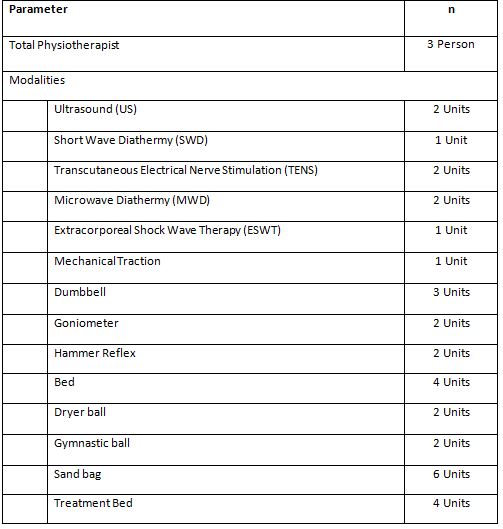
Table 1. Physiotherapy Services Profile

It can be seen in the table 1 physiotherapists are supported with various modalities. As well as several exercise therapy tools and treatment beds that support the best interventions for patients (Figure 1).
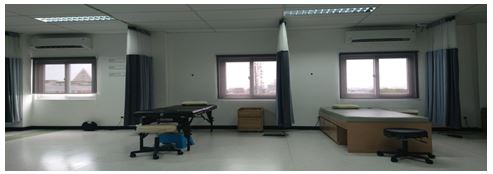
Figure 1. Physiotherapy Room

In a one-year service from January-December 2021, physiotherapists have handled 1,184 patient visits. Detailed demographic data on the number of patients per month can be seen in table 2.
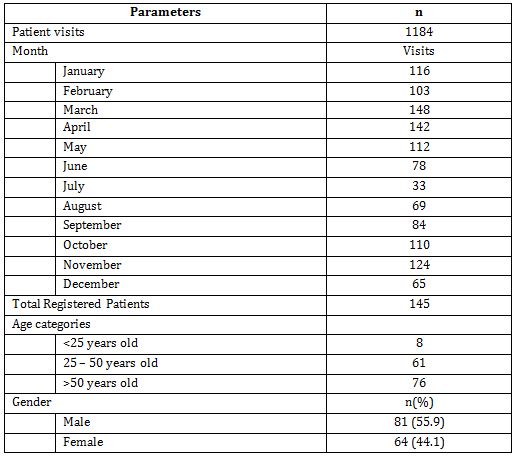
Table 2. Patients Demographic

From the data, we can see that patients are quite high, indicating that patients are disciplined to take part in the physiotherapy program. Seen in June and July, there was a decrease in the number of patients to below 80 people in 1 month due to the second wave of COVID-19 in Indonesia. With a total of 145 patients registered in 1 year, it is also seen that active patients are dominated by patients over 50 years of age with mostly male (55.9%).

The next data is the classification of cases handled with detailed case diagnosis for the 10 most cases. In addition, the data related to the use of physiotherapy interventions were also presented for each patient who came to physiotherapist.
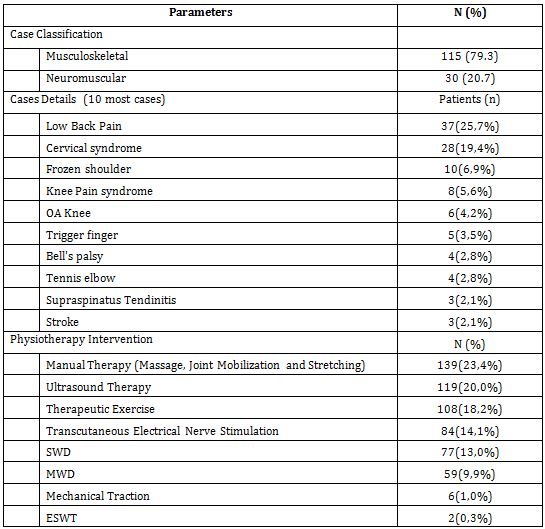
Table 3. Case and Physiotherapy Intervention

From the data in table 3, it can be seen that the direct access to physiotherapy services at NT Clinic mostly treat patients with musculoskeletal conditions, but there is also a large proportion of neuromuscular disorders both centrally and peripherally. This is also in line with research conducted by Demont et al. (2021) that it is true that physiotherapists in primary care have more patients with musculoskeletal conditions14. Physiotherapists will work an important role in reducing musculoskeletal disorders in the community through primary health services. Physiotherapists will be more efficient in treating patients. In fact, it was further explained that it would be able to improve the quality of life of patients, reduce disability in the community, and reduce the cost of health services. With direct access, patients can immediately go to a physiotherapist and get the right treatment, without having to spend time seeing a medical specialist15,16. Moreover, other studies have also concluded that patients with musculoskeletal conditions get better results and require less other services to improve their health conditions1715. However, taking into account the condition of the patient’s case, which may require a referral to a medical specialist, both at the beginning of the examination and after therapy9,12,14.

Physiotherapists at NT Clinic also prioritize manual therapy with types of massage, joint mobilization, and stretching. Then intervention using ultrasound is also the most frequently used intervention and is followed by exercise therapy. Research by Anggiat et al. also shows that physiotherapists use manual therapy more than other modalities18. However, exercise therapy is also the most popular intervention and is very often used in direct access physiotherapy practice8,19. From the intervention, the physiotherapists can use manual therapy and exercise to be the main intervention, supported by various modalities such as ultrasound and electrical stimulation. Diathermy interventions in several studies have been abandoned because of their high cost and low effectiveness compared to manual therapy and exercise20,21. However, interventions based on electro physical agents still dominate in Asia.

This study is an initial study that only made observations in one clinic. In the future, larger studies are needed and involve many clinics or health care services that provide direct access to physiotherapy.

CONCLUSION

NT Clinic is a primary health care clinic that integrates physiotherapy, medical specialist, and support direct access to physiotherapy services. Thus, physiotherapy services at NT Clinic are easy to reach by patients and are supported by medical specialists who can collaborate to provide optimal service to patients.

NT Clinic’s physiotherapy patients are dominated by patients over 50 years of age. Cases handled by physiotherapists at NT Clinic are musculoskeletal and neuromuscular such as low back pain, cervical syndrome, frozen shoulder, knee syndrome, and knee OA. The most frequently used physiotherapy modalities are manual therapy, US, exercise therapy, TENS, and MWD. With direct access, physiotherapists can provide optimal services for patients based on the patient’s age, case, and appropriate intervention. Furthermore, physiotherapists can also provide referral options and receive referrals from medical specialists if needed.

As a recommendation, the current physiotherapy service system at NT Clinic can be an example for colleagues to provide direct access physiotherapy services. With the intervention of manual therapy, exercise therapy, and ultrasound, the physiotherapist is sufficient to provide optimal services supported by other facilities such as bed treatment and exercise equipment.

Acknowledgements: The researcher would like to thank Kirana Wardhani, Adinda Amira Putri, JeremiaBernardito, Abi Wiranata, Alberta YatiWulang, and all NT Clinic’s physiotherapists for collecting and providing the data.

Conflict of interest: The author has no conflict of interest to declare.

Funding of study; This study was self-funded study

Compliance with Ethics: This study does not provide intervention and endangers the respondents so that it does not use ethical studies. However, data collection in this study was carried out with the acceptance of the university with reference no. 351/UKI.F8.PF/PP.5.1/2021 and permission from the clinic.

REFERENCES

1.    Kementerian Kesehatan Republik Indonesia. Peraturan Pemerintah No. 47 Tahun 2016 Tentang Fasilitas Pelayanan Kesehatan.; 2016:1-16.

2.    Holdsworth LK, Webster VS. Direct access to physiotherapy in primary care: Now? – And into the future? Physiotherapy. 2004; 90(2):64-72.

3.    Menteri Kesehatan Republik Indonesia. Peraturan Menteri Kesehatan Republik Indonesia no.9 Tahun 2014 tentang Klinik. Republik Indones. 2014;9:1-16.

4.    Kemenkes RI. Peraturan Menteri Kesehatan Republik Indonesia Nomor 65 Tahun 2015 Tentang Standar Pelayanan Fisioterapi. Menteri Kesehat Republik Indones. 2015;16(2):39-55.

5.    Manurung NSA. Manajemen Proses Fisioterapi Pada Satu Rumah Sakit Swasta Di Jakarta Timur. J Ilm Fisioter. 2020; 20(2):54-63.

6.    World Confederation for Physical Therapy. Guideline for standards of physical therapy practice. Published online 2011:1-19. https://world.physio/sites/default/files/2020-07/G-2011-Standards-practice.pdf

7.    Kemenkes RI. Peraturan Menteri Kesehatan No.80 Tahun,  2013;(1536):1-13.

8.    Manurung NAS, Anggiat L. Entrepreneurship Models in Physiotherapy Practice: an Observational Study. Int J Med Exerc Sci. 2021;7(3):1088-1095.

9.    Deyle GD. Direct Acces Physical Therapy and Diagnostic Responsibility: The Risk-to-Benefit Ratio. J Orthop Sport Phys Ther. 2006; 36(9): 632-634.

10. World Confederation for Physical Therapy. Direct access and patient/client self-referral to physical therapy: Policy Statement. Published online 2019.

11. Leemrijse CJ, Swinkels ICS, Veenhof C. Direct access to physical therapy in the Netherlands: Results from the first year in community-based physical therapy. Phys Ther. 2008;88(8):936-946.

12. Praestegaard J, Gard G, Glasdam S. Practicing physiotherapy in Danish private practice: An ethical perspective. Med Heal Care Philos. 2013; 16(3):555-564.

13. Bury TJ, Stokes EK. Direct access and patient/client self-referral to physiotherapy :A review of contemporary practice within the European Union. Physiother (United Kingdom). 2013; 99(4): 285-291.

14. Demont A, Bourmaud A, Kechichian A, Desmeules F. The impact of direct access physiotherapy compared to primary care physician led usual care for patients with musculoskeletal disorders: a systematic review of the literature. Disabil Rehabil. 2021;43(12): 16371648.

15. Ojha HA, Snyder RS, Davenport TE. Direct access compared with referred physical therapy episodes of care: A systematic review. Phys Ther. 2014;94(1):14-30.

16. Piano L, Maselli F, Viceconti A, Gianola S, Ciuro A. Direct access to physical therapy for the patient with musculoskeletal disorders, a literature review. J Phys Ther Sci.2017; 29(8):1463-1471.

17. Gagnon R, Perreault K, Berthelot S, et al. Direct-access physiotherapy to help manage patients with musculoskeletal disorders in an emergency department: Results of a randomized controlled trial. Acad Emerg Med. 2021; 28(8): 848-858.

18. Anggiat L, Altavas AJ, Budhyanti W. Joint Mobilization: Theory and evidence review. Int J Sport Exerc Heal Res. 2020;4(2):86-90.

19. Caparrós T, Pujol M, Salas C. General guidelines in the rehabilitation process for return to training after a sports injury. Apunt Med l’Esport. 2017; 52(196): 167-172.

20. Abe Y, Goh AC, Miyoshi K. Availability, usage, and factors affecting usage of electrophysical agents by physical therapists: A regional cross-sectional survey. J Phys Ther Sci. 2016; 28(11):3088-3094.

21. Panjaitan LA. Penggunaan Terapi Elektro-fisis Pada Satu Rumah Sakit Umum Swasta di Jakarta. J Fisioter.2020; 20(2):40-45.

Citation: James Wilson HasoloanManik, KiranaWardhani, Adinda Amira Putri, et al. Direct access physiotherapy service model in primary health care facility: an observational study , International Journal of Medical and Exercise Science, March 2022; 8(1); 1210-1218.

A Comparitive Study To Analyse The Effectiveness Of Aerobic Exercise Versus Buerger’s Exercise In Varicose Vein Among Security Guards

K. Kamatchi1, Rajesh Kumar.N.T2, Kandhasamy.S3

Corresponding Author:

1Assistant Professor, Faculty of Physiotherapy, A.C.S. Medical College and Hospital Campus, DR. MGR. Educational and Research Institute, Deemed to be University, Chennai, Tamil Nadu, India

Mail Id: kamatchi.physio@drmgrdu.ac.in

Co-Authors:

2, 3 MPT Students, Faculty of Physiotherapy, A.C.S. Medical College and Hospital Campus, DR. MGR. Educational and Research Institute, Deemed to be University, Chennai, Tamil Nadu, India

 ABSTRACT

Background: Varicose veins are torturous, widened superficial veins in the subcutaneous tissues of the legs which are often easily visible these are generally larger than 3mm in size. According to the population in India patients with varicose veins in India is about 15-20% of populations and is increasing day by day.  Objective of the study is to find the effectiveness of aerobic exercise versus Buerger’s exercise in varicose vein among security guards.

Methodology: This is a comparative study with 30 patients of the security guards from A.C.S. Medical College and Hospital. The inclusion criteria will be both males and females with the age group of 35 to 55 years and the patients having grade 2 oedema. In this study group A consists of 15 patients was trained with aerobic exercise training and group B consists of 15 patients was trained with Buerger’s exercises. Aerobic exercise was performed for 30 minutes per day for four sessions in a week and this was given for 12 weeks and Buerger’s exercises was performed for 30 minutes per day for four session in a week and this was given for 12 weeks. The pre and post-test values were compared using the VAS (visual analogous scale), 6- minute walk test.

Result: On comparing Pre test and Post test within Group A& Group B on Visual Analog Scale & 6 Minute Walk Test score showed highly significant difference in Mean values at P ≤ 0.001 but buerger’s exercise is more effective than aerobic exercise.

Conclusion: Buerger’s exercise is more effective on reducing  varicose vein among security guards

Keywords:  Varicose vein; Aerobic exercise; Buerger’s exercise.

Received on 29thJanuary 2022, Revised on 19thFebruary 2022, Accepted on 26thFebruary 2022, DOI:10.36678/IJMAES.2022.V08I01.005

INTRODUCTION

Generally, the leg veins have one-way valve in them so that muscle contract them and blood can go only in one direction this up the leg which are seen in normal veins.Due to which there is failure of valves to close properly and allows in both directions. This backward flow of blood is known as venous reflex 1,2.

 Due to this there is accumulation of blood in legs causing varicose veins. Varicose veins are torturous, widened superficial veins in the subcutaneous tissues of the legs which are often easily visible. Varicose veins are among the most common chronic conditions seen by physicians today. A varicose vein, sometimes called varicosity occurs when a valve weakness putting more pressure on the other valves and causing blood to stagnate 3, 4.

There are generally larger than 3mm in size located on the size of the calf muscles.Varicose veins are preventable. Maintaining healthy body weight and doing exercises help lessen their emergence appropriate exercise can be the best preventive and defensive strategies against varicose veins 5.

Any program of regular exercises circulation improves muscle tone and helps prevent varicosities. However, high-impact aerobics, jogging, strenuous cycling, or any intense activity may increase blood pressure in the legs and accentuate varicose vein. Walking is the great exercise for the lower leg area–either out in the open or in a treadmill especially with the incline level simple intervention like leg elevation, water immersion and exercise should be studied6,7.

The mechanism of Buerger’s exercises use gravitational changes in positions that are applied to smooth musculature of vessels and to vascular 8. Gravity helps alternate to empty and fill blood columns, which can eventually increase transportation of blood through them9.

The exercises involve the individual lying flat in bed with the legs elevated at 45 degrees until blanching occurs or for a maximum of 2 minutes. The patient then sits on the edge of the bed with the feet hanging down. Further exercise includes dorsiflex, plantarflex, then inward and outward movements of the feet, followed by flexing and extending the toes 10, 11.

Before and after World War 2 medical experts did not know how to operate or treat the patient suffering from atherosclerosis or vessel occlusion, as well as stiffening in their peripheral arteries. Some medical genius at that time developed postural treatment to improve circulation in the lower extremities12-15.

Aim & Need of the Study:  Varicose veins are torturous, widened superficial veins in the subcutaneous tissues of the legs which are often easily visible these are generally larger than 3mm in size. They are usually enlarged and are located on the inside of the calf muscles. Varicose veins are more common seen in women than men. According to the population in India patients with varicose veins in India is about 15-20% of populations and is increasing day by day. This study aims to find the comparative effect between buerger’s exercise and aerobic exercise.

 Hence the need of the study is to find the effectiveness of aerobic exercise versus Buerger’s exercise in varicose vein among security guards.

This was an experimental comparative study pre and post study conducted at ACS Medical College and hospital Chennai. Total 30 patients were selected for this study; they were security guard in ACS College. The study conducted for study duration of 3 months. Inclusion criteria for the study were both male and female aged between 35 to 55 years; Patients were clinically diagnosed with varicose vein with edema grade 2. Patient with deep vein thrombosis, recent lower limb fracture, uncooperative subjects, any neuropathies or ulcers in lower limb, patients undergone with recent lung surgical intervention in lower limb were excluded from this study. Outcome measures for the study were VAS (Visual Analog Scale) and 6 min walk test

Procedure: The patients who fulfill the inclusion criteria were included in the study. The consent was obtained from the patient and the assessment was done and they were divided into two groups each group having 15 patients. Group A patients received aerobic exercise. Group B received Buerger’s exercise. Both groups received treatment duration for 4 sessions in a week up to 12 week after 12 weeks the patients was assessed by pre and post values of  VAS scale and 6 minutes’ walk test.

Aerobic exercises

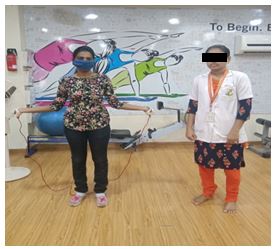
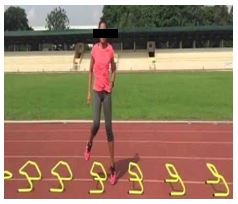
Walking or running: Walking just 20 minutes a day and running minimize the stress on your joint.

Bicycle legs:  5 minutes riding a bicycle or lying on back put legs in the air, bending them at knee. Pedal them slowly either leg at once or alternate one at a time.

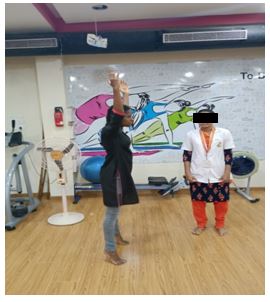
Lunges: 5 minutes stand with legs apart. Step forward slow bending knee and make sure to keep knee directly above the ankle hold it then slowly straighten the leg and step back to original position, repeat with the other leg. While standing with Leg straight, rise up on tip toes and then lower back down.

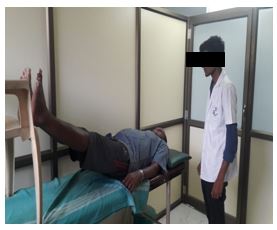
Buerger’s exercise: Buerger Allen exercise- specific exercises intended to improve circulation to the feet and legs. The lower extremities are elevated to a 45 to 90 degree angle and supported in this position until the skin blanches (appears dead white). The feet and legs are then lowered below the level of the rest of the body until redness appears (care should be taken that there is no pressure against the back of the knees); finally the legs placed on the bed for few minutes.

The length of the time for each position varies with the patient’s tolerance and the speed with which colour change occurs. Usually the exercises are prescribed so that the legs are elevated for 2 to 3 minutes, down 5 to 10 minutes and then flat on the bed for 10 minutes.

  1. Aerobic exercises
Fig 1. Walking
Fig 2. Running
Fig 3. Lunges
  • Buerger’s Exercise
Fig 4. Ankle Movements (Inversion)
Fig 5. Ankle Movements (Eversion)
Fig 6. Elevation of the Leg 45-90 Degrees

Data Analysis: The collected data were tabulated and analyzed using both descriptive and inferential statistics. All the parameters were assessed using statistical package for social science (SPSS) version 24.

 Paired t-test was adopted to find the statistical difference within the groups & Independent t-test (Student t-Test) was adopted to find statistical difference between the groups.

  (*- P > 0.05), (**- P ≤ 0.05) 
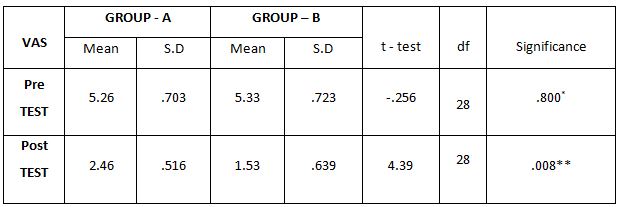
Table-1. Comparison of Visual Analog Scale Score between Group – A and Group – B in Pre and Post Test

The above table reveals the Mean, Standard Deviation (S.D), t-test, degree of freedom(df) and p-value between (Group A) & (Group B) in pre test and post test weeks.

This table shows that statistically significant difference in post test values between Group A& Group B (**- P ≤ 0.05)

This table shows that there is no significant difference in pre test values between Group A& Group B (*P > 0.05).

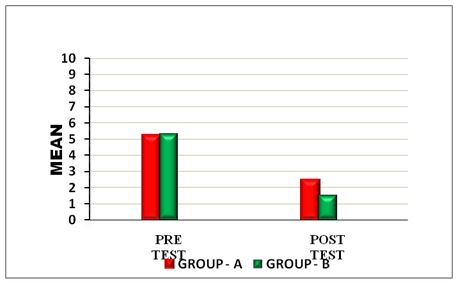
Graph –1.Comparison of Visual Analog Scale Score between Group – A and Group – B in Pre and Post Test
 (*- P > 0.05), (**- P ≤ 0.05) 
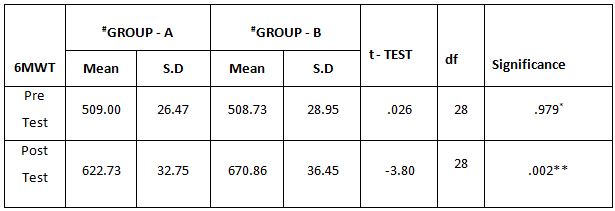
Table-2. Comparison of 6 Minute Walk Test between Group – A and Group – B in Pre and Post Test

The above table reveals the Mean, Standard Deviation (S.D), t-test, degree of freedom(df) and p-value between (Group A) & (Group B) in pre test and post test weeks.

This table shows that there is no significant difference in pre test values between Group A& Group B (*P > 0.05). This table shows that

statistically significant difference in posttest values between Group A& Group B (**- P ≤ 0.05)

Graph -2: Comparison of 6 Minute Walk Test between Group – A and Group – B In Pre And Post Test
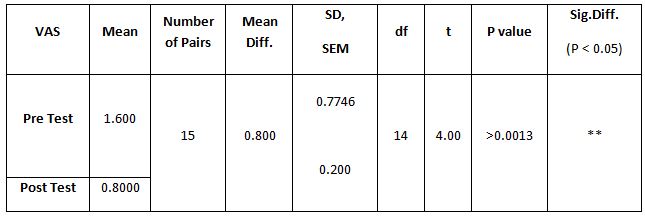
Table -3: comparison of visual analog scale score within group – a& group – b between pre & post test values (***- p ≤ 0.001) 

The above table reveals the Mean, Standard Deviation (S.D), t-value and p-value between pre-test and post-test within Group – A &Group – B. There is a statistically highly significant difference between the pre test and post test values within Group A and Group B(***- P ≤ 0.001).


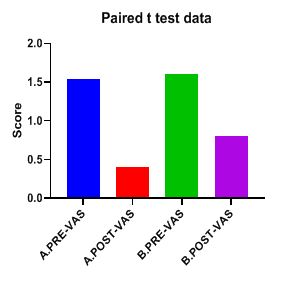
Graph-3: Comparison of Visual Analog Scale Score Within Group – A Group – B between Pre & Post Test Values
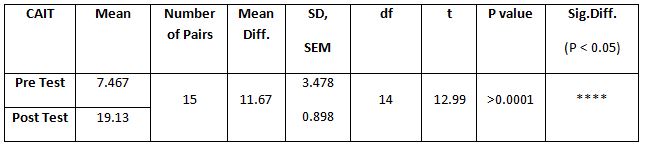
Table- 4. Comparison of 6 minute walk test score within group – A &  group – B between pre & post test values (***- P ≤ 0.001)

The above table reveals the Mean, Standard Deviation (S.D), t-value and p-value between pre-test and post-test within Group – A &Group – B.

 There is a statistically highly significant difference between the pre test and post test values within Group A and Group B(***- P ≤ 0.001).

Graph-4: Comparison of 6 minute walk test score within Group -A &  Group -B between pre & post test values

RESULTS

On comparing the Mean values of Group A & Group B on Visual Analog Scale Score, both the groups showed significant decrease in the post test Mean values, but (Group B – Buerger’s Exercise) shows 1.53 which has the Lower Mean value is effective than (Group A -Aerobic Exercise) 2.46 at P ≤ 0.05. Hence Null Hypothesis is rejected.

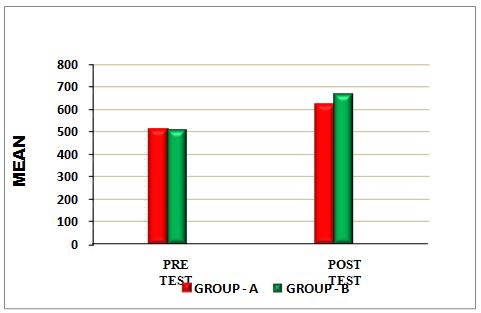
On comparing the Mean values of Group A & Group B on 6 Minute Walk Test Score, both the groups showed significant increase in the post test Mean values but (Group B – Buerger’s Exercise) shows 670.86 seconds which has the Higher Mean value is effective than (Group A -Aerobic Exercise) 622.73 , secondsat P ≤ 0.05. Hence Null Hypothesis is rejected.

On comparing Pre test and Post test within Group A& Group B on Visual Analog Scale & 6 Minute Walk Test score showed highly significant difference in Mean values at P ≤ 0.001

DISCUSSION

The purpose of this study is to find out the comparative effect between aerobic exercises versus Buerger’s exercise in varicose veins. Varicose veins are torturous, widened superficial veins in subcutaneous tissues of the legs which are often visible.

The study was carried out and the result was drawn by using vas scale and 6-minute walk test as the outcome measure. 30 patients diagnosed as varicose veins the age group between 35- 55 years. Study place was ACS Medical College and hospital, Chennai. The patients are evaluated and divided into two groups. Group A included 15 subjects treated with aerobic exercise and Group B included 15 subjects treated with Buerger’s exercise. In the present study

When comparing the Mean values of Group A & Group B on Visual Analog Scale Score, both the groups showed significant decrease in the post test Mean values, but (Group B – Buerger’s Exercise) shows 1.53 which has the Lower Mean value is effective than (Group A -Aerobic Exercise) 2.46 at P ≤ 0.05.

When comparing the Mean values of Group A & Group B on 6 Minute Walk Test Score, both the groups showed significant increase in the post test Mean values but (Group B-Buerger’s Exercise) shows 670.86 seconds which has the Higher Mean value is effective than (Group A -Aerobic Exercise) 622.73 seconds at P ≤ 0.05.

On the comparing the pre and post values by VAS (visual analogous scale) and 6 minute walk test both the exercises shows significant results but buerger’s is more effective than aerobic exercise. Evidence of similarly enhanced buerger’s exercise has been found in the previous studies.

Jian Wei-Ya, et al. (2009) compared with conventional rehabilitation training, buerger’s exercise was more effective in reducing the post –surgery pain asd swelling of patients with the lower limb fractures.

Chyong Fang Chang Rn, MSN et al. (2015) showed that buerger’s exercise combined with the health promoting program significantly improved among community residents at high risk for diabetic foot ulceration.

Poonam Thakur, et al. (2019) proved that buerger’s exercise is improving peripheral circulation among patients with diabetes mellitus admitted in sharda hospital at Noida.

Chyong Fang Chang, et al. (2015) found that buerger’s exercise benefits for PAOD patient’s post- operative patients with orthopaedics and gynaecology problems by improving local circulation.

Ethical clearance: There was no risk of conducting this study.Ethical clearance was obtained from the ethical Institutional Review Board of Faculty of Physiotherapy, Dr. MGR. Educational and Research Institute, Chennai with reference No. A43/PHYSIO/IRB/2018-2019 approval letter dated 07/01/2019.

Conflicts of Interest: There is no conflict of interest to conduct this study.

Fund for the study: This is self-funded study.

CONCLUSION

The present study concluded that both exercise showed a significant results but Buerger’s exercise is more effective than aerobic exercise.

REFERENCES

1. Clendo J A, child J D, stowell T et al., immediate effects thoracic manipulation in patients with neck pain: a randomized clinical trial. Man ther. 2005 May; 10(2); 127-35.

2. Conley MS, mayor RA, Bloomberg JJ, et al., non-invasive analysis of human neck muscle function. Spinc, 1995, 20; 2505-2512.

3. Ariens GA, bongers PM, Dowes M, et al., Are neck flexion, neck rotation, and sitting at work risk factor for neck pain? Occup environ med, 2001; 58; 200-207.

4. Haldemen S, carrol L, Cassidy JD, et al. Finding from bone and joint decade 2000-2010 task force on neck pain andits associated disorders. J Occup Environ med. 2010; Apr: 52(4); 424-7.

5. Janda V; muscles and motor control in cervicogenic disorder: assessment and management. In: physical therapy of the cervical and thoracic spine. 2nd ed. New York: Churchill Livingstone, 1994; pp. 195-216

6. Jull GA, falla DL et al. Clinical assessment of the deep cervical flexor muscles; the craniocervical flexion test. J manipulative physio ther. 2008 Sep.; 31(7); 525-33.

7. Jhohans blomgren et al., effects of deep cervical flexor training on impaired physiological functions associated functions with chronic neck pain: a systematic review. BMC musculoskeletal disorders 2018, 19:415.

8. Sinho Chung et al. Effects of the cranio cervical flexion and isometric neck exercise compared in patients with neck pain: A randomized controlled trail. Physiotherapy theory and practice, 2018:1-10.

9. Stretching Exercises to Prevent Work-related Musculoskeletal Disorders – A Review Article; Journal of Sports Science & Medicine, May 2017; 5(2):27-37.

10. Mohammed Ali et al. the effects of different exercise programs on size and function of deep cervical flexor muscles in patients with chronic non-specific neck pain: A systematic review of randomized. American journal of physical of physical medicine & rehabilitation, 2017; 96(8); 582-588.

11. Jin young Kim et al., Clinical effects deep cervical muscular activation in patients with chronic neck pain. J. Phys. Ther. Sci. 2016; 28; 269-273.

12. Akbari Asghar et al., investing the effects of stabilization exercise and proprioceptive neuromuscular facilitation exercise on cross-sectional area of deep cervical flexor muscles in patients with chronic non-specific neck pain. International journal of medical research &health science, 2016; 11; 502-508.

13. Amira hussian draz et al., efficacy of deep cervical flexor exercise for neck pain: a randomized controlled study. Turk J phys med rehab., 2016; 62(2); 107-115.

14. Eun young Kim et al., comparison of the effects deep cervical flexor strengthening and Mackenzie neck exercises on head forward postures due to the use of smart phones .Indian journal of science and technology, April 2015; Vol.8(S7); 567-575.

15. Dong yeon kang et al., deep cervical flexor training with a pressure biofeedback unit is an effective method for maintaining neck mobility and muscular endurance in college students with forward head posture. J. Phys. Ther. Sci. 2015; 27; 3207-3210.

16. Zaheen Ahmed iqbal et al., Flexor training using pressure biofeedback on pain and disability of school teachers with neck pain. J. Phys. Ther. Sci. 2013,25; 657-661.

17. Nezamuddin, MD., et al., Efficacy of pressure biofeedback guided deep cervical flexor training on neck pain and muscle performance in visual display terminal operators. Journal of musculoskeletal research. 2013; Vol. 16; No.03; 1350011.

18. Saad Ammar Al-Harbi, et al.,  compare the effects of deep cervical flexor strengthening exercises verses electrotherapy modalities on head forward postures resulting from the use of smart phones. World Journal of Pharmacy and Pharmaceutical Sciences, 2013; Volume 6; Issue 6; 266-277.

19. Petri salo et al., neck muscle strength and mobility of the cervical spine as predictors of neck pain: a prospective 6-year study, 2012; Spine 37(12); 1036-1040.

20. Takala ep et al., active neck muscle training in the treatment of chronic neck pain in women: A randomizes controlled trial .jama.2003 may 21; 289(19): 2509-16.

21. Geoffrey R. Williams et al., colony collapse disorder in context. Trends Ecol. 2012; Vol 20; 367-72.

22. Falla et al., the change in deep cervical flexor activity after training is associated with the degree of pain reduction in patients with chronic neck pain. Clin. J. Pain, 2012; 28 (7); 628-634.

23. Aquino RL, et al., applying joint mobilization at different cervical vertebral levels does influence immediate pain reduction in patiets with chronic neck pain. J Man Manip Ther. 2009; 17(2):95-100.

24. Luch E, et al., effects of deep cervical flexor training on pressure pain thresholds over myofacial trigger points in patients with chronic neck pain. J Manipulativ Physiol Ther. 2013 Nov-Dec; 36(9): 604-11.

Citation: K. Kamatchi, Rajesh Kumar.N.T, Kandhasamy.S. A comparitive study to analyse the effectiveness of aerobic exercise versus Buerger’s exercise in varicose vein among security guards, International Journal of Medical and Exercise Science, March 2022; 8(1); 1199-1209.

Impacts of Endurance Training On Deep Cervical Flexor Muscles On Neck Pain Using Pressure Biofeedback

Kandhasamy.S1, Meena.S2, Rajesh Kumar.N.T3

Corresponding Author:

1MPT Student, Faculty of Physiotherapy, A.C.S. Medical College and Hospital Campus, DR. MGR. Educational and Research Institute, Deemed to be University, Chennai, India

Mail Id: aaronstark24@gmail.com

Co-Authors:

2Assistant Professor, Faculty of Physiotherapy, A.C.S. Medical College and Hospital Campus, DR. MGR. Educational and Research Institute, Deemed to be University, Chennai, India

3MPT Student, Faculty of Physiotherapy, A.C.S. Medical College and Hospital Campus, DR. MGR. Educational and Research Institute, Deemed to be University, Chennai, India

 ABSTRACT

Background of the study: Neck pain is a common epidemiological problem in nowadays. Neck pain is more predominant in middle age and a typical condition influencing 20% to 70% of all inclusive community. Most instances of the neck pain are brought about by mechanical factors, for example, injuries and strains of the neck muscles or tendons. The objective of the study is to investigate the impacts of endurance training on deep cervical flexor muscles on neck pain using pressure biofeedback.

Methodology: A comparative study with 30 patients taken from the outpatient department of A.C.S Medical College and Hospital. Inclusion criteria were neck pain of VAS below 7, patients with forward head posture, cervical spondylosis, aged between 18 to 70, both genders with poor deep flexor endurance were selected for the study. Self-reported Performa was given to all the patients and then they will be divided into two groups. Group   a patient will be receiving strengthening exercises and deep cervical flexor training with pressure biofeedback and group b will be receiving strengthening exercises only. Both group receiving treatment duration for four times in a week up to four weeks. After 4 weeks treatment patients were improved by numeric pain rating scale, neck handicap file scale.

Results: Cervical movement has increased essentially after four weeks training in experimental group contrasted with that in control group.

Conclusion: Deep cervical flexor preparing with pressure biofeedback gives better clinical improvement as far as pain, cervical flexion, expansion ROM, DCF perseverance and NDI score.

Keywords: Neck pain; Deep cervical flexor; Pressure biofeedback.

Received on 28thJanuary 2022, Revised on 18thFebruary 2022, Accepted on 26thFebruary 2022, DOI:10.36678/IJMAES.2022.V08I01.004

INTRODUCTION

Neck pain is a critical medical condition for grown-ups as well as for youthful. The beginning and course of neck pain is impacted by different elements with physical, psychosocial and individual elements communicating in the improvement of these disorders. Neck pain is turning out to be progressively pervasive in the public eye. Gauges show that 67% of people will endure neck pain at same phase of their life 1, 2.

Neck pain was portrayed as anon explicit agony in the district of the cervical thoracic intersection that is bothered by neck developments. Pain and disability of the neck is generally dominating among 20 to 60 years old. Neck pain predominance increments with age and become most normal in ladies around the fifth ten years of life. However the specific reason for the aggravation is obscure, most instances of neck pain are because of mechanical factors like injuries and strain of the muscles or tendons of neck 3.

Neck pain with related inability, the 1-years commonness in everybody went from 2% to 11% and from 11% to 14% in laborers detailed restricting their exercises as a result of neck pain. A few literary works investigated neck pain without reference into the upper appendages that endured something like 1 day. The worldwide point pervasiveness in 2010 was assessed to be 4.9% (females: 5.8%; guys: 4.0%)4.

Various physical constructions in the cervical locale can be wellspring of nociception, including zygapophyseal joints, vertebral end plates, muscles, tendons, brain structures, and the inter vertebral circle .However, proof is missing to help the theory that these patho-physical elements are an essential wellspring of mechanical neck pain across the age range in most of patients.

The Deep Cervical Flexor Muscle (DCF) are viewed as a significant stabilizer of the Head-on-neck pose .It has been hypothesized that when the muscle execution is hindrance, the harmony between the back neck stabilizers and the DCFs will be upset and appropriate arrangement and stance is lost, which is then liable to add to cervical disability. In this way Deep Cervical Flexor Muscle (DCF) preparing is prescribed to expand the perseverance of these postural muscles, to progress in neck pain 5.

The Cranio Cervical Flexor Test (CCFT) is a clinical test for the physical activities of the physical activity of the profound cervical flexor muscles, longus capitis, and colli. The perseverance of DCF was characterized as the most extreme time that subjects could keep a base pushing pressure more prominent than 50mmHg. Solid perseverance estimation followed a laid out convention utilizing a Pressure Biofeedback Unit 6.

In a 2012 moderate-quality systematic review of patient has revealed result estimates on 8 distinct instruments. Of these, the NDI was the most widely examined over an assortment of neck pain condition and has been converted into numerous dialects. The NDI was likewise widely surveyed for its psychometric properties. They tracked down the estimation properties of the NDI to be satisfactory, aside from dependability, and temporarily suggested its utilization7.

This is an Experimental study with sample size of 30 patients. This study was conducted at A.C.S Medical College and Hospital, Velappanchavadi, Chennai. The study duration was 4 weeks and sampling design was convenient sampling method. Inclusion criteria of the study were Neck pain of vas below 7, Patient with forward head posture, Patient with primary complaint of neck pain, subjects those aged 18 to 70, both genders and subjects having poor deep flexor endurance.

Patients with history of trauma to neck, bilateral upper limb symptoms, cervical radiculopathy, myogenic neck pain, positive 2 or more neurological signs, History of cervical surgery, non chronic neck pain, headaches occurring during the last six months were excluded from the study. Outcome measures for the study were Neck Disability Scale and Numeric Pain Rating Scale. Materials used in the study were towels and pressure biofeedback.

Procedure: The patients who full fill the inclusion criteria will be included in the study. Self-reported Performa will be given to all the patients and then they will be divided into two groups.Group A patient will be receiving strengthening exercises and deep cervical flexor training with pressure biofeedback and group B will be receiving strengthening exercises only.Both group receiving treatment duration for three times in a week up to four weeks.After the four weeks subjects will be assessed by NPRS,NDI scale.

Numerical Pain Rating Scale: The NPRS is a Segmental numeric form of the visual analogue scale (VAS) in which a respondent chooses an entire number (0-10 whole numbers) that best mirrors the force of his\her pain. The normal organization is a level bar or line22.

Cervical range of motion (CROM): Cervical ROM (dynamic) in flexion and expansion was estimated for each subject. Before estimation, the subject eliminated eye glasses, jewelry, T-shirt or tank top; and noticed a short exhibition of the cervical movement to be performed. To limit fluctuation in estimation brought about by contrasts in the subject body head position, and to be lay out an unbiased head and neck position, toward the beginning of each position measurement.

Flexion and extension:  

Test Position: The subject in sitting position, with thoracic and lumbar spine supported by the back of a chair. The cervical spine is positioned in zero degrees of the rotation and later flexion.

Test Procedure: Neck movement degrees were measured on cervical flexion and extension. Specific instruction was given to the subjects for performance of neck flexion followed by  chin tuck , then move head forward and downward  as far as possible until limited by tightness or discomfort. Normal range of cervical flexion averages to around zero 0-50 degrees.

Specific instructions for neck extension was raise chin first, followed by move head backward, looking up as far as possible until limited by tightness or discomfort. Normal range of cervical extension averages to around 0-60 degree23.

Cranio-cervical Flexion Test (CCFT): The cranio cervical flexion test is performed with the patient in supine lying with the neck in an impartial position (no cushion) to such an extent that the line of the face is level and the line bisecting the neck longitudinally is flat to the testing surface. The uninflated pressure sensor is set in the curve of neck with the goal that it adjoins the occiput and is swelled to a steady benchmark tension of twenty mm Hg; this addresses a guidelines pressure sufficiently adequate to occupy the space between the testing surface and the neck yet doesn’t expand the lordosis. The input and course is given by the gadget to play out the necessary five phases of the test. The patient is told that the test is for precision rather than strength. The head gesturing activity is preformed delicately and gradually. The ever-evolving inward reach enactment and perseverance of the profound cervical flexors are tried by Cranio Cervical flexion tests. Pressure increments during the technique as the patient endeavors a progressive 3 endeavor of 2 mm Hg movement (20 mmHg to 30 mmHg). Likewise keep an isometric withdrawal during moderate tensions as a perseverance task.

Deep cervical flexor training: It targets deep flexors of the upper cervical district, the longus capitis, and colli, rather than the shallow flexors, sterno-cleidomastoid, and foremost scalene muscles, which flex the neck however not the head. The patient was told to perform and hold logically the inward scopes of Cranio Cervical Flexion while attempting to keep the shallow flexors loose. Patients were first instructed to play out a sluggish and controlled Cranio Cervical Flexion development. They were than prepared to have the option to statically hold dynamically expanding inward scope of Cranio Cervical Flexion.

Subjects were directed to the expansion the inward reach positions through criticism acquired structure the dial of an air-filled pressure sensor put behind the neck, which screens the slight leveling of the lordosis. This smoothing has been displayed to go with constriction of longus colli.

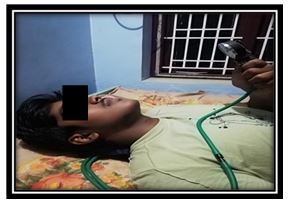
Fig 1: Deep cervical flexor training

Strengthening exercises: To begin, sit in a seat with your feet level on the floor. Your weight ought to be somewhat forward so that you’re adjusted equally on your bottom. Loosen up your shoulders and keep your head level. Utilizing a seat with arms might assist you with keeping your equilibrium.

1. Press your palm against your temple. Resist with your neck muscles. Hold for 10seconds.Relax, Repeat multiple times.

2. Rehash the activity, pushing on your head. Rehash multiple times, Switch sides.

3. Rehash the activity, pushing on the rear of your head. Rehash multiple times.

For your wellbeing, check with your medical services supplier prior to beginning an activity program. Both group receiving conventional exercises for 15 minutes and experimental group receiving deep cervical flexor training for 10 minutes. Both group receiving conventional exercises three times week for four weeks .The experimental group receiving deep cervical flexor training thrice a week.

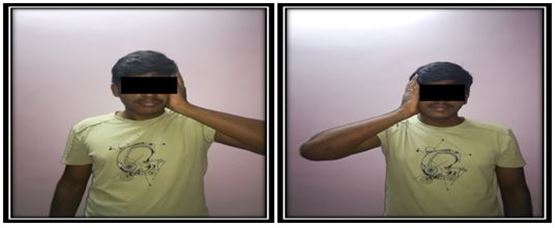
Figure 2(A, B): Neck lateral Flexion to right and left side
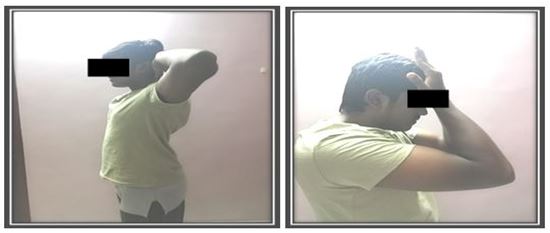
Figure 3 (A, B): Resisted Neck Flexion and extension

Neck disability index:  This questionnaire has been intended to give us data regarding what your neck pain has meant for your capacity to oversee in daily existence. Every one of the 10 things is scored from 0-5. The most extreme score is along these lines 50. They got score can be duplicated by 2 to deliver a rate score. Incidentally, a respondent won’t finish some inquiry. The normal of any remaining things is then added to the finished items 24.

Data analysis: The graphic insights, rate investigation were utilized for classified factors and mean and S.D was utilized persistent factors. The investigation of slanted information between the gatherings was finished by Mann Whitney U test. Matched t test was utilized to examine the factors the inside the gathering, aside from pain. While, Wilcoxon marked

positions test was utilized to break down inside the gathering NPRS score. The factual tests were viewed as critical when the p esteem is under 0.05.

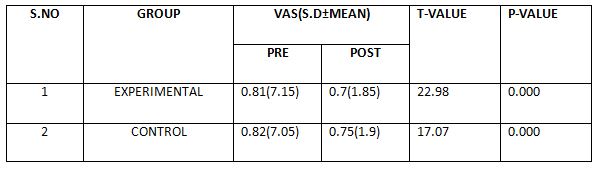
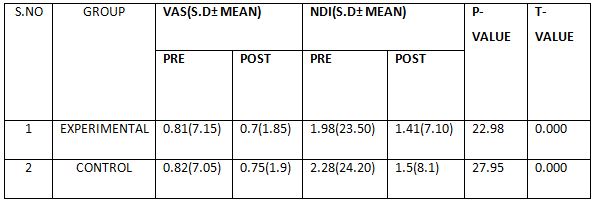
Table-1 Analysis of VAS with In the Groups, Analysis of paired t-test < 0.001 significant
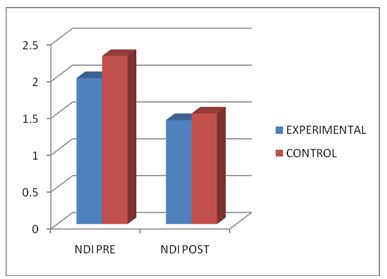
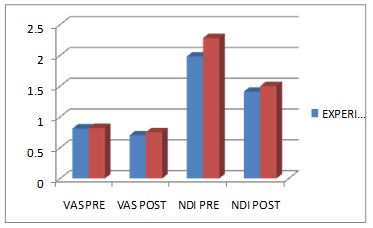
Graph 1: Analysis of NDI & VAS within the Groups
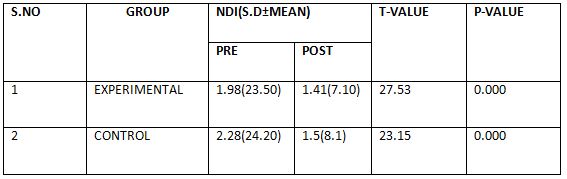
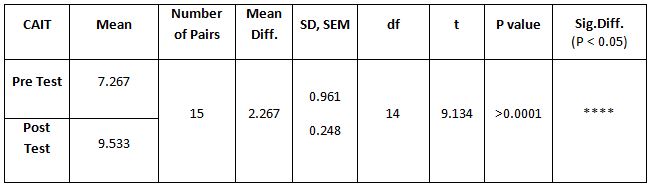
Table-2. Analysis of NDI within the groups, Analysis of paired t-test < 0.001 significant
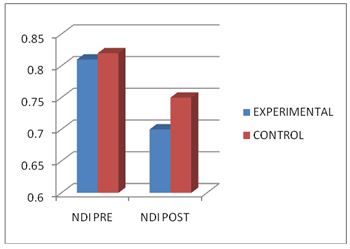
Graph 2: Analysis of NDI & Vas between Groups
Table-3 Analysis of VAS within the groups, Analysis of paired t-test < 0.001 significant
Graph: 3 Analysis of Paired T-Test < 0.001 Significant   

RESULTS

The trial group showed a fundamentally more noteworthy expansion in cervical ROM between post-preparing and the multi week detraining period, contrasted with control group. Solid perseverance of DCF, showed an essentially more noteworthy increment between pre-preparing and post-preparing in the exploratory gathering, contrasted with control group.

DISCUSSION

Neck pain is a constant issue and adds to monetary weight to the general public. Contributing mechanical reason for repetitive neck pain can be aggravation in engine control of the cervical spine which might build the gamble of miniature/full scale injury of cervical structure25.

Limitation of muscle work is hence viewed as crucial for the treatment of cervical spine problem. Diminished actuation of the profound cervical flexors muscle has been noticed straightforwardly and by implication when individuals with neck pain play out the cranio cervical flexion test. Up until this point, there are no investigations contrasting the profound cervical flexor preparing and without biofeedback6.

 A comparative report has been led on pressure biofeedback directed profound cervical flexor preparing alongside traditional treatment and regular treatment just in neck pain. Practice including extending of sternoclediod muscle, upper trapezius, levator scapulae, trapezius for 10 redundancies. The review inferred that cervical flexor with biofeedback was successful than the benchmark group. The entomb group examination showed genuinely huge contrast in muscle execution (p=<.001) and pain forces (p=<.004) 17. An investigation of results inside the gatherings was finished utilizing t-test, Wilcoxon marked rank test and the perception of present review were as per the following:

The post aerobic exercise information of DCF perseverance for groupes 1, 2 and 3 were 17%, 4.8%, and 3.6% improvement when contrasted earlier with preparing once more gathering a had a critical extent of progress15.

The post mediation information of NPRS for group 1 uncovers. A comparatively of 58% decrease of manifestation (pain) in group 2 and 55% decrease of side effect (pain) in group 3 were found. The post mediation results of NPRS uncover that group 1 had more prominent extent of progress, when contrasted with other two groups 26.

Concerning a cervical ROM finished up, the post mediation information of gathering 1 had critical 14.6% improvement for group 2 and 3 separately. The result for ROM uncovers a more prominent extent of progress among group 1 patients. The NDI for group 1, post entomb information uncovers a critical 81% decrease of incapacity, when contrasted with preintervention. The NDI for group 2, post mediation information uncovers a critical 57.5% decrease of incapacity, when contrasted with pre intercession. The NDI for group 3, post mediation information uncovers a critical 32.7% decrease of incapacity, when contrasted with pre intercession27.

The investigation of previously mentioned results perhaps induced that the examination of result factors had an improvement for every one of the three review gatherings include Albeit, a general contrast existed between the gatherings. An examination of results between the gatherings was finished utilizing mann-whitney u test.

The post mediation investigation between group 1&2, group 1&3 and gatherings 2&3, shows that there is huge decrease in the pain force of gatherings 1&2 (p=<.004), contrasted with group 2&3 (p=<.944) and group 1&2 (p=<.010) separately. This expresses that the aggravation force between the tension biofeedback directed DCF preparing and just regular treatment was critical (p=.004).

The post mediation investigation between the groups1&3, group 2&3, shows that, there is critical improvement in the cervical flexion (p=<.000) and augmentation (p=.000) in group 1&3, contrasted with group 2&3(p=<.057) (p=<.0.12) and group 1&2 (p=<.005) (p=<.095).

There was critical improvement in DCF perseverance in group1&3(p=<.000) than group 1&2 and groups2&3. The muscle execution of was genuinely huge improvement in pressure biofeedback group than the benchmark group.

The post intercession investigation between the groups1&2, group 1&3 groups2&3, show that, there is critical decrease in the NDI score of gatherings 1&2(p=<.000), and 1&3(p=<.000) and group 2&3 (p=<.018) individually.

Between group investigation of gathering 1 with that of gathering 2 and gathering 3 shows every one of the results factors, for example, pain power, cervical flexion and augmentation ROM, DCF perseverance and neck incapacity file score of gathering 1 displayed to have a serious level of importance than group 2 and 3.

These importance can be contributed the reality basmajian, (1963) expressed that the subject could handle the enrollment as well as the recurrence of release of engine units through hear-able and visual criticism. Adjunctive treatment of tension biofeedback was a compelling method for decreasing pain 17.

Clinical ramifications: The perceptions of present review uncover that, patients having a place with group 1 had a huge clinical and measurable improvement. Henceforth, it could be deduced that for patients with neck pain, the treatment routine ought to incorporate profound cervical flexor preparing with pressure biofeedback. This might achieve a superior clinical result and consequently useful status of neck.

Ethical clearance: There was no risk of conducting this study.Ethical clearance was obtained from the ethical Institutional Review Board of Faculty of Physiotherapy, Dr. MGR. Educational and Research Institute, Chennai with reference No. A26/PHYSIO/IRB/2018-2019 approval letter dated 08/01/2019.

Conflicts of Interest: There is no conflict of interest to conduct this study.

Fund for the study: This is self-funded study.

CONCLUSION

Deep cervical flexor preparing with pressure biofeedback gives better clinical improvement as far as pain, cervical flexion, expansion ROM, DCF perseverance and NDI score.

REFERENCES

1. Clendo J A, child J D, stowell T et al., immediate effects thoracic manipulation in patients with neck pain: a randomized clinical trial. Man ther. 2005 May; 10(2); 127-35.

2. Conley MS, mayor RA, Bloomberg JJ, et al., non-invasive analysis of human neck muscle function. Spinc, 1995, 20; 2505-2512.

3. Ariens GA, bongers PM, Dowes M, et al., Are neck flexion, neck rotation, and sitting at work risk factor for neck pain? Occup environ med, 2001; 58; 200-207.

4. Haldemen S, carrol L, Cassidy JD, et al. Finding from bone and joint decade 2000-2010 task force on neck pain andits associated disorders. J Occup Environ med. 2010; Apr: 52(4); 424-7.

5. Janda V; muscles and motor control in cervicogenic disorder: assessment and management. In: physical therapy of the cervical and thoracic spine. 2nd ed. New York: Churchill Livingstone, 1994; pp. 195-216

6. Jull GA, falla DL et al. Clinical assessment of the deep cervical flexor muscles; the craniocervical flexion test. J manipulative physio ther. 2008 Sep.; 31(7); 525-33.

7. Jhohans blomgren et al., effects of deep cervical flexor training on impaired physiological functions associated functions with chronic neck pain: a systematic review. BMC musculoskeletal disorders 2018, 19:415.

8. Sinho Chung et al. Effects of the cranio cervical flexion and isometric neck exercise compared in patients with neck pain: A randomized controlled trail. Physiotherapy theory and practice, 2018:1-10.

9. Stretching Exercises to Prevent Work-related Musculoskeletal Disorders – A Review Article; Journal of Sports Science & Medicine, May 2017; 5(2):27-37.

10. Mohammed Ali et al. the effects of different exercise programs on size and function of deep cervical flexor muscles in patients with chronic non-specific neck pain: A systematic review of randomized. American journal of physical of physical medicine & rehabilitation, 2017; 96(8); 582-588.

11. Jin young Kim et al., Clinical effects deep cervical muscular activation in patients with chronic neck pain. J. Phys. Ther. Sci. 2016; 28; 269-273.

12. Akbari Asghar et al., investing the effects of stabilization exercise and proprioceptive neuromuscular facilitation exercise on cross-sectional area of deep cervical flexor muscles in patients with chronic non-specific neck pain. International journal of medical research &health science, 2016; 11; 502-508.

13. Amira hussian draz et al., efficacy of deep cervical flexor exercise for neck pain: a randomized controlled study. Turk J phys med rehab., 2016; 62(2); 107-115.

14. Eun young Kim et al., comparison of the effects deep cervical flexor strengthening and Mackenzie neck exercises on head forward postures due to the use of smart phones .Indian journal of science and technology, April 2015; Vol.8(S7); 567-575.

15. Dong yeon kang et al., deep cervical flexor training with a pressure biofeedback unit is an effective method for maintaining neck mobility and muscular endurance in college students with forward head posture. J. Phys. Ther. Sci. 2015; 27; 3207-3210.

16. Zaheen Ahmed iqbal et al., Flexor training using pressure biofeedback on pain and disability of school teachers with neck pain. J. Phys. Ther. Sci. 2013,25; 657-661.

17. Nezamuddin, MD., et al., Efficacy of pressure biofeedback guided deep cervical flexor training on neck pain and muscle performance in visual display terminal operators. Journal of musculoskeletal research. 2013; Vol. 16; No.03; 1350011.

18. Saad Ammar Al-Harbi, et al.,  compare the effects of deep cervical flexor strength-ening exercises verses electrotherapy modalities on head forward postures resulting from the use of smart phones. World Journal of Pharmacy and Pharmaceutical Sciences, 2013; Volume 6; Issue 6; 266-277.

19. Petri salo et al., neck muscle strength and mobility of the cervical spine as predictors of neck pain: a prospective 6-year study, 2012; Spine 37(12); 1036-1040.

20. Takala ep et al., active neck muscle training in the treatment of chronic neck pain in women: A randomizes controlled trial .jama.2003 may 21; 289(19): 2509-16.

21. Geoffrey R. Williams et al., colony collapse disorder in context. Trends Ecol. 2012; Vol 20; 367-72.

22. Falla et al., the change in deep cervical flexor activity after training is associated with the degree of pain reduction in patients with chronic neck pain. Clin. J. Pain, 2012; 28 (7); 628-634.

23. Aquino RL, et al., applying joint mobilization at different cervical vertebral levels does influence immediate pain reduction in patiets with chronic neck pain. J Man Manip Ther. 2009; 17(2):95-100.

24. Luch E, et al., effects of deep cervical flexor training on pressure pain thresholds over myofacial trigger points in patients with chronic neck pain. J Manipulativ Physiol Ther. 2013 Nov-Dec; 36(9): 604-11.

Citation: Kandhasamy. S, Meena.S, Rajesh Kumar.N.T.  Impacts of endurance training on deep cervical flexor muscles on neck pain using pressure biofeedback, International Journal of Medical and Exercise Science, March 2022; 8(1); 1188-1198.

Impact of Exercise VS Cognitive Therapy In Athletes With Chronic Fatigue Syndrome

S. M. Divya Mary1, N. Koushik Kumar2, Nelson Arputharaj John3, T. Neelamalar4

Corresponding Author:

1Faculty of Physiotherapy, Dr. MGR Educational & Research Institute, Chennai, Tamil Nadu, India

Mail Id: divyamary.physio@drmgrdu.ac.in

Co-Authors:

2 Faculty of Physiotherapy, Meenakshi academic of Higher education, Chennai, Tamil Nadu, India

3 Departments of Physiotherapy, MAHSA University, Selangor, Malaysia

4Physiotherapist, Fitness Zone, Tambaram, Chennai, Tamil Nadu, India.

 ABSTRACT

Background of the study: Athletes are exposed to traumatic events that lead to long term psychological and psychosomatic sufferings. After an athlete experience a traumatic event, squeal may include post traumatic stress disorder. In current past year PSTD prevalence was 3.5% among women it was 7.5% and in men it was about 3.6%.

Methodology: A observational study is done with convenient sampling. Post Traumatic Stress Disorder DMS-5 was used as a measurement tool and their psychological and psychosomatic sufferings as an outcome measure. Athletes who have scored more than 5 in questionnaire were divided in two groups. Before starting the study they were assessed with PSTD-DMS5 scale. The subjects were randomly assigned into group A & B.  Group A were given behavioural therapy and aerobic exercise includes stepper exercise of 3weeks/session of 30mins/session. Group B were given behavioural therapy with aerobic exercise which includes daily brisk walking of 30 minutes before 8AM. All the 30 participants were made to meet the Psychologist weekly once to receive cognitive behavioral therapy of 12 visits of the whole study duration.

Result: On comparing the pre and post test values of group A and group B on PSTD shows significant difference in the mean values of p≤0.001.  Thus it has been proved that stepper aerobics exercise given in groups along with the music has greater significance.

Conclusion: There was improvement in post traumatic stress in athletes of both groups. However stepper aerobics and cognitive behavioural therapy showed more significant improvement than aerobics exercise and cognitive behavioural therapy.

Keywords:  Post traumatic stress disorder scale; Aerobic exercise; Cognitive behavioral therapy.

Received on 24thJanuary 2022, Revised on 18thFebruary 2022, Accepted on 26thFebruary 2022            DOI:10.36678/IJMAES.2022.V08I01.003

INTRODUCTION

Post traumatic pressure problem happens in 5-10% of the populace and two times as normal in man as well as in ladies. It is been accounted for that 60.7% in male and 51.2% in ladies would insight something like one expected awful mishap in the course of their life. There are dependably the possibilities of competitors getting harmed while contending or during preparing which is by and large the motivation behind why a clinician would ultimately experience a patient who is a not kidding competitor and is in the need of their help to restore their PSTD.

Competitors might be presented to horrible accidents that can prompt long haul mental and psychosomatic sufferings. After a competitor encounters a horrible accident, spin-off may incorporate post horrendous pressure issue yet in addition different responses particularly culture explicit example of side effect and co morbidities such a pressure and sadness. Post awful pressure problem is portrayed by side effects of re-encountering the awful mishap keeping away from tokens of occasion or feeling genuinely numb and hyper excitement.

Symptom of PSDD adapted from DMS-5:   It was officially perceived as a mental issue in the third version of analytic and statistical manual of mental issue (DMS-5). [3,7]

  • Recurrent and intrusive distressing recollection.
  • Recurrent distressing dreams
  • Acting or feeling as if events occurring
  • Psychological reactivity to cues
  • Sleep difficulty
  • Irritability  or outburst of anger
  • Difficulty in concentrating

Aerobic exercise stepper exercise: High impact exercise is a type of actual exercise that consolidates with extending and reinforcing preparing schedules determined to work on every one of the components of wellness             adaptability, solid strength, and cardio vascular fitness). Step Aerobics is the type of oxygen consuming activity utilizing of a raised stage.

Practicing with a high-impact steps give a few wellness helps that can help in day to day existence. An extreme cardiovascular exercise will make your heart and lungs work all the more productively. The siphoning of the blood from the calf against gravity gives more oxygenated blood to the cerebrum and along these lines it loosens up the brain as well as the entire body.

Role of aerobic exercise:

  • It improves mental health benefits.
  • It controls weight.
  • It helps to reduce high blood pressure.
  • It reduces the chance of diseases.
  • It uses oxygen more efficiently.
  • It increases metabolism.
  • It strengthens immune system.

It improves cholesterols level. Many studies have proved that music with exercise shows positive effects. When music is used before athletic activity, it has been shown to increase the arousal, facilitate relevant imagery and improve the performance of the simple tasks. When music is used during activity, it has ergogenic effects and psychological effects.

 Listening to music during exercise can both delay fatigue and lessen the subjective perception of fatigue. It can increase physical capacity, improve energy efficiency, and influence mood. In   study after study, the use of muscle during low to moderate level intensity exercise was associated with clear improvements in endurance.

Effects of cognitive behavioural therapy for stress disorder:

  • Manage symptoms of mental illness.
  • Prevent a relapse of mental illness symptoms.
  • Treat a mental illness when medication isn’t good option.
  • Learn techniques for coping with stressful life situations.
  • Identify way to manage emotions.
  • Manage chronic physical symptoms.
  • Cope with medical illness.
  • Overcome emotional trauma related to abuse or emotion.
  • Cope with grief or loss.

The gold standard treatment for PSTD is cognitive behavioural therapy which includes (a) psycho education (b) anxiety management (C) exposure (D) cognitive restructuring.

METHODOLOGY

This observational study was conducted among the athletes by comparative pre and post test type. The 30 subjects were selected at outpatient physiotherapy department, faculty of physiotherapy, DR MGR Educational and research institute. Study duration was 12 weeks (Three sessions per week).

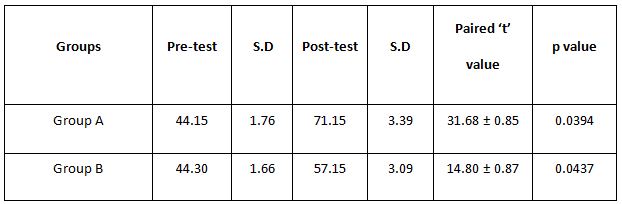
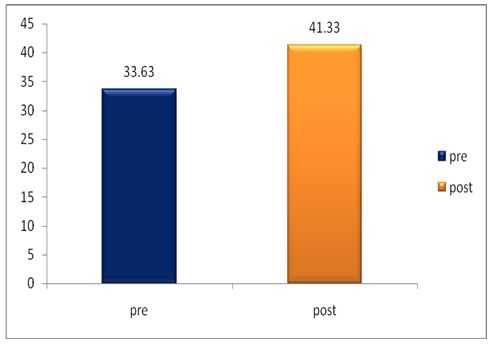
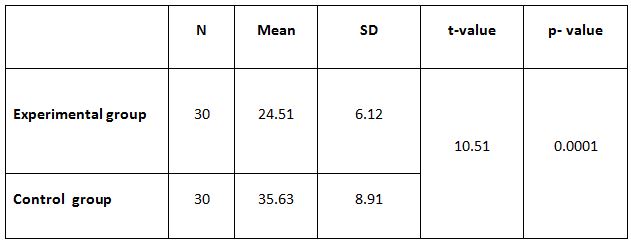
Comparison of Post Traumatic Stress Disorder Dms-5 between Group-A and Group-B in Pre and Post Test

Table 1: Group A; Cognitive Therapy with Stepper Aerobics,Group B; Cognitive Therapy with Aerobics
Graph 1: Comparison of post traumatic stress disorder dms-5 between Group-A  and Group – B in pre and post test

Inclusion criteria were Athletes with post traumatic stress disorder and who are taking medication for stress. Player who scored more than 5 has denoted in trauma screening questionnaire.

Exclusion criteria were any neurological disorder and systemic illness recent surgery and trauma. Stepper, music player, paper pen were the materials used. The subjects were randomly assigned into group A & B.  Outcome measures by post traumatic stress disorder scalDMS-5.

Procedure: Athletes who have scored more than 5 in trauma screening questionnaire was grouped into two groups. Group A n=15, Group

Then they were given with PSTD-DMS5 scale. The subjects were randomly assigned into group A & B. 

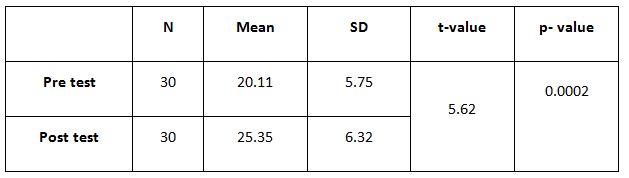
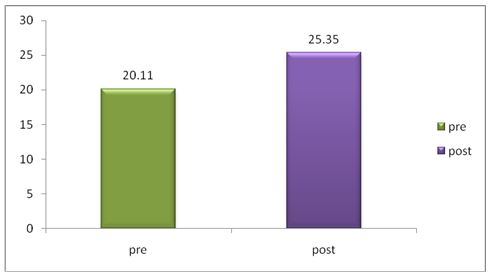
Comparison of Post Traumatic Stress Disorder Dms-5 within Group–A & Group–B between Pre & Post Test Values B n= 15 Before starting the study the whole study was clearly explained to the athletes.

Table 2: Group A – cognitive therapy with stepper aerobics,Group B – cognitive therapy with aerobics
Graph 2: Comparison of Post Traumatic Stress Disorder DMS-5 within group – A And Group – B Between Pre & Post Test Value

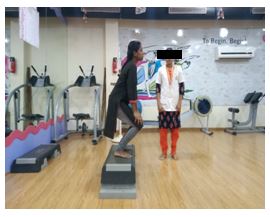
Group A were given behavioural therapy and aerobic exercise includes stepper exercise like stepper Stepper L, step up, step down, grape vine stepper etc., of 3weeks/session of 30mins/session given in the groups along the mild music in groups.

Group B were given behavioural therapy with aerobic exercise which includes daily brisk walking daily of 30 minutes before 8AM.All the 30 participants were made to meet the Psychologist once to cognitive behavioural therapy of 12 vist of the whole study.

RESULTS

On comparing the Mean upsides of Group A and Group B on Post Traumatic Stress Disorder DMS-5, it shows huge difference in the post test Mean qualities however (Group A-Cognitive Therapy with Stepper Aerobics) which has the Lower Mean worth is more successful than (Group B – Cognitive Therapy with Aerobics) P ≤ 0.001.

DISCUSSION

The present study was conducted to determine the effectiveness of cognitive therapy and aerobic exercise in post traumatic stress disorder [PSTD] among athletes. About 50 athletes were selected. They were initially assessed with trauma screening questionnaire. The athletes who scored more than 5 in the questionnaire and athletes who are under medication for PSTD were included in the study. They were randomly selected and at last only 30 participants were selected and remaining 20 were removed from the study due to inconvenient of time, distance and increased stress level. The 30 subjects were grouped into group A [15] and group B [15].

In many studies it has been proved that cognitive behavioural therapy is the gold standard treatment for PSTD. And the beneficial of the regular exercise has a greater impact on psychological makeup which is been provided in the recent studies. The combination of cognitive behavioural therapy and aerobic exercise together plays a major role in bringing back PSTD athletes to the normal.

The statistical reports uncovers that there is no critical distinction in pre test upsides of PSTD[DMS5] score in bunch An and bunch B But there is statically profoundly huge contrast in post test values in PSTD[DMS5] in both gathering An and bunch B.[P≤0.001]. Both the gatherings show critical decline in the post test values Group A is more viable than Group B. This shows the two gatherings are huge in decreasing PSTD in competitors however Group A [Stepper Aerobics and Cognitive Behavioural Therapy] is More Significant When Compared to Group B [Aerobics and Cognitive Behavioural Therapy]. This is no huge distinction in pre test upsides of PSTD [DMS5] score between in Group A and Group B [p≤ 0.001]. Both the gatherings show huge diminishing in post test esteems however Group A is more powerful than bunch B.

Hence, this shows the two gatherings are critical in lessening the PSTD in competitors yet bunch A [Stepper and Cognitive Behavioural Therapy] Is More Significant Than Group B[Aerobics and Cognitive Behavioural Therapy].This is on the grounds that bunch A rehearsed the activity in a gathering and with music. Whenever music is utilized in the any athletic movement it has ergogenic [work enhancing] impacts and mental impact. Standing by listening to the music during activity would both postponement be able to exhaustion and reduces the abstract view of weariness. In bunch practice people had higher aggravation resilience when contrasted with individual exercise performing people.

 The increment resistance to agony might come from a more prominent arrival of endorphins-‘the great feel’ chemicals because of individuals in a state of harmony or gathered with each other. Whereas group B also done with morning brisk walk can improve the cardio vascular capacity, improves the mood swing and bring positive vibe, and gives time have significant effect but when compared to group B, group A is more effective because the person is not socially well being and some may be introvert and some may be lazy to wake up in the morning and some will be partial involvement in morning walk.

The cognitive behavioural therapy was most effective on treatment for conditions like anxiety and depression. It is most effective in psychological treatment for moderate and severe depression it is most effective that antidepressants for many types of depression. This is why group A is more effective when compared to group B.

Ethical clearance: Ethical clearance was obtained from the ethical Institutional Review Board of Faculty of Physiotherapy, Dr. MGR. Educational and Research Institute, Chennai with reference No. C53/PHYSIO/IRB/2017-2018 approval letter dated 10/08/2021.

Conflicts of Interest: There is no conflict of interest to conduct this study.

Fund for the study: This is self-funded study.

CONCLUSION

This study shows that there was significant improvement in the post traumatic stress in the athletes in both groups. However stepper aerobics and cognitive behavioural therapy [Group A] showed more significant improve-ement than aerobics exercise and cognitive behavioural therapy (Group B) and reduces the stress level of the athletes and bring back them to the normal.

REFERENCE

  1. Shuer ML, Dietrich MS. Psychological effects of chronic injury in elite athletes. West J Med. 1997; 166:104–109.
  2. Newcomer R, Roh J, Perna F, Stilger V, Etzel E. Injury as a traumatic experience: intrusive thoughts and avoidance behavior associated with injury among college student-athletes. J Appl Sport Psychol. 1998;10(suppl):S54.
  3. Delahanty DL, Herberman HB, Craig KJ, et al. Acute and chronic distress and posttraumatic stress disorder as a function of responsibility for serious motor vehicle accidents. J Consult Clin Psychol. 1997; 65:560–567.
  4. Stallard P, Velleman R, Baldwin S. Prospective study of post-traumatic stress disorder in children involved in road traffic accidents. BMJ. 1998; 317:1619-1623.
  5. Nixon HL. A social network analysis of influences on athletes to play with pain and injuries. J Sport Social Iss. 1992; 16:127–135.
  6. Nixon HL. Accepting the risks of pain and injury in sport: mediated cultural influences on playing hurt. Sociol Sport J. 1993; 10: 183–196.
  7. Nixon HL. Explaining pain and injury attitudes and experiences in sport in terms of gender, race, and sports status factors. J Sport Social Iss. 1996; 20:33–44.
  8. Delahanty DL, Dougall AL, Craig KJ, Jenkins FJ, Baum A. Chronic stress and natural killer cell activity after exposure to traumatic death. Psychosom Med. 1997; 59:467–476.
  9. Baum A, Cohen L, Hall M. Control and intrusive memories as possible determinants of chronic stress. Psychosom Med. 1993; 55:274–286.
  10. Kiecolt-Glaser JK, Marucha PT, Malarkey WB, Mercado AM, Glaser R. Slowing of wound healing by psychological stress. Lancet. 1995; 346: 1194–1196.
  11. Marucha PT, Kiecolt-Glaser JK, Favagehi M. Mucosal wound healing is impaired by examination stress. Psychosom Med. 1998; 60: 362–365.
  12. Carlson JG, Singelis TM, Chemtob CM. Facial EMG responses to combat-related visual stimuli in veterans with and without posttraumatic stress disorder. Appl Psychophysiol Biofeedback. 1997; 22:247–259.
  13. Klein B, Mitchell J, Gilson K, et al. A therapist-assisted Internet-based CBT intervention for posttraumatic stress disorder: Preliminary results. Cogn Behav Ther. 2009; 38(2):12–31.
  14. Bisson JI. Post-traumatic stress disorder. Clin Evid (Online) 2007; pii: 1005.
  15. Kolassa IT, Ertl V, Eckart C, et al. Association study of trauma load and SLC6A4 promoter polymorphism in posttraumatic stress disorder: Evidence from survivors of the Rwandan genocide. J Clin Psychiatry. 2010;71(5):543–547.
  16. American Psychiatric Association. Diagnostic and Statistical Manual of Mental Disorders. 3rd ed. Washington, DC: American Psychiatric Association; 1980.
  17. Cahill SP, Foa EB, Hembree EA, Marshall RD, Nacash N. Dissemination of exposure therapy in the treatment of posttraumatic stress disorder. J Trauma Stress. 2006; 19(5):597–610.
  18. National Institute for Clinical Excellence. London: National Institute for Clinical Excellence; 2005. Post-traumatic stress disorder (PTSD): The management of PTSD in adults and children in primary and secondary care. NICE Clinical Guideline No. 26.
  19. Garakani A, Hirschowitz J, Katz CL. General disaster psychiatry. Psychiatr Clin North Am. 2004; 27(3):391–406.
  20. Expert Consensus Panel The expert consensus guideline series. Treatment of Posttraumatic stress disorder. The Expert Consensus Panels for PTSD. J Clin Psychiatry. 1999; 60(Suppl 16): 3–76.
  21. Forbes D, Creamer M, Phelps A, et al. Australian guidelines for the treatment of adults with acute stress disorder and post-traumatic stress disorder. Aust N Z J Psychiatry. 2007;41(8):637–648.
  22. Bisson JI, Tavakoly B, Witteveen AB, et al. TENTS guidelines: Development of post-disaster psychosocial care guidelines through a Delphi process. Br J Psychiatry. 2010; 196(1):69–74.
Citation:   S. M. Divya Mary, N. Koushik Kumar, Nelson Arputharaj John, T. Neelamalar.  Impact of exercise vs cognitive therapy in athletes with chronic fatigue syndrome, International Journal of Medical and Exercise Science, March 2022; 8(1); 1181-1187.

Effects of structured physical activity in improving attention among school going children

Vishnupriya.R1, Srividya.G2, Kannan.D3

Corresponding Author:

1PhD Scholar, Annamalai University, Chidambaram, Tamil Nadu and Professor, JKKMMRF College of Physiotherapy, Komarapalayam, Namakkal, Tamil Nadu, India

Mail Id: vpvishnupriyaa114@gmail.com

Co-Authors:

2Research Guide, Department of PMR, Annamalai University, Chidambaram, Tamil Nadu, India

3Professor/Principal, JKKMMRF, College of Physiotherapy, Komarapalayam, Namakkal, Tamil Nadu, India.

 ABSTRACT

Background of the study: Attention is the behavioural and cognitive process of selectively concentrating on a discrete aspect of information. Difficulty in maintaining attention in the classroom is the main factor for lower grades. However, as an emerging outlook in physiotherapy, engaging the underachievers in structured physical activity will enhance a attention skill.  Consequently it will have a tremendous positive impact on children’s academic performance. This study aimed to identify the effect of structured physical activity in improving attention skill among school-going children.

Methodology: The study is an experimental study design and it was conducted among forty Children after obtaining ethical clearance and written consent from the school and parents of these children. All the children were selected based on the selection criteria. All the forty children were randomly allocated into two equal groups.  The Children in Group A underwent structured physical activity for 60 minutes per day for three days a week for a period of five months. The children in Group B experienced relaxed indoor activities for 60 minutes and were given three days a week for five months. The pre and post therapy assessment was done using Mindful attention awareness scale (MASS) questionnaire. The SPSS statistical package 26.0 was used to analyze and compare the collected data.

Result:  The study result revealed a mean score of 31.68 ± 0.85 for Group A and 14.80 ± 0.87 for Group B with the p-value of 0.0001 which is highly significant.

Conclusion: This study concludes that structured physical activity aids in improving the attention skill of school-going children which in turn improves the academic performance when compared with the children who underwent relaxed in door activities.

Keywords: Attention; MASS; Structured Physical Activity; Relaxed Indoor Activities.

Received on 24thDecember 2021, Revised on 14thFebruary 2022, Accepted on 25thFebruary 2022, DOI:10.36678/IJMAES.2022.V08I01.002

INTRODUCTION

Attention is the ability to choose and concentrate on relevant stimuli. It is the cognitive process that makes it possible   to position ourselves towards relevant stimuli and consequently respond to it. This cognitive ability is very important and is an essential function in students’ daily academic activities1.

In recent pandemic situation there has been a shift in the lifestyles of various age groups including children especially school going children as there was a break in the regular classroom education system of study2. Unlike children a few years ago children now a days are leading increasingly sedentary lifestyle that involves time spent on computer, Television and mobile gadgets.

Effective attention is what allows the children to screen out irrelevant stimulation in order to focus on the information that is important in the moment3. Difficulty with attention will lead to problems like not attending to a academic activity they miss details in instruction4. Children repeatedly make the same mistakes and unable to listen to all the information presented to them.

Prolonged sedentary behavior reduces the attention of the child and reduces the focus on the tasks5. Physical activity in early childhood helps preschoolers establish a healthy lifestyle 6. Various educational objectives propose the physical activity on contribution in mental acuity, skills, and strategies essential for navigating challenges faced across the life span7.

Physical activity (PA) is any bodily movement produced by the muscles which require energy expenditures systematically and safely8.It also includes the motor behaviors such as daily and leisure activities, and it is considered a determinant of life and for general health status 9.  Various studies identified that Physical activity facilitates the release of neurotrophic factors, which increases the blood flow to the cerebrum, thereby improving the supply of glucose and lipids to the brain11,12.

The Mindful attention awareness scale is a 15-item scale designed to assess dispositional mindfulness. This scale strongly evaluates the psychometric properties which have been validated. It is unique to measure the consciousness related to predictive of a variety of self-regulation and well-being constructs 13.

Various researches widely acknowledge the physical and mental health benefits of physical activity,14, but there are fewer studies on their effects on cognitive and academic performances and few works were reported on this topic but not on the school children 15, and there is much difference in the exercises prescribed by various researchers and Very few studies have been done in the area of physiotherapy on this perspective. So, this study is aimed to identify the effect of physical activity in improving attention among school-going children.

METHODOLOGY

The study was initiated after obtaining ethical approval from the Institutional ethical committee, Annamalai University, Tamil Nadu, India. A pamphlet was created about physical activity and approached the private schools in and around Komarapalayam, Namakkal district, Tamil Nadu. The researcher met the principal and explained the study and around 15 schools were visited only ten school principals agreed to provide samples for the study. Written consent was obtained from the parent of the student who was included for the study prior to the beginning of the study. A meeting with the parent and the class teacher was made and explained the study. Only five schools were taken for this study, and 40 students were randomly selected from each school based on the inclusion criteria. The age group of the participants is 11 years to 14 years of both Genders.

The Children who had good attendance percentage and who were physically healthy with adaptive behavioral skills, were selected for the study. Children who are underachievers in their academic performance and children without any recent infections were also included for the study. Children with orthopedic or neurological disorders,   those with injury to the lower limbs, severely obese children, children with psychological disorders, children who are already in sports were excluded from the study.

Forty-six children were selected for the study, and they all were divided randomly into two equal groups, twenty-three in each group. Group sampling was done by the computer-generated randomized method. The children in group A underwent structured physical activity for 60 minutes per day over a period of five month and three days per week. Structured physical activity (SPA) taught to the children includes walking with normal speed, walking with maximal speed, slow jogging, slow running, and skipping. Each exercise needs to be done for seven minutes16,17.

Group B underwent relaxed indoor activities (RIA) for 60 minutes per day over a period of 5 months and three days per week. Fifteen minutes were given for warming up exercises, and cool down, activities were also provided. The intensity of the exercises was set at 50%-70% of maximal heart rate 18.

 A pre training data was collected using the MASS questionnaire. The post training data was collected by using the MASS Questionnaire at the end of the study (i.e., 5th month). The SPSS statistical package 26.0 was used to analyze and to compare the pre and post training on the impact of physical activity on the attention skill of school going children.  The impact of physical activity on the attention skills was analyzed before giving the structured physical activity again the data was collected after 5 months. It was statistically analyzed using SPSS statistical package.

The parametric test was used to determine the level of attention using MASS score. The scores obtained pre-test and post-test values were compared. The obtained p value of 0.05 showed the significant difference between pre and post. Due to illness,   three     children   were not able to attend the part of the study. As a result each groups both groups A and B from the study. As a result, each group had a total of 20 children.

RESULTS

A parametric test is used to analyze the data collected from the children and the data were analyzed using SPSS 26.0. The with-in group analysis is shown in Table II, and the between-group analysis in Table III. The demographical variables are shown in Table I. All of the analysis in the study was done using a critical value of p= 0.05.

Table 1: Shows that out of 40 children, 13 children were 14 years and 11 children were 13 years and 16 children were in between 11 to 12 years there were more number of male children than female children.

 Food habits

Table 2: Demographic and Variable analysis
Table 3: Suggests the data within the groups of pre and post test values of Group A and Group B on analysis of MASS
* The probability of this result, assuming the null hypothesis, is less than .0001.
Table 4:  Showed the difference between Group A and Group B on analysis of MASS.

While comparing the pre-intervention and post-intervention data, there is a significant difference obtained between the groups. It was also noted there is a marked increase in attention skills of Group A students.

DISCUSSION

The purpose of the study was to identify the effects of structured physical activity in improving attention skill among school-going children. The problems of attention among the school going children are crucial in its contribution towards learning and academic performances19. School children have trouble having proper attention due to anxiety, frustration, and depression. A prolonged sedentary lifestyle reduces the child’s attention to academic instructions, concentration on the task engagements 20. So, it is mandatory to monitor these children and should give proper attention and training also needs to be given to them to overcome their difficulties 21

Physical activity (PA) is significant for a child to improve their fitness physically and mentally. It aids in controlling the various psychological symptoms and reduces the risk of developing multiple health issues22. Exercises improve children’s mental health by reducing anxiety, depression, and negative mood by improving self-esteem and cognitive functions23.

Physical activity plays an essential role in improving the child’s moods; the exercises increase circulation to the brain and influence the hypothalamic-pituitary-adrenal axis and reactive to stress24.

Many Studies also identified that acute bouts of aerobic exercises increase cerebral oxygenated blood flow and improve precuneus’ activity 25,26. The Physical activity also enhances Brain-Derived Neurotrophin Factors (BDNF) levels in the blood 27. This improves the activity of the brain and thereby improves the concentration, working memories, and visual-spatial abilities28,29

A few other studies also supported this study results; Tine and Butler have identified that 12 min single bout aerobic exercises improve attention and concentration in students with the age of 10-13 years30.

 A study conducted by Gallotta et al., 2012, identified that the school students involved in aerobic exercises in the physical education sessions showed an improved attention performance than those who didn’t participate31. Above study is supporting the present study.

In a study, Meta-analysis of   physical activity and cognitive performances in school-age children showed positive relationship. Several studies have suggested that participation in the PA has a positive relationship with academic performances.

All these findings have suggested that physical activity has a strong influence on academic performances and improvement in the attention of school children. It also plays a significant role in the development of cognitive health. 

This study showed a significant improvement in the attention skill of school children who underwent regular physical activity than those who were engaged in non-physical relaxed activity. The improvement in the relaxed activity group may be influence the participant in the research. There are considerable differences obtained within the groups. On comparing the groups, the group who underwent regular PA shows much significant improvement. 

This study has identified a few limitations, as selecting the participants and making parents accept to be involved in the study was a monumental task. Home activity or recreational sports activities are not controlled.

As the study duration was higher many students hesitated to participate in the study initially and later, which was liked by them, COVID-19 rules were followed, but the investigation was concluded by using telephone calls to individual parents and direct visits to each child by the researchers. 

Ethical Clearance: Ethical clearance has obtained from J.KK. Munirajah Medical Research Foundation, College of Physiotherapy, B. Komarapalayam, Tamil Nadu, to conduct this study with reference number: 001/jkk coptdated 04/06/2019.

Acknowledgment: The authors wish to thank the Principals of Schools, for allowing conducting the study and all the Children and the parents who were involved.

Conflict of Interest: There is no conflict of interest to conduct or publish this study.

Source of Funding:  This study is self funded.

CONCLUSION

This study concluded that structured physical activity is better in improving the attention of school-going children. When compare to the relaxed indoor activities.

REFERENCES

  1. Peretz C, Korczyn AD, Shatil E, Aharonson V, Birnboim S, Giladi N-Computer-Based, Personalized Cognitive Training versus Classical Computer games: A Randomized Double- Blind prospective Trial of cognitive stimulation-Neuroepide-miology 2011; 36: 91-9.
  2. Sedentary life style; Overview of updated evidence of potential health risks-jung ha park, Ji hyun moon and Yun hwan Oh. 2020 Nov; 41(6): 365–373.
  3. Plebanek, D. J., & Sloutsky, V. M. Costs of Selective Attention: When Children Notice What Adults Miss. Psychological science, 2017; 28(6), 723–732.
  4. Cotman CW, Berchtold NC, Christie L-A. Exercise builds brain health: key roles of growth factor cascades and inflammation. Trends Neurosci 2007; 30: 464–72.
  5. Lowry R., Lee S M., Fulton J E., Kann L. Healthy people 2010 objectives for physical activity, physical education, and television viewing among adolescents: National trends from the youth risk behaviour surveillance system, 1999-2007, Journal of Physical Activity & Health, 2009; 6(1):  S36-S45, 2009.
  6. Gordon E S., Tucker P., Burke S M., Carron AV. Effectiveness of physical activity interventions for preschoolers: A meta-analysis. Research Quarterly for Exercise and Sport2013; 84(3):287-294.
  7. Donnelly J E.,Hillman C H., Castelli D., Etnier J L., Lee S., Tomporowski P., Lambourne K., Szabo-Reed AN. Physical Activity, Fitness, Cognitive Function, and Academic Achievement in Children: A Systematic Review. Medicine and science in sports and exercise, 2016; 48(6); 1197-1222.
  8. Mandolesi L., Polverino A., Montuori S., Foti F., Ferraioli G., Sorrentino P., Sorrentino G. Effects of Physical Exercise on Cognitive Functioning and Wellbeing: Biological and Psychological Benefits.  Frontiers in psychology. 2018; 9, 509.
  9. Burkhalter T M., Hillman C H. A narrative review of physical activity, nutrition, and obesity to cognition and scholastic performance across the human lifespan. Adv. Nutr. Int. Rev. J.2011; 2, 201S-206S.
  10. Robinson A M., Hopkins M E., and Bucci D J. Effects of physical exercise on ADHD-like behavior in male and female adolescent spontaneously hypertensive rats. Dev. Psychobiol. 2011; 53, 383–390.
  11. Hötting K., Röder B. Beneficial effects of physical exercise on neuroplasticity and cognition. Neurosci. Biobehav. Rev. 2013; 37, 2243–2257.
  12. Mandolesi L., Gelfo F., Serra L., Montuori S., Polverino A., Curcio G. et al.,  Environmental factors promoting neural plasticity: insights from animal and human studies. Neural Plast. 2017; 1–10.
  13. Brown K W. & Ryan R M. The benefits of being present: Mindfulness and its role in psychological well-being. Journal of Personality and Social Psychology, 2003: 84, 822-848.
  14. Biddle S J H, Asare M. Physical activity and mental health in children and adolescents: a review of reviews. Br J Sports Med 2011; 45: 886-95.
  15. Janssen I, Le Blanc A G. Systematic review of the health benefits of physical activity and fitness in school-aged children and youth. Int J Behav Nutr Phys Act 2010;7:40
  16. Bull FC, Al-Ansari SS, Biddle S, Borodulin K, et al. World Health Organization 2020 guidelines on physical activity and sedentary behaviour. Br J Sports Med. 2020 Dec; 54(24):1451-1462.
  17. Guthold R, Cowan MJ, Autenrieth CS, Kann L, Riley LM. Physical activity and sedentary behaviour among schoolchildren: a 34-country comparison. The Journal of pediatrics. 2010; 157(1); 43-9.e1.
  18. Subramanian S K., Sharma V K., Aruna-chalam, V., Radhakrishnan, K., Ramam-urthy, S.  Effect of Structured and Unstruct-ured Physical Activity Training on Cognitive Functions in Adolescents – A Randomized Control Trial. Journal of clinical and diagnostic research: JCDR, 2015; 9(11); CC04-CC9.
  19. Lai Y J., Chang KM. Improvement of Attention in Elementary School Students through Fixation Focus Training Activity. International journal of environmental research and public health, 2020; 17(13); 4780.
  20. Weiyun C, Zhanjia Z, Brooke C, Lexi LC1, Morgan C, Zhonghui H. Acute Effects of Aerobic Physical Activities on Attention and Concentration in School-aged Children. Biomed J Sci & Tech Res.2017; 1(5).
  21. Sohlberg M.M., Mateer C.A. Effectiveness of an attention-training program. J. Clin. Exp. Neuropsychol. 1987; 9:117-130.
  22. Centres for Disease Control and Prevention. School Health Guidelines to Promote Healthy Eating and Physical Activity. MMWR. 2011; 60 (No. RR-5).
  23. Callaghan P. Exercise: a neglected intervention in mental health care? J Psychiatr Ment Health Nurs. 2004; 11;476-483. 
  24. Guszkowska M. Effects of exercise on anxiety, depression and mood [in Polish] Psychiatr Pol. 2004; 38; 611–620
  25. Widenfalk J, Olson L, Thorén P. Deprived of habitual running, rats downregulate BDNF and TrkB messages in the brain. Neurosci Res. 1999 Aug; 34 (3):125-32.
  26. Vaynman S, Ying Z, Gomez-Pinilla F. Hippocampal BDNF mediates the efficacy of exercise on synaptic plasticity and cognition. Eur J Neurosci. 2004 Nov; 20(10); 2580-90.
  27. Ferris LT, Williams JS, Shen CL. The effect of acute exercise on serum brain-derived neurotrophic factor levels and cognitive function. Med Sci Sports Exerc. 2007 Apr; 39(4);728-34.
  28. Winter B, Breitenstein C, Mooren FC, Voelker K, Fobker M, Lechtermann A, Krueger K, Fromme A, Korsukewitz C, Floel A, Knecht S. High impact running improves learning. Neurobiol Learn Mem. 2007 May; 87(4); 597-609.
  29. Hillman CH, Erickson KI, Kramer AF. Be smart, exercise your heart: exercise effects on brain and cognition. Nat Rev Neurosci. 2008 Jan; 9(1); 58-65.
  30. Tine M T., & Butler AG. Acute aerobic exercise impacts selective attention: An exceptional boost in lower-income children. Educational Psychology, 2012; 32; 821-834.
  31. Gallotta MC, Guidetti L, Franciosi E, Emerenziani GP, Bonavolontà V, Baldari C. Effects of varying type of exertion on children’s attention capacity. Med Sci Sports Exerc. 2012 Mar; 44(3); 550-5.
Citation: Vishnupriya R, Srividya G, Kannan D. Effects of structured physical activity in improving attention among school going children, International Journal of Medical and Exercise Science, March 2022; 8(1); 1172-1180.

Effects of sitting pelvic tilt exercise and pelvic floor exercise during third trimester in primigravida on low back pain

Indhu. K1, Jayabharathi. R2

Corresponding Author:

1MPT Student, Faculty of Physiotherapy, A.C.S. Medical College and Hospital Campus, Dr. MGR. Educational and Research Institute, Deemed to be University, Chennai,Tamil Nadu, India

Mail id: indhusri330@gmail.com

Co-Author:

2Assistant Professor, Faculty of Physiotherapy, A.C.S. Medical College and Hospital Campus, Dr. MGR. Educational and Research Institute, Deemed to be University, Chennai, Tamil Nadu, India

 ABSTRACT

Background of the Study: Low back pain is common condition during the pregnancy. The increased Lordosis of pregnancy combined with the effect of relaxin on the joint of the pelvis and the weight of gravid uterus results on anterior shift in the center of gravity which all together contributes to complain of low back pain during pregnancy. The main objective of the study is to find out the effects of sitting pelvic tilt exercise and pelvic floor exercise during third trimester in Primigravida on low back pain.

Methodology: This was an experimental study with pre and post intervention. The study setting was done in ACS medical college and hospital. Total 30 Primigravida women aged between 20-35 years selected by random sampling method. The selected women followed sitting pelvic tilt exercise and pelvic floor exercise for 8 weeks. Three sets per day with 10 repetitions per set. The outcome measures were determined by Numerical Pain Rating Scale (NPRS). Primigravida (third trimester) Numerical pain rating scale score (4-6).

Result: The study revealed that sitting pelvic tilt and pelvic floor exercise shows better reduction in pain on comparing the pre-test and post-test values in low back pain on Primigravida women. It showed a significant difference in mean value (1.13) at p value < 0.0001.

Conclusion: The study concludes that sitting pelvic tilt exercise and pelvic floor exercise was effective on reducing pain intensity. Hence sitting pelvic tilt exercise and pelvic floor exercise is effective therapeutical option for the management of low back pain among Primigravida on third trimester.

Keywords:  Primigravida; Third trimester; Sitting pelvic tilt exercise; Pelvic floor exercise; Low back pain.

Received on 04th January 2022, Revised on 12thFebruary 2022, Accepted on 25thFebruary 2022, DOI:10.36678/IJMAES.2022.V08I01.001

INTRODUCTION

Pregnancy is a time of tremendous musculoskeletal, physical and emotional changes, but yet a condition of wellness. Low back ache is one of the most common complaints during gestation, affecting 48-90 per cent of women1,2,3. During pregnancy lot of physiological and musculoskeletal changes takes place for the development of fetus 4. In pregnant women, it is most common and significantly affecting their daily activities5. As the fetus grows, a women’s abdominal wall stretches to accommodate the expanding womb. Abdominal muscle stretched to the point of their elastic limit by end of pregnancy6.

The center of gravity shifts upward and forward because of enlargement of the uterus and breast. This requires postural compensation for balance and stability during pregnancy, the hormone relaxin is present ten times more than its normal concentration in female body. Relaxin also causes abnormal motion in many other joints of body, causing inflammation and pain 7, 8.

Lumbar Lordosis that develops at later stages of pregnancy, gravity shifting, postural changing, and workload lead towards pregnancy related low back pain1. Increased Lordosis of pregnancy combined with the effect of relaxin on the joint of the pelvis and the weight of the gravid uterus which results anterior shift in the center of gravity.

All contribute to complaint of low back pain during pregnancyHormonal changes that occur during pregnancy causes softening of ligaments and the joints, particularly of the pelvis, to enable the fetus to pass through the birth canal more easily9. This results in increased joint looseness and decreased stability. This, in conjunction with lengthening of the abdominal muscles, compromises the stability of the spine and results in excess mobility of the joints. This may be the cause of pain in the lower back and posterior pelvis. Low back pain during pregnancy was most frequently reported in the third trimester of pregnancy (40.7%) and was often reported to be in lower back area (71.2%). One third of them will suffer from severe pain which will reduce their quality of life10, 11.

The majority of women affected are Primigravida 80% of pregnant women suffering from low back pain 12,13 , Pelvic floor muscles training is safe and effective technique that restore or develop pelvic floor muscles strength and help women control this musculature during pregnancy14. The sitting pelvic tilt exercise is one of the mobility exercise which seems to strengthen or increases the flexibility of muscles needed to compensate for increase abdominal mass an thereby maintaining normal posture. The pelvic floor exercise is used in this study was designed to coactive superficial and deep core muscles thus, results in significantly better improvement in pain15.

There are two simple exercise that can be safely given to women during pregnancy- pelvic floor and pelvic tilt exercise. This study was performed to assess the effect of sitting pelvic tilt exercise and pelvic floor exercise on low back pain during the third trimester in Primigravida. Exercise is given in sitting position is called sitting pelvic tilt exercise, the pelvic floor exercise is also given in sitting position during third trimester.

Aim of the study: To investigate the effects of sitting pelvic tilt exercise and pelvic floor exercise during third trimester in Primigravida on low back pain.

Need of the study: Pregnancy related low back pain has become the common issue for women in the last trimester which affect the quality of life during pregnancy. Sitting pelvic tilt exercise and pelvic floor exercise which approaches for low back pain during the third trimester. So this study is done to find out the effects of these exercises in reducing low back pain.

METHODOLOGY

This was an Experimental study with Comparative Pre and Post type.  Study Setting: done at A.C.S Medical College and hospital, Velappanchavadi, Chennai-77.Sample Size for this study was 30 Primigravida and intervention duration was 8 Weeks.

Inclusion Criteria for this study were Primigravida women third trimester with low back pain, Age 20-35 Years, Numerical pain rating scale (4-6), Subjects willing to participate. Material Used for this study were hard chair, scoring sheet. Outcome Measure for the study was Numerical Pain Rating Scale.

Procedure: Subjects would be selected based on selection criteria. Numeric pain rating scale consists of 10 scores. The women should choose corresponding score according to their level of pain. The intervention included sitting pelvic tilt exercise and pelvic floor exercise for low back pain in participants respectively.

Intervention

Sitting pelvic tilt exercise: Subjects will be asked to sit in chair with a straight backrest with feet flat on the floor at hip’s width distance. Subjects will be asked to tilt the pelvis back and draw in umbilicus. Holding time is three to ten seconds. Duration of the program was three sets per day. Each set consist ten repetitions.

Pelvic floor exercise: Sit and lean slightly forward with straight back. Squeeze and lift the muscles in gentle manner then hold the squeeze for 8 seconds. Duration of the program was three sets per day. Each set consist ten repetitions.


Fig 1: Anterior Pelvic tilt
Fig 2: Posterior Pelvic tilt
Fig 3: Pelvic floor exercise

Data Analysis: The collected data were tabulated and analyzed using both descriptive and inferential statistics. All the parameters were assessed using statistical package for social science (SPSS) version 24. Paired t-test was adopted to find statistical difference within the groups.        

Table-1 Comparison of numeric pain rating scale (NPRS) score within the group in pre and post test

The above table reveals the mean difference, standard deviation (S.D), t-value and p- value of the low back pain between the pre-test and post-test within the group. Based on low back pain, it shows that there is statistically significant difference between pre-test and post-test value within the group p<0.0001.

Graph-1: Graphical representation of comparison on numeric pain Rating scale within the group between pre and post test

RESULT

A total sample of 30 subjects was included in the study with the age group between 20 to35 years. The patients were selected from A.C.S. Medical College & Hospital, Chennai-77. These patients were inquired about the characteristics of pain and functional activity. The study revealed that sitting pelvic tilt and pelvic floor exercise showed better reduction in pain intensity. On comparing the pre-test and post-test values in low back pain on primigravid women shows significant difference in mean value (1.133) at p value < 0.0001.

 DISCUSSION

The present study was designed to investigate the efficacy of two exercise for Primigravida women with low back pain during third trimester. The sitting pelvic tilt exercise and pelvicfloor exercise snows effectiveness in reducing pain and have improvement in functionalability. Low back pain commonly occurs during pregnancy. Both sitting pelvic tilt exerciseand pelvic floor exercise is very simple and effective exercise. In our study we are improvingthe strength or lower back region and thereby reducing pain in women with low back pain.30 primigravida were selected by random sampling method.

The pain is measured using Numerical Pain Rating Scale. This study supports the finding on Yana Richens et al, (2015) 16 reported back ache first developing during the 5th-7th month of pregnancy. Symptoms are often reported by women to be worse in the evening and in third trimester and suggested that pelvic tilting and pelvic floor exercise which can be safely given during pregnancy. Areerat s et al., (2002)3 reported the sitting pelvic tilt exercise during third trimester in primigravida could decrease pain intensity without incidence of preterm labor, low birth weight or neonatal complication.

A study reported that sitting pelvic tilt exercise during third trimester in Primigravida did not only reduce pain in numerical pain scale and also decrease episodes of insomnia and sleep disorders. Another study stated that on comparing non exercised pregnant women with prenatal exercised pregnant women decreases the severity of low back pain16,17.

Low back pain intensity was increased in control group. The exercise group shows significant reduction in the intensity of low back pain after exercise. Exercise during second half of the pregnancy significantly reduced the intensity of low back pain. Physical activity and exercise during pregnancy promotes physical fitness and may prevent excessive weight gain18.

Exercise may reduce the risk of gestational diabetes, preeclampsia and cesarean deliveries and exercise offers significant benefits in women reducing low back pain and pelvic pain, specifically beneficial effects in severity of pain and thus on functional abilities and quality of life of the women affected. The sitting pelvic tilt exercise and pelvic floor exercise has been suggested as his management for low back pain in pregnancy 19, 20.

The statistically report reveals there is a significant difference in Numeric pain Rating scale scoring (P<0.0001) in subjects who undergone sitting pelvic tilt exercise and pelvic floor exercise. Finally the sitting pelvic tilt exercise and pelvic floor exercise can be used as simple and effective treatment on reducing low back pain among third trimester Primigravida.

Ethical clearance: There was no risk of conducting this study.Ethical clearance was obtained from the ethical Institutional Review Board of Faculty of Physiotherapy, Dr. MGR. Educational and Research Institute, Chennai with reference No. A23/PHYSIO/IRB/2018-2019 approval letter dated 08/01/2019.

Conflicts of Interest: There is no conflict of interest to conduct this study.

Fund for the study: This is self-funded study.

CONCLUSION

The study revealed that sitting pelvic tilt Exercise and pelvic floor exercise was effective reducing pain intensity, hence concluded that sitting pelvic tilt exercise and pelvic exercise is effective therapeutical option for the management of low back pain for exercise among Primigravida in third trimester.

REFERENCE

  1. Singh N, Desai OP. Prevention and management of low backache in pregnant women through the use of exercise program and education booklet. Indian Journal of Occupational Therapy 2008; 39(3):65‐72.
  2. Kristiansson P Back pain during pregnancy: a prospective study, Spine (1996); 15; 702-709.
  3. Areerat S Effect of the sitting pelvic tilt exercise during the third trimester in Primigravida on back pain. J Med Association Thailand, (2002); 85:107-10.
  4. Osgaard HC, Zetherstrom G Reduction of back & post pelvic pain inpregnancy spine (1994); 19:984-900.
  5. Kashanian M, Akbari Z, Alizadeh MH. The effect of exercise on back pain and lordosis in pregnant women. International Journal of Gynecology & Obstetrics 2009; 107(2): 160‐1.
  6. Mogren IM, Pohjanen Al. Low back pain and pelvic pain during pregnancy: prevalence and risk factor.Spine:2005;30: 983-91.
  7. MacEvilly, M., Buggy, D., (1996). Back pain and pregnancy: a review. Pain, 64(3), 405-414.
  8. Calguneri et al., 1982; Szlachter et al., 1982; Brynhildsen et al., 1998 Changes in joint laxity occurring during pregnancy.
  9. Sahota PK, Jain SS, Dhand R (2003) Sleep disorders in pregnancy. Curr Opin Pulm Med 9: 477-483.
  10. Ming WS (2004) Low back pain during pregnancy: prevalence, risk factors and outcomes. Obstetrics and gynecology 4: 65-70.
  11. Sabino J, Grauer JN (2008) Pregnancy and low backpain, Current reviews in musculoskeletal medicine 1:137-141.
  12. Pennick VE Interventions for preventing and treating pelvic and back pain in prenancy. Cochrane Database of systematic Reviews 2013 Aug 1; (8): CD0011391: D001139.
  13. Saz HMT, Zadeh NK, Shamseldini A,Hosseini M (2007) Prevalence of low back pain in gnant women who are attended to Baqitallah hospital. J Army Uni med Sci lR ran 5: 1293-1297.
  14. Salvesen KA, Morkved S. Randomised controlled trial of PFMT during pregnancy BM); 2004: 329:378-80.
  15. Ayanniyi O, Sanya A.O, Ogunlade S.O, Prevalence and Pattern of Back Pain among Pregnant Women Attending Ante-Natal Clinics in Selected Health Care Facilities, African Journal of Biomedical Research, Vol. 9 (2006); 149-156. 
  16. Yana Richens et al Lower back pain during pregnancy: advices and exercise for women. British Journal of Midwifery, (2015), Vol. 18, No. 9.
  17. Deepthi et al., Does Sitting Pelvic Tilt Influence Quality of Pain in Low Back Pain and Quality of Sleep among Primigravida Indian Mothers. J Women’s Health Care 2016, 5:5.
  18. Margie H Davenport et al Exercise for the preventing and treatment of low back, pelvic girdle and Lumbo pelvic pain during pregnancy: a systemic review and meta- analysis(2019), Br J Sports Med, 2019 Jan; 53(2):90-98.
  19. Garshasbi et al. The effect of exercise on the intensity of low back pain in pregnant women, Int J Gynaecol Obstet .2005 Mar; 88(3):271-5.
  20. Iva Sklempe Kokic 1, Marina Ivanisevic, Melita Uremovic,et al Effect of therapeutic exercises on pregnancy-related low back pain and pelvic girdle pain: Secondary analysis of a randomized controlled trial J Rehabil Med. 2017 Mar 6; 49(3): 251-257.
Citation:  Indhu.K, Jayabharathi.R.Effects of sitting pelvic tilt exercise and pelvic floor exercise during third trimester in primigravida on low back pain, International Journal of Medical and Exercise Science,  March 2022; 8(1); 1165-1171.

Comparative effect of Single Leg Bridging Exercise in Swiss ball over Forward Jump Exercise on patient with Functional Ankle Instability

Jibi Paul1, Syeda Khanam P2, Kondaka Indira Pavani3, Jayalakshmi. N4
Corresponding Author:1Professor, Faculty of Physiotherapy, A.C.S. Medical College and Hospital Campus, DR. MGR. Educational and Research Institute, Deemed to be University, Chennai, IndiaMail id: physiojibi@gmail.com

Co-Author:

2Professor, East Point College of Physiotherapy, Bangalore, Karnataka, India

3Professor, Montessori College of Physiotherapy, Vijayawada, Andra Pradesh, India

4BPT Graduate, Faculty of Physiotherapy, A.C.S. Medical College and Hospital Campus, DR. MGR. Educational and Research Institute, Deemed to be University, Chennai, India

Abstract

Aim and objective of the study: The main objective of the study is to find the comparative effect of single leg bridging in Swiss ball over forward jump exercise on patients with functional ankle instability. Secondary objectives of the study are to find the individual effect of single leg bridging in Swiss ball and forward jump exercise on patients with functional ankle instability.

Methodology: This is a comparative pre and post type study. 30 subjects  with age of 20-30 years of both male and female subjects were included in this study; they were divided in to 15 subjects in two groups. This study conducted at Department of Physiotherapy of  ACS Medical college and Hospital, Chennai, for 3 session in a week for 4 weeks. Group A were given receive single leg bridging exercise in Swiss ball and Group B were given forward jump exercise. Both group trained for 10 repetitions of exercise in each session. Pain and functional disability was measured before and after the intervention session using the measurement tools VAS and CAIT. The special test done for confirming functional ankle instability by Talar Tilt Test.

Result: Comparative study between Group A and Group B showed significant difference in effectiveness of pain and improve Ankle instability with P value >0.0001, among patients with functional ankle instability.

Conclusion:  This study is concluded that single leg bridging exercise found more effective on reduction of pain and improve ankle stability among patients with functional ankle instability.

Keywords: Swiss ball, Single leg bridging, forward jump exercise; Ankle instability; Visual analog scale (VAS); Cumberland ankle Instability Tool (CAIT)

Received on 28th October  2021, Revised on 25th November 2021, Accepted on 29th November 2021            DOI:10.36678/IJMAES.2021.V07I04.005

INTRODUCTION

Practical flimsiness of the lower leg joint has been characterized by Freeman as “a propensity for the foot to give way later a lower leg sprain.” Three variables thought to cause useful shakiness of the lower leg joint are anatomic or mechanical unsteadiness, muscle shortcoming, and deficiencies in joint proprioception. Cornwall showed that people with a background marked by reversal lower leg hyper-extends exhibit less dependability when playing out a solitary leg position than do no impaired subjects1-3.

Up to 70% of individuals have persevering manifestations of pain and precariousness later a straightforward lower leg sprain. Persistent lower leg precariousness, among the most well-known manifestations, is crippling and can prompt a wide range of disability. Chronic lower leg insecurity can incorporate repetitive injury, mechanical shakiness in which an essential mechanical restriction is lost, and utilitarian lower leg instability4-7.

As per this hypothesis, dynamic soundness of the lower leg joint relies upon the capacity of the evertors (Peronei) to respond rapidly to abrupt reversal annoyances, to develop sufficient pressure to forestall harmful scopes of lower leg movement, and accordingly to forestall injuries of the horizontal tendon complex of the lower leg. This hypothesis recommends that people with FI could have postponed and decreased reflex reactions in the evertor muscles of their impacted lower legs in response to an inversion stress in light of modified capsular and ligamentous afferent information8-10.

In any case, more current proof recommends that the dynamic control of lower leg dependability relies upon feed-forward engine control of the focal sensory system. It has been recommended that unseemly situating of the lower leg joint before ground contact during strolling may have significant ramifications for lower leg joint stability11-15.

METHODOLOGY

The study design is an experimental study. The study type is pre­­-post comparative study. Population: Only sports persons are included in the study. The study setting is conducted in Faculty of Physiotherapy, ACS Medical College campus, Velappanchavadi, Chennai.   The sample size is 30 subjects. Study Sampling Method: Simple random sampling by lottery method used to divide the samples equally 15 subjects in each group. The study was conducted for duration of 4 weeks.

Selection Criteria

Inclusion Criteria: Age group 20-30 years, Both Male and Female subjects were included in this study.

Exclusion Criteria:  Ankle pain above grade 2, Lower limb fracture, Dislocations of lower limbs, obese persons, cardiovascular patients

Measurement Tool of the study was Pain measured by VAS and Ankle instability by CAIT.

Procedure: This is a comparative study with pre and post intervention. 30 subjects with ankle instability are selected based on the inclusion criteria.

Group A (15 subjects) received single leg bridging in Swiss ball for period of 15 seconds holding of 3 repetitions and they were asked to do this for 4 weeks in alternative day.

Fig 1. Group A Single Leg Bridging Exercise In Swiss Ball

Group B (15 Subjects) received forward jump exercise for period 3 sets of 10 repetition for 4 weeks in alternative day. Pain and functional disability was assisted before and after the intervention session using the measurement tool. The special test done for confirming functional ankle instability was Talar Tilt Test. Pre and Post data was collected before and after the training program.

Fig 2 .Group B Forward Jump Exercise

Talar Tilt Test: The talar slant test or reversal move is performed with the patient prostrate or on their side, with foot loose. The gastrocnemius should likewise be loose by flexion of the knee. The bone is then shifted from one side to another into adduction and kidnapping. The discoveries ought to be contrasted and the contralateral side. Steal and rearrange the heel. On the off chance that a firm endpoint can’t be felt when contrasted and the contrary lower leg, suspect harm to the CFL. Note that the level of slant goes from o-23 degree. Much of the time, this test is troublesome, if certainly feasible, to perform auxiliary to patient torment and expanding.. This test is done to the subject for confirming functional ankle instability. The examination is demonstrated in the image below.

Fig 3. Talar Tilt Test

Data Analysis

Group A- Single Leg Bridging in Swiss Ball Exercise

The below table 1 shows significant difference in VASon patients with functional ankle instability with P value >0.0001

Table 1: Paired t test on VAS within the Group A on the effectiveness of Single Leg Bridging in Swiss Ball Exerciseamongpatients with functional ankle instability. 

The above table 1 shows significant difference in VASon effectiveness of Single Leg Bridging in Swiss Ball Exercise among patients with functional ankle instability with P value >0.0001.

Table 2: Paired t test on VAS within the Group B on the effectiveness of Single Leg Bridging in Swiss Ball Exercise among patients with functional ankle instability

The above table 2 shows significant difference in VASon effectiveness of Single Leg Bridging in Swiss Ball Exercise among patients with functional ankle instability with P value >0.0013.

Group B -Forward Jump Exercise

Table 3: Paired t test on CAIT within the Group B on the effectiveness of Forward Jump Exercise among patients with functional ankle instability.

The above table 3 shows significant difference in CAIT within the Group B on the effectiveness of Forward Jump Exercise among patients with functional ankle instability with P value >0.0001.

Table 4: Paired t test on CAIT within the Group B on effectiveness of Forward Jump Exercise among patients with functional ankle instability.

The above table 4 shows significant difference in CAIT within the Group B on effectiveness of Forward Jump Exercise among patients with functional ankle instability with P value >0.0001.

Graph 1: Presentation of VAS within the Group A and B on the effectiveness of Jump Exercise among patients with functional ankle instability
Graph 2: Presentation of CAIT within the Group A and B on the effectiveness of Jump Exercise among patients with functional ankle instability.

The below table 5 shows significant difference on VAS between Group A and B among patients with functional ankle instability with P value <0.0001.

Table 5: ANOVA to compare VAS between Group A and B among patients with functional ankle instability

The above table 5 shows significant difference on VAS between Group A and B among patients   with functional ankle instability with P value <0.0001.

Table 6: ANOVA to compare CAIT between Group A and B among patients with functional ankle instability

The above table 6 shows significant difference on CAIT between Group A and B among patients with functional ankle instability with P value <0.0001.

Graph 3: Presentation of VAS and CAIT between Group A and B among patients with functional ankle instability.

RESULT

Total 15 participants of patients with functional ankle instability were included in the study base on specific selection criteria.

In study pain has reduced with mean difference of 1.133, by Single Leg Bridging in Swiss Ball Exercise with P value >0.0001, among patients with functional ankle instability.

In study pain has reduced with mean difference of 0.80, by Single Leg Bridging Exercise with P value >0.0001, among patients with functional ankle instability.

Shoulder function has improved with mean difference of 11.67, by Forward Jump Exercise with P value >0.0001, among patients with functional ankle instability.

Shoulder function has improved with mean difference of, by 2.267, Forward Jump Exercise with P value >0.0001, among patients with functional ankle instability.

Comparative study between Group A and Group B showed significant difference in effectiveness of pain and improve Ankle instability with P value >0.0001 respectively among patients with functional ankle instability.

Single Leg Bridging Exercise found more effective on reduction of pain and improve Ankle instability among patients with functional ankle instability with mean difference of 1.133 and 11.67 respectively, while compare the mean difference on effect of Forward Jump Exercise with 0.80 and 2.267 respectively.  

DISCUSSION

The capacity to recognize movement in the foot and make postural changes because of the identified movements is significant in the anticipation of lower leg injury. Essentially, the capacity of a person to detect the place of the foot preceding impact point strike is absolutely critical. Studies have shown that useful lower leg precariousness brings about a diminished capacity to keep up with balance and abatement in joint position sense. Constant lower leg shakiness is a typical issue in sports and among dynamic individual16, 17.

The present study investigated that to compare the effect of single leg bridging in Swiss ball over forward jump exercise on patients with functional ankle instability. After the rehabilitation the ankle instability is measured by using CAIT (Cumberland Ankle Instability Tool)18.

This review has recommended that lower leg injury might cause interruption of joint afferents situated in the supporting tendons and case, prompting an impedance of the postural control framework. Utilizing an altered Rom-berg’s test, they tracked down a reduction in the capacity to keep up with static equilibrium on the harmed appendage when contrasted with the unharmed appendage of patients with one-sided lower leg injury. From their finding of diminished postural control, they proposed a halfway separation of joint mechano-receptors in the practically unsound lower leg, which added to indications of useful unsteadiness. Various mechanoreceptors are available in joint container, tendon, muscle, and skin. Mechanoreceptors are delicate to joint strain and pressure brought about by both powerful development and static position19.

This review has detailed a diminishing in manifestations of practical flimsiness and rehashed scene of injury following a preparation routine of equilibrium type works out. Peters et al, detailed after a parallel lower leg sprain, 10% to 30% of people report tenacious indications or reinjury20.

This study has suggested that the postural control and functional limitations exist in individuals with CAI. In addition, rehabilitation appears to improve these functional limitations. The result of the present study reported that the single leg bridging exercise shows significant improvement in patient with ankle instability 21.

Ethical clearance: There was no risk of conducting this study.Ethical clearance was obtained from the ethical Institutional Review Board of Faculty of Physiotherapy, Dr. MGR. Educational and Research Institute, Chennai with reference No. E17/PHYSIO/IRB/2019-2020 approval letter dated 07/01/2020.

Conflicts of Interest: There is no conflict of interest to conduct this study.

Fund for the study: This is self-funded study.

CONCLUSION

This study is concluded that the single leg bridging exercise found more effective on reduction of pain and improve ankle stability among patients with functional ankle instability.

There was a significant reduction of pain and improvement of functional ankle instability in both groups. Comparatively there was more reduction of pain and improvement of functional ankle instability in subjects who received single leg bridging exercise in Swiss ball.

REFERENCES

 1.  Susan. L Rozzi,Scott M. lephart, Rob Sterner, Lori Kuligowski, Balance training on persons with functionally unstable ankles, J Ortho sports Phys Ther, August 1999; 29(8): 478-486.

2.  Claire E. Hiller, Kathryn M. Refshauge, Anita C. Bundy, Rob D. Herbert, Sharon L. Kilbreath, The Cumberland Ankle Instability Tool: A Report of Validity and Reliability Test, Arch Phys Med Rehabl, 2006; 87:1235-1241.

3.   Eamonn Delahunt, Kenneth Monaghan, and Brian Caulfield, Altered Neuromuscular Control and Ankle Joint Kinematics During Walking in Subjects With Functional Instability of the Ankle Joint,The American journal of sports medicine, 2006; 34(12): 1970-1976.

 4. Jay Hertel, Functional Anatomy, Patho-mechanics, and Pathophysiology of Lateral Ankle Instability, Journal of Athletic Training, December 2002; 37(4):364-375.

5.  Julie N. Bernier, David H. Perrin, Effects of coordination training on proprioception of the functionally unstable ankles, Research study, April 1998; 27: 264-275.

6. Carrie L. Docherty, Josef H. Moore, Brent L. Arnold, Effects of Strength Training on Strength Development and Joint Position Sense in Functionally Unstable Ankles, Jour of athletic training, Decemeber 1998; 33(4) : 310-314.

7. Tamerah N. Hunt, Michael S. Ferrara. The Reliability of the Modified Balance Error Scoring System, Clin J Sport Med, November 2009; 19(6):471- 474.

8. Salim Vahedi Namin, Amir Letafatkar, Vida Farhan, Effects of balance training on movement control, balance and performance in females with chronic ankle instability, Hormozgan Medical Journal, September 2017; 21(3):188-199.

9.  Mutlu Cug, Effects of Swiss Ball Training on Knee Joint Reposition Sense, Core Strength and Dynamic Balance In Sedentary Collegiate Students, February 2012; 33(6): 24-78.

10. Sheri A. Hale SA, Hertel J, Olmsted-Kramer LC. The effect of a 4-week comprehensive rehabilitation program on postural control and lower extremity function in individuals with chronic ankle instability. J Orthop Sports Phys Ther.2007; 37:303–311.

11. Delahunt E, Monaghan K, Caulfield B. Altered neuromuscular control and ankle joint kinematics during walking in subjects with functional instability of the ankle joint. Am J Sports Med. Dec 2006; 34(12):1970-1976.

12. Marcos De Noronha M, Refshauge KM, Kilbreath SL, Figueiredo VG. Cross-cultural adaptation of the Brazilian-Portuguese version of the Cumberland Ankle Instability Tool (CAIT)  Disabil Rehabil. 2008; 30(26):1959–1965.

13. Hiller CE, Refshauge KM, Bundy AC, Herbert RD, Kilbreath SL. The Cumberland Ankle Instability Tool: a report of validity and reliability testing. Arch Phys Med Rehabil. 2006; 87(9):1235–1241.

14. Ross SE, Guskiewicz KM, Gross MT, Yu B. Assessment tools for identifying functional limitations associated with functional ankle instability. J Athl Train. 2008; 43(1):44–50.

15. Rozzi, S. L, S. M. Lephart, R. Sterner, and L. Kuligowski. Balance training for persons with functionally unstable ankles. J Orthop  Sports Phys Ther 1999. 29 (8):478–486.

16. Alex J Nelson, Christy L Collins, Ellen E Yard, Ankle injuries among united states high school sports athletes, 2005-2006 42 (3), 381, 2007.

17. Ali MD Nadzalan, Nur Iklwan Mohammed, Jeffrey low fookLee, ChamnanChinnasee, The effects of step verus jump forward jump exercise training on muscle architecture among recreational badminton players, Journal 2017; .35 (8), 1581-1587.

18. Gregory D Myer, Kelvin R Ford, Jensen L bBrent, Timothy E Hewett, The effects of plyometric vs. dynamic stabilization and balance training on power, balance, and landing in female atheletes, 2006; 20(2), 345.

19.Narges Pirmohammadi, Elham Shirzad, Effects of a Four-week core stability training program on the kinetic parameters in atheletes with Functional ankle instability, 2019; 11(1), 33-42.

20. Marcos DE Noronha, Kathryn M Refshauge, Sharon L Kilbreath, viltor G Figueiredo, Cross-cultural adaptation of the Brazilian-Portuguese version of the Cumberland Ankle Instability Tool, 2008; 30(26), 1959-1965.

21. Gwendolyn Vuurberg, Lana kluit, C Niek van Dijk, The Cumberland Ankle Instability Tool (CAIT) in the Dutch population with and without complaints of ankle instability, 2018; 26(3), 882-891.

Citation:  

Jibi Paul, Syeda Khanam P, Kondaka Indira Pavani, Jayalakshmi. N (2021). Comparative effect of single leg bridging exercise in swiss ball over forward jump exercise on patient with functional ankle instability, ijmaes; 7(4);  1155-1164.

Effectiveness of Cervical Muscle Endurance Training in Patients with Mechanical Neck Pain

Jibi Paul1, Ramamurthy2, Syeda Khanam P3, S. Isaac Bala Singh4

Corresponding Author:

1Professor, Faculty of Physiotherapy, A.C.S. Medical College and Hospital Campus, DR. MGR. Educational and Research Institute, Deemed to be University, Chennai, India

Mail id: physiojibi@gmail.com

Co-Authors:

2Associate Professor, Department of Anatomy, A.C.S. Medical College and Hospital Campus, DR. MGR. Educational and Research Institute, Deemed to be University, Chennai, India

3Professor, East Point College of Physiotherapy, Bangalore, Karnataka, India

4BPT Graduate, Faculty of Physiotherapy, A.C.S. Medical College and Hospital Campus, DR. MGR. Educational and Research Institute, Deemed to be University, Chennai, India

Abstract

Background of the study: Muscle endurance is the capacity of a gathering of muscle or muscle to support rehashed compressions against an obstruction for a lengthy timeframe. Due to neck pain the endurance of the cervical muscles is been reduced. Aim and Objective of the study is effectiveness of cervical muscle endurance in patients with mechanical neck pain.
Methodology: Patients in the age group of (35-50 years) with mechanical neck pain were included in study. 20 patients were selected with mechanical neck pain in A.C.S. Medical College and Hospital, Chennai. Cervical muscle endurance exercises of isometrics were given to the subjects to improve cervical muscle endurance. After 4 weeks the cervical endurance was measured by dial mode sphygmomanometer and analysis of the study was done. Outcome measures of the study were deep cervical flexors and cervical extensors muscle endurance has taken at pre-test and post-test at end of study.
Result: Paired t’ test t’ test was done to think about the post treatment scores of both the gatherings. The aggravation power is viewed as essentially diminished in Post-test than the Pre-test with p<0.001.
Conclusion: This review shows that the dynamic perseverance practice is advantageous in easing mechanical neck pain and ought to be consolidated alongside the customary physiotherapy treatment for mechanical neck pain.

Keywords: Cervical muscle; Mechanical Neck Pain; Muscle Endurance; Dial mode Sphygmomanometer.

Received on 08th October  2021, Revised on 24th November 2021, Accepted on 26th November 2021            DOI:10.36678/IJMAES.2021.V07I04.004

INTRODUCTION

Neck is comprised of vertebrae that reach out from the skull to the upper middle. Cervical circles retain shock between the bones. The bones, tendons, and muscles of our neck support our head and take into account movement. Any anomalies, aggravation, or injury can cause neck agony or firmness 1, 2.Neck torment might emerge because of strong snugness in either the neck and upper back, or squeezing of the nerves exuding from the cervical vertebrae3.

The neck is the piece of the human body that appends the head to the remainder of the body. It is comprised of many muscles that are associated from the head to the middle of the body. The motivation behind the neck muscles is either to take into consideration neck development or to offer primary help for the head 4. The movement is either pivot, which means side-to-side; parallel flexion, which means ear to bear; flexion, which means jaw line to sternum; and hypertension, which means looking up5.

Longus colli and capitis, Infrahyoid, suprahyoid, Splenius capitis, splenius cervis, semispinalis capitis muscles, suboccipitals trapezius muscles, and sternocleido-mastoid muscles, are some of the neck muscles associated with neck 6, 7.

Endurance is is simply the capacity of a living being to endeavor and stay dynamic for a significant stretch of time, just as its capacity to oppose, withstand, recuperate from, and have resistance to injury, wounds, or weakness. It is typically utilized in vigorous or anaerobic exercise8,9,10. The meaning of ‘long’ fluctuates as per the sort of effort – minutes for focused energy anaerobic exercise, hours or days for low power vigorous exercise. Preparing for perseverance can contrarily affect the capacity to apply perseverance strength except if an individual likewise embraces opposition preparing to neutralize this impact11

Isometric exercise is a sort of solidarity preparing in which the joint point and muscle length don’t change during constriction (contrasted with concentric or capricious withdrawals, called dynamic/isotonic developments)12, 13. Isometrics are done in static positions, rather than being dynamic through a scope of motion14.

Objective of the study: The objective of the study is to find the effectiveness of cervical muscle endurance training in patients with mechanical neck pain.

This was a quasi experimental study with cross-sectional Pre and Post-test type. Study was conducted on department of physiotherapy A.C.S. Medical College and Hospital. Total 20 Subjects used to conduct this study. Convenient sampling method used to select the samples from the population. The study was conducted for duration 3 months with an intervention duration of 4 weeks

Selection Criteria: Inclusion criteria were patients with mechanical neckpain and subjects with age group 35-50 years old. Exclusion criteria were the subjects with musculo-skeletal complications, subjects with cardiovascular complications and subjects with age group beyond 50 years old were excluded from the study.

Measuring tools were Jull’ stechnique, Visual Analog Scale and material used were Dial mode sphygmomanometer, Couch, Stopwatch. Outcome measures for the study were VAS scale for pain, Jull’s measurement for endurance.

Procedure: 20 patients were taken from the A.C.S. Hospital and divided into two groups, each group contains 10 individuals. Group A-Treatment group, Group B- Control group Patients in the age group of (35-50 years) with mechanical neck pain included in study .cervical muscle endurance will be measured by using Dial mode sphygmomanometer (at pre and posttest) deep cervical flexors and cervical extensors endurance training will be given to all the patients for 4 days in a week for 4 weeks. Cervical muscle endurance exercises like isometrics will be given to them to improve cervical muscle endurance. After 4 weeks the cervical endurance can be measured by dial mode sphygmomanometer and an observ-ational study is done.

Exercise Protocol

Isometric Neck Flexion:

FIG:1 Isometric Neck flexion

Patient in a sitting position and therapist hand placed in forehead, ask the patient to do neck flexion while therapist giving the resistance and hold the position for 15-20 seconds and 3repetition.

Isometric Neck Extension

Fig.2. Isometric Neck Extension

Patient in a sitting position and therapist hand placed in occipital region, ask the patient to do neck extension while therapist giving the resistance and hold the position for 15-20 seconds and 3repetition.

Isometric lateral flexion:

Fig.3 Isometric Lateral Flexion

Patient in a sitting position and therapist hand placed in temporal region, asks the patient to do lateral flexion while therapist giving the resistance and hold the position for 15-20 seconds and 3repetition

Isometric neck rotation:

Patient in a sitting position and therapist hand placed in mandible, ask the patient to do neck rotation while therapist giving the resistance and holdthe position for 15-20 seconds and 3 repetition.

Fig: 4 Isometric Neck Rotation

Data Analysis:

Table 1. Paired T Test for Vas within Strengthening Exercise Group

The above table reveals the Mean, standard deviation (S.D), t-test, degree of freedom (df) and p value of the VAS within pre-test and post-test weeks.

The above table 1 shows significant difference in VAS after neck endurance training program with mean difference of 6.3 and P<0.0001.

Table 2. Paired T Test for Dynamometer Measurement within Strengthening Exercise Group

The above table reveals the Mean, standard deviation (S.D), t-test, degree of freedom (df) and p value of the JULL’S score between pre-test and post-test weeks.

The above table 2 shows significant difference in Jull’s score after neck endurance training program with mean difference of 13 and P<0.0001

RESULT

Paired’t’ test was done to contrast the pretreatment scores and the post treatment scores .Unpaired ‘t’ test was done to think about the post treatment scores of both the gatherings. The aggravation force is viewed as fundamentally diminished in Post-test than the Pre-test with p<0.001.

DISCUSSION

There is a significant difference in the post test esteems in VAS and Jull’s scores at p≤0.001 where the determined worth is more noteworthy than the table worth. On looking at post-test mean qualities on VAS and Jull’s shows more powerful at P≤0.001.

Neck torment has been the most widely recognized boss protest among working matured men and lady. Mechanical neck torment regularly emerges treacherously and is by and large multifactorial in beginning, including at least one of the accompanying: helpless stance, uneasiness, discouragement, neck strain and wearing or word related exercises.

Panjabi et al assessed that the neck muscular build contributes 80% to the mechanical soundness of cervical spine while the Osseo ligamentous framework contributes the leftover 20%.Neck aggravation predominance has been accounted for as going from 22% to 30%.In correlation, the year pervasiveness of neck torment in overall public reaches 30 to 50%.Davies et al says that isometric exercise is a static type of activity that happens when a muscle contract without a calculable change in the length of the muscle or without noticeable jointmotion 13,14.

Isometric exercise is normally used to build muscle execution. Mechanical neck pain restricts the cervical development, muscle control and coordination which prompts inability and low quality of life 15, 16 .

Consequences of one randomized controlled preliminary of patients with neck and migraine grievances showed that a gathering of patients who get perseverance works out, endeavoring to focus on the profound neck flexor muscular structure as a component of a multimodal intercession, experienced critical decrease in neck agony and cerebral pain regularly17.

The discoveries of the review pranjal gogoi infer that the mechanical neck pain is multifactorial in beginning however the underlying driver of abrupt agony is because of absence of perseverance in cervical profound muscles 18.

Thisreview centers around the perseverance of cervical muscles which help to battle the repeat of torment because of shortcoming of muscles. The ever-evolving aerobic exercise program builds the perseverance of profound cervical muscles there by decreases the aggravation and handicap. Every one of these can work on the personal satisfaction of the patients and works on the result  19.

A study demonstrates that the helpful impact of solidarity preparing program (isometric obstruction preparing) Increases neck muscle size and strength during sidelong flexion and diminishes the fatigability of shallow muscles of the neck.Isometric strength estimation is a valuable and pragmatic 20 .

Ethical clearance: There was no risk of conducting this study. Ethical clearance was obtained from the ethical Institutional Review Board of Faculty of Physiotherapy, Dr. MGR. Educational and Research Institute, Chennai with reference No. IVB-015/PHYSIO/IRB/2017-2018 approval letter dated 08/01/2018.

Conflicts of Interest: There is no conflict of interest to conduct this study.

Fund for the study: This is self-funded study.

CONCLUSION

The intense exercise program for cervical muscle had altogether builds the perseverance of the cervical muscle separated from pain and incapacity likewise diminishes in the subjects. The subjects getting cervical isometric exercise have critical distinction in perseverance, pain and incapacity. So this study concluded that aerobic exercise program has better result on patients with Mechanical neck pain.

REFERENCES

  1. Clair DA, Edmondston SJ, Allison GT. Physical therapy treatment dose for nontraumatic neck pain: A comparison between 2 patient groups. J Orthop Sports Phys Ther. 2006;36(11):867-75.
  2. Binder AI. Cervical spondylosis and neck pain. BMJ. 2007;334: 527-531
  3. Sarig-Bahat H. Evidence for exercise therapy in mechanical neck disorders. Man Ther. 2003; 8(1): 10-20.
  4. Hallgren RC, Greenman PE, Rechtien JJ. Atrophy of suboccipital muscles in patients with chronic pain: a pilot study. J Am Osteopath Assoc. 1994; 94(12):1032-1038.
  5. McPartland JM, Brodeur RR. Rectus capitis posterior minor: a small but important suboccipital muscle. J Bodywork Mov Ther. 1999;3(1):30-35.
  6. Placzek JD, Pagett BT, Roubal PJ, et al. The influence of the cervical spine on chronic headache in women: a pilot study. Journal of Manual and Manipulative Therapy. 1999;7(1):33–39.
  7. Beeton K, Jull G. Effectiveness of manipulative physiotherapy in the management of cervicogenic headache: a single case study. Physiotherapy. 1994; 80(7):417-423.
  8. Vernon H, Mior S: The Neck Disability Index: A study of reliability and validity. J Manipulative Physiol Ther. 1991,14(7):409-415.
  9. Shaun O Leary Deborah Falla et al. Muscle dysfunction in cervical spine pain: Implications for assessment and management. Journal of orthopedic & sports.2009; 39(5):324-333.
  10. Aker PD, Gross AR, Goldsmith CH, Peloso P. Conservative management of mechanical neck pain: systematic overview and meta-analysis. BMJ. 1996; 313(7063):1291-1296.
  11. Ackelman BH, Lindgren U. Validity and reliability of a modified version of the neck disability index. J Rehabil Med. 2002;34(6):284287.
  12. Borghouts J. A. J., Koes B. W., Vondeling H., Bouter L. M. Cost-of-illness of neck pain in The Netherlands in 1996.  Pain.  1999; 80(3):629–636.
  13. Panjabi MM, Cholewicki J, Nibu K, Grauer J, Babat LB, Dvorak J. Critical load of the human cervical spine: an in vitro experimental study. Clin Biomech (Bristol,Avon). 1998; 13(1):11-17.
  14. Falla D, Jull G, Hodges PW. Feed forward activity of the cervical flexor muscles during voluntary arm movements is delayed in chronic neck pain. Exp Brain Res. 2004;157:4348.
  15. Berg HE, Berggren G, Tesch PA, Dynamic neck strength training effect on pain and function, Arch phys Med Rehab 1994; june 75(6);661-5.
  16. Aker PD, Gross AR Goldsmith CH, peloso P, conservation management of mechanical neck pain; Systematic overview and meta-analysis, BMJ 1996 ;313:1291- 1296.
  17. Sarig-Bahat H. Evidence for exercise therapy in mechanical neck disorders. Man Ther. 2003;8(1):10-20.
  18. O’ Leary S, Falla D,Jull G. Recent advances in therapeutic exercise for the neck: implications for patients with head and neck pain. Endod J. 2003;29(3):138-142.
  19. Jull G,Russel T, Vicenzio B. Effect of neck exercises on sitting posture in patients with mechanical neck pain, phys ther.2007apr;87(4):408-17.
  20. Placzek JD, Pagett BT, Roubal PJ, et al. The influence of the cervical spine on chronic headache in Women: a pilot study. Journal of manual and manipulative therapy. 1999; 7(1):33-39.

Citation:  Jibi Paul, Ramamurthy, Syeda Khanam P,S. Isaac Bala Singh (2021).  Effectiveness of cervical muscle endurance training in patients with mechanical neck pain, ijmaes; 7(4); 1148-1154.

Comparative effect of Aerobic Training versus Plyometric Training among Young Obese Women with Poly Cystic Ovarian Syndrome

Jibi Paul1, Syeda Khanam P2, Prachi Jain3Abinaya.T4

Corresponding Author:

1Professor, Faculty of Physiotherapy, A.C.S. Medical College and Hospital Campus, DR. MGR. Educational and Research Institute, Deemed to be University, Chennai, India

Mail id: physiojibi@gmail.com

Co-Authors:

2Professor, East Point College of Physiotherapy, Bangalore, Karnataka, India

3AssistantProfessor, East Point College of Physiotherapy, Bangalore, Karnataka, India

4BPT Graduate, Faculty of Physiotherapy, A.C.S. Medical College and Hospital Campus, DR. MGR. Educational and Research Institute, Deemed to be University, Chennai, India

Abstract

Background of the study: Poly cystic ovarian syndrome is the most common endocrine disorder in women of reproductive age, affecting 8 % – 12 % of women worldwide and is one of the most prevalent causes of infertility in women. The objective of the study is to compare the effect of aerobic training versus Plyometric training among young obese women with poly cystic ovarian syndrome.
Methodology: The study was an experimental design, comparative and pre -post type. The study setting is at SKATER Reviving Touch Clinic, Chennai, with sample size of 20 subjects based on the inclusion and exclusion criteria. The study duration was about 12 weeks. The inclusion criteria were female subjects with age group between 21-30 years, menstrual abnormalities, previously diagnosed PCOS and Obese, BMI>25. Materials Used in the study were Treadmill (Walking), Elliptical trainers (Cycling), Skipping rope, Hurdle and Plyometric box. Outcome measure of the study was BMI, WHR and Regulation of menstrual cycle.
Result: On comparing Pre-test and Post-test within Group A & Group B on BMI, WHR and PCOS questionnaire Score shows significant difference in Mean values at P ≤ 0.001.
Conclusion: The present study concluded that the Aerobic training group was considerable to be more effective than Plyometric training group among young obese women with poly cystic ovarian syndrome.

Keywords: Poly cystic ovarian syndrome; Aerobic training; Plyometric training; BMI;Waist-Hip Ratio

Received on 06th October  2021, Revised on 22nd November 2021, Accepted on 25th November 2021            DOI:10.36678/IJMAES.2021.V07I04.003

INTRODUCTION

Polycystic Ovarian Syndrome: Polycystic ovary condition (PCOS) is the most widely recognized endocrine problem in ladies of regenerative age, influencing 6%±10% of ladies worldwide1,6. Diagnostic models incorporate the presence of androgen overabundance, oligomenorrhea, and proof of polycystic ovaries (PCO) on ultrasound2,7. Though customarily saw as a conceptive issue, PCOS is currently arising as a deep rooted metabolic issue, with proof of expanded pervasiveness of corpulence, insulin obstruction, and metabolic syndrome3,11.However, the metabolic infection trouble in patients with PCOS surpasses that saw in straightforward obesity4,12.

Androgen abundance has been ensnared as an unmistakable danger factor, with a few examinations showing coursing androgen weight to connect intimately with proxy markers of metabolic danger, autonomous of weight list (BMI)5. About 50 % of ladies with PCOS are overweight or large characterized by Body Mass Index >25 or >30 kg/m 10.

Aerobic Exercise: High-impact practice is an actual exercise of low to extreme focus that relies essentially upon the high-impact energy producing process. “Vigorous” signifying “identifying with, including, or requiring free oxygen” and alludes to the utilization of oxygen to enough satisfy energy needs during exercise by means of high-impact metabolism8. Generally, light-to-direct force exercises that are adequately upheld by high-impact digestion can be performed for expanded timeframes. Vigorous limit alludes to the greatest measure of oxygen devoured by the body during extraordinary exercise, in a given time span. Aerobic exercise helps to burn calories, aids in vital control, rises serum HDL (High Density Lipoprotein) cholesterol, reduces weight and may improve IR. Aerobic exercises are: Walking, Cycling, skipping 9.

Plyometric Exercise: Plyometric is known as jump training. It is designed to enhance muscular power and explosiveness. In fact, it consists of fast and powerful movements. Plyometric exercises burn more calories in various ways. Infact, plyometric make the muscle bigger stronger and improve endurance capabilities, in thisway calories are burn at higher rate plyometric also enhance the metabolism which help in burning calories even when you do not perform any activity. Indeed, these exercises facilitate weight loss. Plyometric exercises are squat jumps, hurdle jumps, and jump boxes 17.

Walking: A treadmill is a gadget by and large for strolling or running or climbing while at the same time remaining in similar spot among the clients of treadmills today are clinical offices (clinics, restoration focuses, and clinical and physiotherapy centers, foundations of advanced education). Treadmills are presently basically engine driven. It has a running table with sliding plate18.

Cycling (Elliptical Trainer): It is a fixed exercise machine. Curved mentors are viewed as insignificant effect; they are an illustration of weight – bearing type of activity. Circular observed that use and oxygen utilization were something similar in the two types of gym equipment21.

Skipping: A jumping rope is a device, utilized where at least one member get around the rope swung so it passes under their feet and over the head. Avoiding 15-20 minutes is sufficient to consume off the calories. Numerous expert mentors, wellness specialists and expert contenders significantly suggest skipping for consuming fat over some other elective like running and running 22.

BMI: BMI is a very good indicator of whether you need to loss (or gain) body fat. Patients of PCOS often struggle with their weight. While there is no perfect BMI, those affected by PCOS should aim to keep their BMI between 20 and 25 23.

WHR: Waist outline in centimeters estimated at the tightest boundary, halfway between the upper line of iliac hull and the lower rib edge. Hip perimeter was taken as the most extensive estimation at the degree of more noteworthy trochanters24.

Questionnaire: The approved poll can be valuable for screening ladies with feminine inconsistencies, Hirsutism or other related finding for the presence of polycystic ovary disorder 14.

Aim of the study: Aim of the study is tocompare the effect of Aerobic training versus Plyometric training among young obese women with poly cystic ovarian syndrome.

Need of the Study: PCOS is one of the most common endocrine disorders in women during her reproductive years which may affect the regular menstrual cycles, BMI and WHR in women which may be increased in variably. Exercise programs which would help in losing the weight gained due to level of oestrogen in adipose tissue, lower insulin levels. There is a need of the study is designed to compare the effect of aerobic training versus plyometric training among young obese PCOS women

METHODOLOGY

The study was an experimental design, comparative and pre-post type. The study setting is at SKATER Reviving Touch Clinic with sample size of 20 subjects based on the inclusion and exclusion criteria. The study duration was about 12 weeks. The inclusion criteria are females, age group between 21 – 30 years, menstrual abnormalities, previously diagnosed PCOS and Obese, BMI > 25. The exclusion criteria are Hypertension, Cardiac conditionsovarian tumour, Malignancy, Menstrual cyclic day and Normal women.

Materials Used: Treadmill (Walking), Elliptical trainers (Cycling), Skipping rope, Hurdle, Plyometric box

Outcome Measure: BMI, WHR, Regulation of menstrual cycle.

Procedure: 20 PCOS obese woman fulfilled with inclusion criteria will be randomly recruited in to two groups (group A & group B). Group A will be given aerobic training (Walking, Cycling, skipping) and Group B will be given Plyometric training (Squat jumps, Hurdle jumps, jump boxes) for a period of 12 weeks, 3 days per week duration is 45 minutes with 2 to 4 minutes rest between each workouts. And they will be evaluated before and after 12 weeks of the therapy through measuring their BMI and WHR.

Intervention: The study recruited 20 subjects with PCOS obese woman and the participants were questions for the presence of PCOS symptoms. Hence the subjects with PCOS in the age group of 21-30 years were selected on the inclusion criteria and exclusion criteria, they were fully explained about the study and asked to fill the questionnaire form in acceptance with participation of the study is signed by the participate and the research the subjects will be randomly recruited in to two groups (group A & group B). Group A will be given aerobic training (Walking, Cycling, skipping) and Group B will be given Plyometric training (Squat jumps, Hurdle jumps, jump boxes) for a period of 12 weeks, 3 days per week duration is 45 minutes with 2 to 4 minutes rest between each workouts. And they will be evaluated before and after 12 weeks of the therapy through measuring their BMI and WHR.

Aerobic Exercise: Walking (Treadmill), Cycling (Elliptical Trainer), Skipping

Plyometric Exercise: Hurdle jumps, Jump boxes, Squat jumps

Walking (Treadmill): Ask the patient to stroll on the treadmill for a time of 10-15 minutes. Screen the pulse, beat rate and the pace of breathing on the treadmill. The subject isn’t changing his even position and is latently moved and compelled to find the running belt under his feet. The subject can likewise be fixed in security saddles, underweighting frameworks, and different backings or even fixed in and moved with a mechanical orthotic framework using the treadmill.

Figure 1 : Treadmill Walking

Cycling (Elliptical Trainer): Ask the patient to ride the elliptical trainer for a period 10-15 minutes. Monitor the heart rate, pulse rate and the rate of breathing on the elliptical trainer.

Figure2: Elliptical Cycling

Skipping: Ask the patient to jump with both feet slightly apart over the rope for a period of 10 – 15 minutes. Monitor the heart rate, pulse rate and the rate of breathing on the skipping. The subject leap over a rope swung so it passes under their feet and over their heads. This high-impact exercise can accomplish a “consume rate” of up to 700 to north of 1200 calories each hour of vivacious movement, with around 0.1 to almost 1.1 calories burned-through per bounce principally relying on the speed and force of hops and leg collapsing.

Figure: 3 Skipping

Hurdle Jump

Ask the patient to feet together, shoulder width apart and to take a small step towards the hurdle and leap over it for a period of 10-15 Minutes. Monitor the heart rate, pulse rate and the rate of breathing on the hurdle. Make sure the subject land on both feet and explore over the next hurdle.

Figure 4: Hurdle Jump

Jump Boxes: Ask the patient to quarter-squat position and explosively jump up onto a plyometric box for a period of 10-15 minutes. Monitor the heart rate, pulse rate and the rate of breathing on the Plyometric box. The subject asked to engage the core to lift their legs as high as they can. Make sure the subject land on the surface in squat position, stand up straight.

Figure 5: Jump Boxes

Squat Jump: Ask the patient to deep squat and jump as high as they can for a period of 10-15 minutes. Monitor the heart rate, pulse rate and the rate of breathing during the workout. Squat jumps are a powerful, plyometric exercise that increases the heart rate for a significant calorie burn. Before performing jump squats, the subjects should taught basic take-off and landing position to prevent injury.

Figure 6: Squat Jump

Data Analysis: The gathered information was organized and dissected utilizing both spellbinding and inferential insights. Every one of the boundaries was analyzed statistical package for social science (SPSS). Matched t-test was taken on to find the factual distinction inside the gatherings &Independent t-test (Student t-Test) was embraced to track down measurable contrast between the gatherings.

GROUP A- AEROBIC TRAINING  

Table 1: Paired t test on BMI, WL, HL, WHR within group a on effectiveness by aerobic training exercise among young obese women with poly cystic ovarian syndrome.

The above table 1 shows significant difference in BMI, WL, HL and WHR with P value <0.0001.

GROUP B -PLYOMETRIC TRAINING

Table 2: Paired T Test on BMI, WL, HL and WHR within Group B on Effectiveness by Plyometric Exercise among Young Obese Women with Poly Cystic Ovarian Syndrome.

The above table 2 shows significant difference in BMI, WL, HL andWHR with P value <0.0001.

Comparative Study between Group A and B

Table 3: Comparitive study on BMI between Group A and B

The above table 3 shows significant difference on BMI between Group A and B with P value <0.001, Aerobic training shows more effective with mean difference of 1.910.

Table 4: ANOVA to compare WL between Group a and B

The above table 4 shows no significant difference on WL between Group A and B with P value <0.3968, but mean difference shows aerobic exercise more effective with mean difference of 6.70.

Table 5: ANOVA to compare HL between Group A and B

The above table 5 shows no significant difference on HL between Group A and B with P value <0.2343, but mean difference shows Aerobic training is more effective with mean difference of 3.60.

Table 6: ANOVA toCompare WHR between Group A and B

The above table 6 shows significant difference on WHR between Group A and B with P value <0.0048, Aerobic training shows more effective with mean difference of 0.033.

RESULT

Total 20 participants of young obese women with poly cystic ovarian syndrome were included in the study based on specific selection criteria with age group between 21 to 30 years.

In Group A, BMI, WL, HL and WHR has improved with mean difference of 1.910, 6.70, 3.600 and 0.033 respectively, by Aerobic training Exercise.

In Group B, BMI, WL, HL and WHR has improved with mean difference of 1.050, 2.300, 1.400 and 0.0110, respectively, by Plyometric Exercise.

Comparative study between Group A and Group B shows significant difference in BMI and WHR with P value >0.001 and <0.0048 respectively with more effective on aerobic training exercise. But HL and WHR shows no significant difference between Group A and B with P value <0.3968 and 0.2343 respectively.

Mean difference between Group A and Group B shows Aerobic training Exercise is more effective on BMI, WL, HL and WHR.

DISCUSSION

The aim of the study is to find out the comparative effect of aerobic training versus Plyometric training among young obese women with poly cystic ovarian syndrome.

20 subjects from SKATER reviving touch clinic, based on the inclusion criteria underwent aerobic training for group A and Plyometric training for group B for period of 12 weeks.

After 12 weeks, statistical analysis revealed that the Aerobic training group was considerable to be more effective than Plyometric training group among young obese women with poly cystic ovarian syndrome.

Most of the previous exercise studies in women with PCOS have only reported changes in BMI& WHR. In a non – randomized study found that the a three months structures aerobic exercise program improve BMI in overweight women with PCOS, compared to a non – aerobic exercise PCOS group 25,26.

The vigorous exercise works on the personal satisfaction in overweight PCOD ladies by lessening BMI, the quantity of follicles and the guideline of period 13.

The body weight, muscle versus fat substance, WHR, BMI and body lipid level of the two gatherings diminished essentially. The impact of high-impact preparing bunch was essentially better compared to the plyometric preparing bunch. The weight reduction and physical and emotional wellness state of the vigorous preparing bunch were superior to the Plyometric bunch16.

The 12 weeks of vigorous preparing with way of life the executives had enhancement for hormonal profile and personal satisfaction improvement among young ladies with PCOS 19, 20.

Reinforces is essential for embracing customary actual work in the treatment of metabolic and regenerative capacity in ladies with PCOS. Significantly standard exercise in ladies with PCOS has benefits in weight reduction with further developed administration of the metabolic and regenerative confusions17.

Metabolic aggravation like IR and weight are additionally connected with PCOS. It is thought to have hereditary etiology. The seriousness and course of the sickness are dictated by way of life, particularly BMI 15.

The comparison of post-test mean values of BMI and WHR over the subjects shows differences in the effectiveness to regular the periods, reduced BMI and decreased WHR, which explained that the symptoms decrease in post-test has lower mean value is more effective than the pre -test.

The result of this study shows that there is highly significant difference between post–test when compare to pre-test.

The result of this study also shows that there is a significantly reduced symptom of irregular periods, BMI 25, WHR by improvement in the functional ability following aerobic exercise in post-test values.  The mean post -test scores aerobic training comparatively more than pre -test scores of aerobic training.

Ethical clearance: There was no risk of conducting this study.Ethical clearance was obtained from the ethical Institutional Review Board of Faculty of Physiotherapy, Dr. MGR. Educational and Research Institute, Chennai with reference No. A-02/PHYSIO/IRB/2019-2020 approval letter dated 07/01/2020.

Conflicts of Interest: There is no conflict of interest to conduct this study.

Fund for the study: This is self-funded study.

CONCLUSION

The present study concluded that there was significant improvement in 12 weeks of aerobic training had reduction of symptoms like to regular the menstrual cycle, decreased BMI & WHR and quality of life improvement in women with PCOS. Hence Aerobic training group was considerable to be more effective than Plyometric training group.

REFERENCES

  1. Harrison CL, Lombard CB, Moran LJ, Teede HJ, et al., Exercise therapy in polycystic ovary syndrome: A systemic review. Hum Reprod Update 2011;17:171-8
  2. Hischberg AL, et al., Polycystic ovary syndrome, obesity and reproductive implications. Womens Health (LondEngl) 2009; 5: 529-40.
  3. Speroffl MF, et al., Clinical gynecology endocrinology and infertility. 7th ed. Philadelphia: Lippincott Williamsans Williams 2005. p.465
  4. Hoeger KM, et al., Exercise therapy in Polycystic ovary syndrome. Semin Reprod Med 2008; 26:93-100.
  5. Febin Jebaraj A, Robert Alexandar C, et al., Effect of plyometric and aerobic exercise on obesity among school students. Sports and Health 2016; 3(2):83-85.
  6. Bozdag G, Mumusoglu S, Zengin D, Karabulut E, Yildiz BO, et al., The prevalence and phenotypic features of polycystic ovary syndrome: a systematic review and meta-analysis. Hum Reprod. 2016; 31(12):2841±55.
  7. Kumarendran B, O’Reilly MW, Manolopoulos KN, Toulis KA, Gokhale KM, Sitch AJ, et al., (2018) Polycystic ovary syndrome, androgen excess, and the risk of non alcoholic fatty liver disease in women: A longitudinal study based on a United Kingdom primary care database. PLoS Med 15(3): e1002542.
  8. Shetty D, Chandrasekaran B, Singh AW, Oliverraj J, et al., Exercise in polycystic ovarian syndrome: An evidence-based review. Saudi J Sports Med 2017; 17:123-8.
  9. VeenaKirthika S, Jibi Paul, Senthil Selvam P, SathyaPriya V et al., Effect of Aerobic exercise and life style intervention among young women with Polycystic Ovary Syndrome., Research J. Pharm. and Tech 2019; 12(9):4269-4273.
  10. Hoeger KM, et al., Exercise therapy in Polycystic ovary syndrome. Semin Reprod Med 2008;26:93-100.
  11. Wild RA, Carmina E, Diamanti-Kandarakis E, Dokras A, Escobar-Morreale HF, Futterweit W, et al., Assessment of cardiovascular risk and prevention of cardiovascular disease in women with the polycystic ovary syndrome: a consensus statement by the Androgen Excess and Polycystic Ovary Syndrome (AE-PCOS) Society. J Clin Endocrinol Metab. 2010; 95(5):2038-49.
  12. Fauser BC, Tarlatzis BC, Rebar RW, Legro RS, Balen AH, Lobo R, et al., Consensus on women’s health aspects of polycystic ovary syndrome (PCOS): the Amsterdam ESHRE/ASRM-Sponsored 3rd PCOS Consensus Workshop Group. Fertil Steril. 2012; 97(1):28-38 e25.
  13. Deepthi .G, Sankarakumaran .P, Albin Jerome, Deivendran Kalirathinam, NareshBaskar Raj, Mahadeva Rao US, et al., Effect of Aerobic Exercise in Improving the Quality of Life in Polycystic Ovarian Disease. Research J. Pharm. and Tech. 10(6): June 2017; 10(6): 1788-1790.
  14. Sue D. Pedersen, et al., Polycystic ovary syndrome -Validated questionnaire for use in diagnosis, Candian Family Physician 2007; 53:1041-1047.
  15. Abazar E, Taghian F, Mardanian F, Forozandeh D, et al., Effects of aerobic exercise on plasma lipoproteins in overweight and obese women with polycystic ovary syndrome. Adv Biomed Res 2015; 4:68.
  16. Guo Siqiang et al.,Experimental study of aerobic exercise on the weight loss effect of obese female college students. Biomedical Research (2018) Volume 29, S193-S 196.
  17. Leanne M. Redman, Karen Elkind-Hirsch, Eric Ravussin, et al., Aerobic Exercise In Women With Polycystic Ovary Syndrome Improves Ovarian Morphology Independent Of Changes In Body Composition, Fertil Steril. 2011 June 30; 95(8): 2696-2699.
  18. Sao Paulo et al., Aerobic training in obese adolescents: A multidisplinary approach, July/Aug.2018: 24(4).
  19. Namrata N. Patel et al., Plyometric training: A Review Article, August 2014:6(15); 33-37.
  20. AfifiL, Saeed L, Pasch LA, Huddleston HG, Cedars M I, Zane LT, Shinkai K et al., Association of ethnicity, Fitzpatrick skin type, and hirsutism: A retrospective cross – sectional study of women with polycystic ovarion syndrome, international journal of women’s dermatology, march 2017; 3(1);37-43.
  21. Cronin L, Guyatt G, Griffith L, Wong E, Azziz R, Futterweit W, Cook D, Dunaif A et al., Development Of A Health – Related Quality Questionnaire (PCOSQ) For Women With Polycystic Ovary Syndrome (PCOS), The Journal Of Clinical Endocrinology & Metabolism, 1June 1998; 83(6); 1976-1987.
  22. HarbansLalGodara, ChitraBishnoi et al., Effect Of Aerobic Training On Percentage Of Body Fat, Total Cholesterol And HDL – C Among Obese Children,IOSR Journal of Sports and Physical Education (IOSR – JSPE); Nov-Dec 2013;1(2).
  23. MortezaTaghavi, Mohammad Ali Sardar, FahimehAyyaz, Hale Rokni et al., Effect Of Aerobic Training Program On Obesity And Insulin Resistance In Young Women With Polycystic Ovary Syndrome, Iranian journal of diabetes and obesity, 2011; 3(1).
  24. Khademi A, Alleyassin A, Aghahosseini M, Tabatabaeefar L, Amini M, et al., The Effect of Exercise in PCOS Women Who Exercise Regularly, Asian J Sports Med; 1(1):34874.
  25. Susan Sam, MD, et al., Obesity and Polycystic Ovary Syndrome, 2007 April; 3(2): 69–73.
  26. Francesco Giallauria, ET AL., Relationship between heart rate recovery and inflammatory markers in patients with polycystic ovary syndrome: a cross-sectional study, Journal of Ovarian Research, (2009 Feb 2; 2:3. doi: 10.1186/ 1757-2215-2-3.

Citation:  Jibi Paul, Syeda Khanam P, Prachi Jain, Abinaya.T(2021). Comparative effect of aerobic training versus plyometric training among young obese women with poly cystic ovarian syndrome , ijmaes; 7(4); 1135-1147.

The Comparative Study of Endurance Training and Quality of Life in Patient with Heart Valve Surgery

Swethaa. D1, Meena2, Tejaswee

Corresponding Author:

1Associate Professor, Venkata Padmavathi Institute of Medical Sciences, Tirupati, Andra Pradesh, E. Mail Id: dswethaa3@gmail.com

Co Authors:

2MPT Graduates, Venkata Padmavathi Institute of Medical Sciences, Tirupati, Andra Pradesh

3MPT Graduates, AVM College of Physiotherapy, Kadapa, Andra Pradesh

Abstract

Background of the Study: Aerobic exercises have shown effect on decrease severity and mortality in tolerant with heart valve illness. Aim of the study was to find the endurance and quality of life in patient with heart valve surgery.
Methodology: This was an experimental study conducted in Post Surgical Cardiology Department of Sri Venkateswara Rama Narayana Ruya Government General Hospital, Tirupati. In this study, 60 patients are assigned into two Groups A and B, 30 in each group. Age group of 40-60 was selected for this study. Measurement tools and materials used for this study were Pulse oximeter, Sphygmomanometer, Cycle ergo meter, Stethoscope, Stop watch, Inch tape, Chair with arm rest, Cones, Shoes. Outcome measures used were 6 Minute walk and test, St. George’s respiratory questionnaire.
Result:  Endurance training  and quality of life showed significant improvement in  6- minute walk test and St. George’s respiratory questionnaire  between pre and post test.
Conclusion: This study shows that endurance training is effective improving the aerobic capacity and quality of life in patient with heart valve surgery patients.

Keywords: Quality of life; Heart valve surgery; Ergo meter; 6- minute walk test; St. George’s respiratory questionnaire

Received on 04th October  2021, Revised on 20th November 2021, Accepted on 24th November 2021            DOI:10.36678/IJMAES.2021.V07I04.002

INTRODUCTION

Heart Valve Disease represent one-third of all coronary illness and are expanding in predominance because of a old age and advances in treatment techniques. As of now, heart valve illnesses are generally degenerative in nature, but profoundly pervasive in non-industrial nations because of rheumatic coronary illness 1-4.

Heart valve sicknesses is either left sided (aortic and mitral valve illness) or a mixed.  Heart valve sickness is frequently a suggestive with symptoms. At the point when indicative, that clinical show incorporates dyspnea, exhaustion, liquid maintenance and diminished physical capacity. Indicative heart valve infection is related with critical mortality and horribleness and seriously sway wellbeing related personal satisfaction and actual limit5-7.

Before valve surgery procedure dyspnea and physical in limit is normal. After the surgery procedure, individuals are regularly immobilized because of hospitalization, conceivable post-medical procedure difficulties and limitation intended to help sensation of sternum. Therefore, their physical capacity is in danger of more risk. Also, open heart medical procedure, personal satisfaction might be influenced with mental issues like burdensome manifestations and tension 8-10.

In rundown, after heart valve medical procedure not exclusively is there a danger of mortality and bleakness, incorporates emergency clinic readmissions and result medical care cost, yet significantly patients additionally experience actual mental or social recuperation issue that may adversely affect on their wellbeing related personal satisfaction11.

Aerobic exercise is related with useful and morphologic heart transformations which remember bradycardia and increments for valve thickness and size of every one of the four chambers. Various investigations have proposed that perseverance practice preparing can work on significant out come in quiet with heart valve medical procedure 12.

Aerobic exercise may likewise decrease grimness and mortality in tolerant with heart valve illness. Intense exercise activities of the ventilatory muscles in valve one more type of breathing activity utilized dominatingly to work on pneumonic capacity and increment exercise capacity 13.

The activity with cycle ergo meter in stage 2 of cardiovascular recovery can further develop fringe muscle strength and practical limit. It can expand oxygen transport and venous return as well as diminishing postoperative difficulties and furthermore modifies muscle work, forestalling greenery misfortune practices with or without obstruction by aloof way, dynamic helped or dynamic activities 14.

The adequacy of various methods of intense exercise on wellbeing, for example, cycle ergo meter training, walking or running has been shown in a few investigations. Among these mod of activities, cycle ergo meter preparing is especially elective since it is generally simple, safe purposes and causes no connected wounds15.

Cycle ergo meter preparing is generally a significant part of any perseverance practice program that looks to work on oxygen consuming limit and cardio vascular wellbeing. Cycling is a wellbeing type of perseverance practice and as a non weight bearing movement; less affects joints and is along these lines less unpleasant for the body. At long last, cycle ergo meter is attainable in any event, for fragile more established people 16.

Physiologically it works on cardiovascular wellbeing, directed glucose, helps in diminishing weight, reinforces resistance, and further develops muscle strength and expanding Range of movement. Chest versatility practices forestall pneumonic inconveniences and torment during in persistent phase. Post operatively respiratory disability and useful impediment found in quiet with heart valve medical procedure, for example, cut torment and seepage, diminished thoracic divider portability 17.

Aim of the Study: To improve the endurance and quality of life in patients with heart valve surgery.

METHOD:

This was an experimental study with 60 Subjects were taken 30 in each group. The study was conducted in post surgical cardiology department of Sri Venkateswara Rama NarayanaRuya Government General Hospital (SVRRGGH), Tirupati.

Materials and methods:

Material Needed: Pulse oximeter, Sphygmomanometer, Cycle Ergo meter, Stethoscope, Stop watch, Chair with armrest, Inch tape, Cones, Shoes.

Selection Criteria:

Inclusion Criteria: Both Female and male patients heart valve surgery , Age 40 to 60, Aortic Valve stenosis, Mitral Valve stenosis, Right or Left side heart valve surgery, Patients who are willing to participant actively in the study, Annular Valve disease.

Exclusion criteria : Ischemic Heart disease, Musculoskeletal system diseases, Pregnant or breast feeding woman, Non cooperative patients, Psychological patients, Malignancy.

Intervention:

Experimental Group: Experimental group received endurance training; 6Days/week, 2 sessions/day, 4 weeks, Cycle ergo meter- 10 minutes / 2 sessions/day, Chest mobility, exercise ; 8 -10 repetition/set.

Control Group: Control group receives chest mobility exercises; 3 Days/week, 2 sessions/ day, 4 weeks.

Outcome Measures

SIX (6) minutes walk test:

The 6 Minute Walk Test is a sub-maximal exercise test used to survey vigorous limit and perseverance. The distance covered throughout a period of 6 minutes is utilized as the result by which to think about changes in execution limit. The test was at first intended to help in the evaluation of patient with cardiopulmonary issues. Progressively, it was presented in various different conditions.

It assesses the practical limit of the individual and it gives important data in regards to every one of the frameworks during actual work, including respiratory and cardiovascular frameworks, blood course, neuromuscular units, body digestion, and fringe circulation.

Hardware Required: Stopwatch Measuring/trundle wheel to quantify distance covered, 30 meter stretch of unobstructed walkway. Two cones used to check the distance that should be covered. Pulse oximeter for estimating pulse and SpO2 (discretionary). Borg Breathlessness Scale (discretionary).

Set-Up:

Spot cones at one or the flip side of the 30 meter stretch as defining moments. Have seats set up one or the other side and most of the way along the walking 13.

Patient Instructions:

The object of this test is to stroll beyond what many would consider possible for 6 minutes. You will stroll to and fro in this corridor. Six minutes is quite a while to walk, so you will endeavor. You will likely escape breath or become depleted. You are allowed to dial back, to stop, and to rest as fundamental. You might incline toward the divider while resting; however continue strolling when you are capable. You will stroll to and fro around the cones. You should turn energetically around the cones and proceed back the alternate way without a second thought. Presently I will show you. Kindly watch the manner in which I turn decisively.”

Peruse this normalized consolation during the test: After the first moment: “You are progressing nicely. You have 5 minutes to go.” When the clock shows 4 minutes remaining: “Keep doing awesome. You have 4 minutes to go.”

At the point when the clock shows 3 minutes remaining: “You are progressing nicely. You are mostly done. At the point when the clock shows 2 minutes remaining: “Keep doing awesome. You have just 2 minutes left. At the point when the clock shows 1 moment remaining: “You are progressing nicely. You just have 1 moment to go.

With 15 seconds to go: “In a second I will advise you to stop; at the point when I do, stop right, where you are and I will come to you.” At 6 minutes: “Stop” In the event that the member stops whenever earlier, you can say: “You can incline toward the divider assuming you might want; keep strolling at whatever point you feel capable.”

Try not to utilize different inspirational statements (or non-verbal communication) to impact the patient’s strolling speed. Go with the member along the strolling course, however keep simply behind them. Try not to lead them.

In the event that accessible record the distance at which the oxygen immersion drops < 88%.

St. George Respiratory Questionnaire (SGRQ):

St George Respiratory Questionnaire is a sickness – explicit instrument intended to quantify sway on generally speaking wellbeing, day to day existence, and saw prosperity in tolerant with obstructive aviation routes infection.

An all out score of St George Respiratory Questionnaire determined from 0 (no wellbeing debilitation) to 100 (most extreme wellbeing Impairment). Notwithstanding the all out score, there is additionally a score for every space: side effects, movement, and effect which are scored 0 – 100 also.

Data analysis:  Data was analyzed by using the SPSS 18.0 version and also excel package.  Descriptive Statistics was used for both the groups. The relationship within the groups was analyzed by t-test for paired sample observation and between the groups was analyzed by independent two sample t-test.

The pre and post difference of 6 MWT of experimental group of mean and standard deviation was analyzed statistically tested by paired t-test.  The result is presented in table-1

Table-1, 6MWT-Experimental group

From table-1, it is found that the mean value of 6MWT experimental group before application of Endurance Training mean value is 1553.36 The ‘P’ value is 0.0001 and after application of Endurance Training and is 1730.12The ‘P’ value is 0.0001 Since the P value is less than 0.001 it is concluded that there is a significant improvement in 6MWT experimental group.

Graph 1: 6MWT-Experimental group

The pre and post difference of 6 MWT control group was analyzed statistically by paired t-test.  The result is presented in table -2.

Table-2: 6MWT-Control group
Graph 2: 6MWT-control group

From table-2, it is found that the mean value of 6 MWT before application chest mobility exercise is 1445.42 and after application of chest mobility exerciseis 1622.12 The ‘P’ value is 0.0001.  Since the P value is less than 0.001 it is concluded that there is a significant improvement in 6 MWT in the control group.

The pre and post difference of 6 MWT between groups was analyzed statistically by paired t-test.  The result is presented in table -3.

Table 3. 6MWT -Between groups
Graph 3: 6MWT-Between groups

From table-3, it is found that the mean value of 6 MWT before application chest mobility exercises is 1737.36 and after application chest mobility exercises is 1938.16 The ‘P’ value is 0.0001.  Since the P value is less than 0.001 it is concluded that there is a significant improvement in 6 MWT in the experimental group.

The pre and post difference of control group of mean and standard deviation was analysed statistically tested by paired tested by paired t-test. The result is presented in table 1.

Table-4. SGRQ-Experimental group
Graph 4- SGRQ-Experimental group

The pre and post difference of SGRQ of control group of mean and standard  deviation was analysed tested by paired t-test.the result is presented in table-5.

Table- 5, SGRQ-Control Group
Graph 5- SGRQ- Control group

The post difference of dyspnoea in SGRQ between experimental and control group was analyzed statistically by using independent two sample t-test. The result is presented in Table-6.

Table-6. SGRQ-Between groups
Graph 6- SGRQ-Between groups

RESULT

Endurance training and quality of life shows significant improvement in 6 minute walk test and ST George respiratory questionnaire in patients with heart valve surgery.

The result showed that there was significant difference between pre and post test training in experimental group.

DISCUSSION

Endurance training is a pattern helpful for patient with heart valve surgery. Endurance training improves muscle strength, venous return, and aerobic capacity and prevents complications.  In experimental group and control group the endurance training was given in phase 2 of surgery.

The endurance training by cycle ergometer is given 10 minutes twice daily for 4 weeks along with chest mobility exercises 2 sessions per day. Chest mobility exercises are given for 3 days/week/ 2 sessions/ 4 weeks. The study found significant improvement in endurance training and quality of life in experimental group compared with the control group.

The parameters of 6 minute walk test and St George respiratory questionnaire showed significant improvement in experimental group compared with the control group.

The exercise component of cardiac rehabilitation is useful for reversing the symptoms associated with deconditioning. Women with mitral valve prostheses improved their peak metabolic equivalent capacity by 19% and their physical working capacity by 25% after undergoing an 8-week program, whereas control subjects did not improve 19.

Recurrent symptoms and hemodynamic decomposition are leading causes of hospital admission. One study showed that heart failure patients in cardiac rehabilitation reduced readmissions by 19% and mortality by 22% 20.

In stable patients with chronic class II and III heart failure who participated in exercise training for 14 months, survival was prolonged by an additional 1.82 years at a cost of $1,773 per life-year saved in the exercise group compared with non-exercising control subjects 21.

Ethical clearance: There was no risk of conducting this study.Ethical clearance was obtained from the ethical committee of Venkata Padmavathi Institute of Medical Sciences, Tirupati, Under the NTR University of Health Sciences, Vijayavada with reference No.198/A4/Diss/MPT/19-20 approval letter dated 25thFebruary 2021.

Conflicts of Interest: There is no conflict of interest to conduct this study.

Fund for the study: This is self-funded study.

CONCLUSION

In present study there was significant difference found in the post test of control and experimental group. Comparison of pre and post test of experimental and control groups respectively showed significant difference however the post test comparison between control and experimental group had shown high statistical difference.

The experimental group treated with endurance training, showed greater improvement in aerobic capacity and quality of life. The study concludes that endurance training is effective in improving aerobic capacity, cardiovascular health and quality of life in patient with Heart Valve Surgery.

REFERENCES

  1. Nkomo VT, Gardin JM, Skelton TN, Gottdiener JS, Scott CG, Enriquez-Sarano M: Burden of valvular heart diseases: a population-based study. Lancet. 2006, 368: 1005-1011. 10.1016/S0140-6736(06)69208-8.
  2. Sire S: Physical training and occupational rehabilitation after aortic valve replacement. Eur Heart J. 1987, 8: 1215-1220.
  3. Davies EJ, Moxham T, Rees K, Singh S, Coats AJ, Ebrahim S, Lough F, Taylor RS: Exercise based rehabilitation for heart failure. Cochrane Database Syst Rev. 2010, 4: CD003331
  4. Newell JP, Kappagoda CT, Stoker JB, Deverall PB, Watson DA, Linden RJ: Physical training after heart valve replacement. Br Heart J. 1980, 44: 638-649. 10.1136/hrt.44.6.638
  5. Gohlke-Barwolf C, Gohlke H, Samek L, Peters K, Betz P, Eschenbruch E, Roskamm H: Exercise tolerance and working capacity after valve replacement. J Heart Valve Dis. 1992, 1: 189-195.
  6. Lim HY, Lee CW, Park SW, Kim JJ, Song JK, Hong MK, Jin YS, Park SJ: Effects of percutaneous balloon mitral valvuloplasty and exercise training on the kinetics of recovery oxygen consumption after exercise in patients with mitral stenosis. Eur Heart J. 1998, 19: 1865-1871. 10.1053/euhj.1998.1146.
  7. Piotrowicz E, Baranowski R, Bilinska M, Stepnowska M, Piotrowska M, Wojcik A, Korewicki J, Chojnowska L, Malek LA, Klopotowski M, Piotrowski W, Piotrowicz R: A new model of home-based telemonitored cardiac rehabilitation in patients with heart failure: effectiveness, quality of life, and adherence. Eur J Heart Fail. 2010, 12: 164-171. 10.1093/eurjhf/hfp181.
  8.  Stessman J, Hammerman-Rozenberg R, Cohen A, Ein-Mor E, Jacobs JM. Physical activity, function, and longevity among the very old. Arch Intern Med. 2009; 169:1476–83. doi: 10.1001/archinternmed.2009.
  9.  Vogel T, Brechat PH, Leprêtre PM, Kaltenbach G, Berthel M, Lonsdorfer J. Health benefits of physical activity in older patients: a review. Int J ClinPract. 2009; 63:303–20. doi: 10.1111/j.1742-124.
  10. Wen CP, Wai JP, Tsai MK, Yang YC, Cheng TY, Lee MC, et al. Minimum amount of physical activity for reduced mortality and extended life expectancy: a prospective cohort study. Lancet. 2011; 378:1244–53.
  11.  Ekelund U, Franks PW, Sharp S, Brage S, Wareham NJ. Increase in physical activity energy expenditure is associated with reduced metabolic risk independent of change in fatness and fitness. Eur Diabetes Care. 2007; 30:2101–6. doi: 10.2337/dc07-0.
  12. Acree LS, Longfors J, Fjeldstad AS, Fjeldstad C, Schank B, Nickel KJ, et al. Physical activity is related to quality of life in older adults. Health Qual Life Outcomes. 2006; 4:37. doi: 10.1186/1477-7525-4-37. 
  13. Davis MG, Fox KR. Physical activity patterns assessed by accelerometry in older people. Eur J Appl Physiol. 2007; 100:581–9. doi: 10.1007/s00421-006-0320.
  14. Santos PMR, Riccia NA, Sustera EAB, Paisani DM, Chiavegato LD. Effects of early mobilisation in patients after cardiac surgery: a systematic review. Physiotherapy. 2017;103(1)
  15.  Needham DM, Truong AD, Fan E. Technology to enhance physical rehabilitation of critically ill patients. Crit Care Med [Internet]. 2009; 37(10 Suppl): S436– 41.
  16.  Hopkins RO, Mitchell L, Thomsen GE, Schafer M, Link M, Brown SM. Implementing a mobility program to minimize post-intensive care syndrome. AACN AdvCrit Care. 2016; 27(2):187-203.
  17. Wahab R, Yip NH, Chandra S, Nguyen M, Pavlovich KH, Benson T et al. The implementation of an early rehabilitation program is associated with reduced length of stay: A multi-ICU study. Journal of the Intensive Care Society 2016, Vol. 17(1) 2–11.
  18. Sommers J, Engelbert RH, Dettling-Ihnenfeldt D, Gosselink R, Spronk PE, Nollet F, van der Schaaf M. Physiotherapy in the intensive care unit: an evidence-based, expert driven, practical statement and rehabilitation recommendations. Clin Rehabil. 2015; 29(11):1051-63. 
  19. Habel-Verge C, Landry F, Desaulniers D, et al. Physical fitness improves after mitral valve replacement. Can Med Assoc J 1987; 136:142–147.
  20. Belardinelli R, Georgiou D, Cianci G, et al. Randomized controlled trial of long-term moderate exercise training in chronic heart failure: effects on functional capacity, quality of life, and clinical outcome. Circulation 1999; 99:1173–1182.
  21.  Georgiou D, Chen Y, Appadoo S, et al. Cost-effectiveness analysis of long-term moderate exercise training in chronic heart failure. Am J Cardiol 2001; 87:984-988.
Citation:  
Swethaa. D, Meena, Tejaswee (2021).The comparative study of endurance training and quality of life in patient with heart valve surgery, ijmaes; 7(4); 1122-1134.