jmmodernpublishers.ijmaes.org
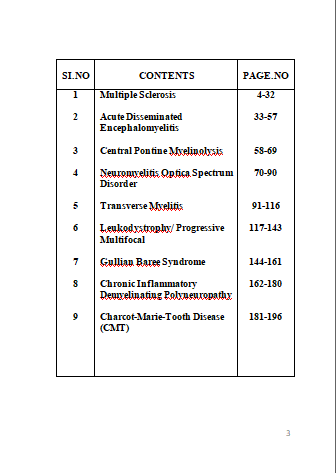
This book is the product of the thoughts and views of various physiotherapy teachers and clinical therapists. Every chapter in this book covers multiple neurological disorders in children, adults and elders. The clinician’s point of view on the various neurological conditions is elaborated well in this textbook. This book promotes the interest of the students and teachers to study neurology efficiently and is also helpful for them to appear in various examinations.
By
Dr. D. ANANDAN, MPT, (PhD)
Dr. B. ARUN, MPT, PhD
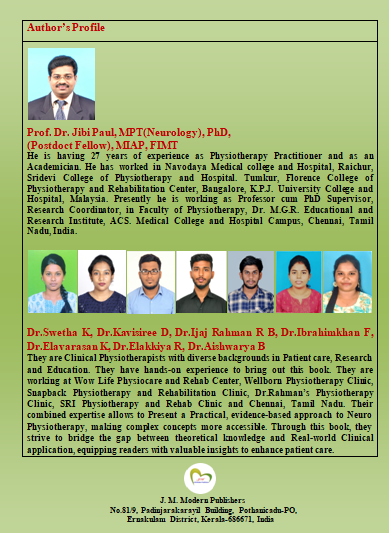
Dr. Jibi Paul
Sony George1*, Jibi Paul2, Ayana V S3
Authors:
2Professor, Faculty of Physiotherapy, Dr.MGR. Educational and Research Institute, Chennai, Tamil Nadu, India
3Consultant Physiotherapist, P.N.N.M Hospital, Anchalumoodu, Perinadu, Kollam, Kerala, India
Corresponding Author:
1*Chief Physiotherapist, P.N.N.M Hospital, Anchalumoodu, Perinadu, Kollam, Kerala, India Mail id: sonyvinujee80@gmail.com
ABSTRACT
Introduction: Thoracic outlet syndrome (TOS) comprises a group of disorders that result in compression of the neuro vasculature exiting the thoracic outlet and was first described in 1956. TOS is usually subclassified into neurogenic TOS (nTOS), venous TOS (vTOS), and arterial TOS (aTOS), depending on the appropriate etiology upon presentation. It has been classified as Venous thoracic outlet syndrome and Neurogenic thoracic outlet syndrome.
Causes: Sometimes, a congenital (from birth) abnormality can cause thoracic outlet syndrome, but it is more likely to occur after injury or bodybuilding. A cervical rib is an extra rib that grows from the cervical spine. Abnormal muscle or first rib formation, some people may have an extra or aberrant scalene muscle his condition is related to abnormalities of bony and soft tissue in the lower neck region.
Symptoms: Patients with thoracic outlet syndrome will most likely present pain anywhere between the neck, face and occipital region or into the chest, shoulder and upper extremity and paresthesia in the upper extremity. The patient may also complain of altered or absent sensation, weakness, fatigue, a feeling of heaviness in the arm and hand. The skin can also be blotchy or discolored. A different temperature can also be observed.
Management: Medical Management include Thrombolytic medications are given to dissolve blood clots. Anticoagulant medications decrease the blood’s ability to clot. Surgical Management include chest (thoracic surgery or blood vessel (vascular) surgery perform the procedure. Thoracic outlet syndrome surgery has risks of complications, such as injury to the brachial plexus. Physiotherapymanagementcan decrease symptoms of pain and increase muscle strength, improve Postural correction and return to near normal function of upper limb.
Keywords: Thoracic- Venous thoracic outlet syndrome; Neurogenic thoracic outlet syndrome; Thrombolytic and Anticoagulant medications; Postural correction.
Pushpam.J. Chundamalai*1, Siby Thomas 2
Authors:
2Professor and HOD, Department of Hospital Administration, Division of Health Management, School of Medical Education, Centre for Professional and Advanced studies, Gandhinagar P.O., Kottayam, Kerala, India
Corresponding Author:
*1Assistant Professor, Department of hospital administration, Division of health management, School of Medical Education, Centre for Professional and Advanced studies, Gandhinagar P.O., Kottayam, Kerala, India. Mail Id: pjnasha55@gmail.com
ABSTRACT
Background of the study: American Medical Association first recommended in 1958 that hospital set up Infection Control Committee. Though not widely accepted with modification of original policy in 1976, Infection Control Committee functions effectively to reduce the spread of infectious diseases. Infection control reduces mortality and morbidity due to nosocomial infection. It helps to maintain employee health and morale. Objectives of Study was to analyse the effectiveness of Infection Control Committee of Pushpa Giri Medical College Hospital Tiruvalla and also to study the function and importance and functions of hospital infection control committee.
Methodology: The study was conducted at Pushpa Giri Medical College Hospital Tiruvalla. The population selected was 2 set of populations which consist of all Infection control committee members and all ward in charge Pushpa Giri Medical College Hospital Tiruvalla as sample. A pre tested questionnaire was used to collect the data and distributed among 15 hospital infection control committee members and 35 wards in charge. The period of study was 45 days from 6-5-2019 to 28-6-2019. The filled in questionnaires were collected, classified and analysed.
Results: The study revealed that the infection control committee is effective. It is vital in rendering service to the patients. The infection control committee functions efficiently and follows the international guidelines.
Conclusion: The observations revealed that the policies and procedures of this hospital is based on CDC and WHO guidelines. There are too many factors influencing the effectives functioning of Hospital Infection Control Committee.
Keywords: Infection Control Committee; Infectious diseases; Nosocomial infection
Pushpam. J. Chundamalai*1, Siby Thomas 2, Thasni S3
Authors:
2Professor and HOD, Department of Hospital Administration, Division of Health Management, School of Medical Education, Centre for Professional and Advanced studies, Gandhinagar P.O., Kottayam, Kerala, India 3Student, Department of hospital administration, Division of health management, School of Medical Education, Centre for Professional and Advanced studies, Gandhinagar P.O., Kottayam, Kerala, India
Corresponding Author:
*1Assistant Professor, Department of hospital administration, Division of health management, School of Medical Education, Centre for Professional and Advanced studies, Gandhinagar P.O., Kottayam, Kerala, India. Mail Id: pjnasha55@gmail.com
ABSTRACT
Background of the Study: The aim of this project is to comprehensively identify the extent of workplace violence against nurses from patients in the emergency department. And analyze the prevalence and pattern of workplace violence against nurses, and also identify the effective and supporting management in the hospital. Objective of the study was to study the extent of workplace violence against nurses from patients in the emergency department last 12 months.
Methods: Research design of this study was descriptive. Descriptive research is used to describe characteristic of a population or phenomenon being studied. Purposive sampling is used to select sample from the population. Primary and secondary data were collected from observation and questionnaire were used to collect the data.
Result: A 15 days project study reveals the workplace violence against nurses from patients in the emergency department at Indira Gandhi co-operative hospital Kadavanthara. The study clearly shows that 22% of the nurses are facing verbal workplace violence from patients in the emergency department. The pattern of workplace violence which is mainly verbal was identified. It was also identified that the management was supportive and effective.
Conclusion: Collected data from nurses based on workplace violence through questionnaires represented in tabular columns and drawn graphically. According to this study 22% of nurses are facing the workplace violence, among the all the nurses in the Indira Gandhi co- operative hospital, Kadavanthara.
Keywords: Workplace Violence; Nurses; Emergency Department
Yuni Crissa1, Beriman Rahmansyah2*, Lucky Anggiat3
Authors:
1,2,3Faculty of Vocational Studies, Physiotherapy Program, Universitas Kristen Indonesia, Jakarta, Indonesia.
Corresponding Author:
*2Faculty of Vocational Studies, Physiotherapy Program, Universitas Kristen Indonesia, Jakarta, Indonesia. Mail Id: Beriman.rahmansyah@uki.ac.id
ABSTRACT
Background of study: ACL injury is a commonly concerning injury in sports. When an athlete suffers an ACL injury, it can prevent them from returning to their sport and even diminish their performance. Physiotherapists must follow a clear and structured rehabilitation program to track the progress of their patients. This study describes the second phase of an exercise rehabilitation program in one patient after ACL reconstruction surgery with a focus on increasing muscle strength and flexibility.
Methods: This study presents a case report design of a female basketball player who suffered a grade 3 ACL tear. Patients were willing to provide informed consent for their data to be used in a 2-week research study that included 4 physiotherapy sessions.
Result: After four session physiotherapy programs, the pain level of active knee movement decreased 20 mm also increase the range of motion of knee joint with 100 in flexion. The results of the muscle strength measurements also showed an increase in muscle strength and functional ability score with Knee Injury and Osteoarthritis Outcome Score (KOOS) was increase 30%.
Conclusion: Implementation of phase two sports injury rehabilitation guidelines for post-ACL reconstruction conditions leads to positive patient outcomes, including reduced pain, increased range of motion, muscle strength, and functional ability.
Keywords: Sports; Injury; Rehabilitation; Physiotherapy; ACL
Sujith S1, Jomi John2, Sreejith P S3
Authors:
2Assistant Professor, School of Medical Education, Centre for Professional and Advanced Studies, Gandhinagar, Kottayam, Kerala, India
3Chief Physiotherapist, Mercy Nursing Home, Karukachal PO, Kottayam, Kerala, India.
Corresponding Author:
1Assistant Professor, School of Medical Education, Centre for Professional and Advanced Studies, Gandhinagar, Kottayam, Kerala, India, Mail Id:sujithhavemail@gmail.com
ABSTRACT
Background and Objectives: Low back pain is a commonly confronted orthopedic problem. Even though in high prevalence, the source of pain is not established in majority of cases, termed nonspecific low back pain. A major factor in genesis and persistence of nonspecific low back pain isinstability of spine. Transverse abdominis muscle is attributed to play an important role in stabilization of lumbar spine. The purpose of the study is to find out the effectiveness of abdominal draw in manoeuvre in combination with ankle dorsiflexion in strengthening transverse abdominis muscle and its impact on pain and disability in patients with nonspecific low back pain.
Methods: 30 subjects who satisfy the inclusion criteria were recruited for the study. Subjects were then allocated to two groups-Group A (control group) and Group B (experimental group), with 15 in each group. Subjects in group A received conventional treatment and group B received experimental treatment of abdominal draw in maneuvers in combination with ankle dorsiflexion along with conventional treatment. Transverse abdominis activation was measured using stabilizer, Pain using Visual analogue scale (VAS) and disability by Oswestry disability index (ODI).
Result: Post test scores of experimental and control groups of VAS, ODI and Transverse abdominis activation were statistically analyzed using the Mann-Whitney U test and two sample t test. Data analysis showed a statistically significant improvement in VAS and transverse abdominis activation at 1 % level and ODI showed statistically significant improvement at 5% level.
Conclusion: Low back pain patients who received abdominal draw in manoeuvre in combination with ankle dorsiflexion along with conventional physical therapy showed improvement in transverse abdominis activation, pain as well as disability than control group.
Key words: Low Back Pain; Abdominal draw in Manoeuvre; Ankle Dorsiflexion; Transverse abdominis.
Jibi Paul1, Arun Kumar. M2, Sony George3, Jeslin Jeba Sheela4
Authors:
2BPT Graduate, Faculty of Physiotherapy, Dr. MGR. Educational and Research Institute, Chennai, Tamil Nadu, India
3Chief Physiotherapist, Department of Physiotherapy, PNNM Hospital, Anchalummood, Kollam, Kerala, India
4HOD, Department of Physiotherapy, Scudder College of Allied Health Sciences and Scudder Memorial Hospital, Kelley’s Road, Ranipet, Tamil Nadu, Memorial Hospital, Kelley’s Road, Ranipet, Tamil Nadu, India
Corresponding Author:
1Professor, Faculty of Physiotherapy, Dr. MGR. Educational and Research Institute, Chennai, Tamil Nadu, India,Mail Id: physiojibi@gmail.com
ABSTRACT
Background of the study: Plantar fasciitis is a disorder of connective tissue which support the arch of foot. It results in heel pain and bottom of the foot is usually most severe with first step of the day. Pain is exaggerated by bending the foot and toes upward the skin. The aim of the study was to compare the effect of shockwave therapy and laser therapy in plantar fasciitis patients along with stretching exercises.
Methodology: It is a Comparative study with Pre and Post type. This study conducted at ACS Medical College and Hospital, Physiotherapy OPD, Velappanchavadi, Chennai. Male and female patients of 30 samples of Age group between 20-60 with plantar fasciitis were selected for this study. They were divided in to Group A with 15 samples and Group B with 15 samples. They were given treatment of Shockwave therapy along with stretching exercises (Group A), Laser therapy along with stretching exercises (Group B) for 3days per week for 4weeks. The patients were with Stabbing pain in bottom of foot, severe pain in bottom of the foot in morning and Limited up motion of ankle. Pain and Function assessed with Visual analogue scale (VAS) and Foot function Index (FFI).
Result: The study concluded that Group A is more effective than Group B with mean difference of 4.137 and 39.20 respectively in VAS and FFI.
Conclusion: The study showed beneficial results in both groups, the results reflected that the shockwave therapy along with stretching exercises had better improvement on reducing pain and improving the foot function among the plantar fasciitis patients.
Keywords: Plantar fasciitis; Stretching exercise; Shockwave therapy; Laser therapy; Foot function index; Visual analogue scale.
G.Vaishnavi*1, U.Elona2, Jayakumar .G3
Authors:
2BPT Graduate, Faculty of Physiotherapy, Dr.MGR Educational and Research Institute, Chennai, Tamil Nadu, India
3Assistant Professor, Faculty of Physiotherapy, Dr.MGR Educational and Research Institute, Chennai, Tamil Nadu, India
Corresponding Author
*1Assistant Professor,Faculty of Physiotherapy, Dr.MGR Educational and Research Institute, Chennai, Tamil Nadu, India
Abstract
Background of the Study: Wearing face mask is recommended as part of personal protective and public health measure to prevent the spread of disease. The analysis framed the four dimensions of the wearing face mask it appears essential for designing more effective health communication about the spread of disease or other global crises in the future. The personal protection using worldwide during this pandemic the impact of covid-19 was felt throughout the world and it’s recommended to use. Aim & Objective of the study is to analyze the impact of wearing different types of masks and evaluating the physiological vital indicators.
Methodology: This observational study was conducted in physiotherapy department of ACS Medical college and hospital. In which 40 subjects were randomly selected were based on the inclusion and exclusion criteria. Subjected selected both boys and girls, age group between 18- 30 years adults wearing mask for prolonged period and check the respiratory rate are included for the study. Included samples were with Age group between 18-30years College students, both boys and girls, person who wearing mask for prolonged period.
Result: Total 40 participants were included in the study base on specific selection criteria. Comparative ANOVA between Group A, B, C and D showed significant difference in Respiratory Rate, and no significant difference in Pulse Rate and Blood Pressure between the Groups A, B, C and D. Mean value of Respiratory Rate, Pulse Rate, Blood Pressure shows Group D is Better.
Conclusion: It is concluded there was a significant difference in group D by using ANOVA. This study confirms the impact of wearing different types of masks gives the effective respiratory rate.
Keywords: Mask; Respiratory Rate; Pulse Rate; Blood Pressure; Covid-19; Pandemic.