Category: Physiotherapy
This book is the product of the thoughts and views of various physiotherapy teachers and clinical therapists. Every chapter in this book covers multiple neurological disorders in children, adults and elders. The clinician’s point of view on the various neurological conditions is elaborated well in this textbook. This book promotes the interest of the students and teachers to study neurology efficiently and is also helpful for them to appear in various examinations.
By
Dr. D. ANANDAN, MPT, (PhD)
Dr. B. ARUN, MPT, PhD
Dr. Jibi Paul
Impact of Resistance Exercise Versus Diet Supplements on Iron Deficiency Anemia in Girls
S. M. Divya Mary1, P.Priyadharshini 2
| Author: 2BPT Internee, Faculty of physiotherapy, Dr. MGR. Educational and research institute University, Velappanchavadi, Chennai, Tamilnadu, India Corresponding Author: 1Assistant professor, Faculty of physiotherapy, Dr.MGR Educational and research institute University, Velappanchavadi, Chennai, Tamilnadu, India Email id: divyamary.physio@drmgrdu.ac.in |
ABSTRACT
Background of the Study: The objective of the study to determine the effect of resistance exercise versus diet supplements on iron deficiency anemia in girls. Anemia is a decreased hemoglobin level and red blood cells. Iron deficiency anemia is a common nutritional disorder affecting 30% of the adolescent. Nowadays most of the teenage girls are prone to IDA and 10 million cases are reported per year in India. Resistance exercise improves the muscle strength and it also enhances the demand of oxygen level, the underlying mechanism RBCs mainly comes from the bone marrow and it stimulates the erythropoiesis along with hyperplasia in hemopoietic bone marrow. Diets supplements are higher dosage of iron content are essential. The iron rich foods such as dried fruits, whole grains, ragi, spinach, soya beans, and sunflower seeds can be prescribed.
Methodology: The experimental study was conducted in ACS Medical College and hospital, Medical Department.30 Subjects will be selected by convenient sampling method and dividing into two groups randomly. The subjects were treated 3 sessions per week for about 3 months. Girls with age of 16-25 years and hemoglobin level 6-11g/dl was been included systemic illness, congenital anomalies, recent surgeries were excluded. Hemoglobintest were the outcome measure in the study.
Results: On comparing Pre-test and Post-test within Group A & Group B on hemoglobin level shows highly significant difference in Mean values at P ≤ 0.001.
Conclusion: This study concludes that the resistance exercise along with diet supplement had considerable effect in improving the hemoglobin concentration among the subject with IDA. However, the resistance exercise along with diet group was considered to be more effective than the diet supplements alone.
Keywords: Resistance exercise; Diet supplements; Teenage girls; Lack of interest.
Effectiveness of Physiotherapy Interventions on Symptom Severity and Hand Function in Patients with Idiopathic CTS
Hazliza Razali1, Naresh Bhaskar RAJ2, Wan-Arfah N3, Zakaria Yusoff4, Vinodhkumar Ramalingam5
Author:
1PhD student, Faculty of Health Sciences, Universiti Sultan Zainal Abidin, Gong Badak Campus, 21300 Kuala Nerus, Terengganu, Malaysia.
Co-Authors:
3Senior Lecturer,Faculty of Health Sciences, Universiti Sultan Zainal Abidin, Gong Badak Campus, 21300 Kuala Nerus, Terengganu, Malaysia.
4Orthopedic Surgeon, Department of Orthopaedic, Hospital Raja Perempuan Zainab, 15100 Kota Bharu, Kelantan, Malaysia.
5Senior Lecturer, Faculty of health and life sciences, INTI International University, Nilai, Malaysia
Corresponding Author:
2Dr.Naresh Bhaskar Raj, Senior Lecturer, Faculty of Health Science, Universiti Sultan Zainal Abidin (UniSZA), 21300 Terengganu, Malaysia. E-mail address: bnaresh@unisza.edu.my
ABSTRACT
| Background of the study: Extracorporeal shock wave therapy (ESWT) has been reported as valuable and beneficial treatment for musculoskeletal disorder. Over the last few years, ESWT became more widely employed in clinical practice, with certain clinical studies confirming significant efficacy. Clinically, ESWT has been utilised to treat a variety of musculoskeletal and peripheral neuropathy disorders, including CTS. ESWT’s low energy was proven effective in mild to moderate CTS. The aim of the study is to analyse the effect of three physiotherapy intervention on symptom and hand functions in patients with carpal tunnel syndrome. Methodology: This study consisted of 52 male and female who had pain in their hands, either bilaterally or unilaterally. They were allotted into of three groups, Group A; received Ultrasound therapy (UST) combined with nerve and tendon gliding exercise,Group B; received Shock wave therapy (ESWT) combined with nerve and tendon gliding exercise and Group C; received only nerve and tendon gliding exercise, two times per week for four weeks. The outcome measure used was Boston Carpal Tunnel Questionnaire (BCTQ) to evaluate the symptom severity and functional status scale among the participants. The evaluation was performed at baseline, 2 weeks, 4 weeks and follow-up. Results: Repeated measure ANOVA shows significant improvement (p<0.005) in all comparison based on time. The overall improvement in Group B from baseline to follow-up was a reduction of 48.43% in the symptoms and 55.2% increase in the functions and was significant (p<0.005). Conclusion: This study concludes that the ESWT is an effective modality for idiopathic mild to moderate CTS. The beneficial effect of this non-invasive modality is safe and valuable to be used as one of physiotherapy modality in Malaysia. Keywords: Carpal Tunnel Syndrome; Shock Wave Therapy; Ultrasound Therapy; Nerve and Tendon Gliding Exercise; Hand function; Idiopathic. |
Treatment of Bell’s Palsy Structured Facial Re-Education Program Versus Conventional Treatment – A Comparative Study
Madan Mohan.M.R1, Manjunatha.H2, J.Ramesh Kumar3
| Authors: 1MPT Graduate, Goutham College of Physiotherapy, Bangalore, Karnataka, India 2Professor and Principal, East Point College of Physiotherapy, Bangalore, Karnataka, India Corresponding Author: 3Associate Professor, Department of Physiotherapy, Sri Devaraj Urs Academy of Higher Education and Research, Bangalore, Karnataka, India Mail Id: rameshmpt@gmail.com |
| ABSTRACT Background and Objectives: Bells palsy is an idiopathic facial paralysis of acute onset mostly attributed to a non-suppurative inflammation of facial nerve within the stylo-mastoid foramen. There are many unresolved views regarding the therapeutic approaches in the treatment of Bell’s palsy. The purpose of the study was to determine the effectiveness of structured facial re-education program over the conventional treatment program in reducing the facial impairments in patients with Bell’s palsy. Methods: Out of 20 subjects of Bells palsy, 10 were administered with electrical stimulation and 10 with Structured facial re-education program; once daily for 4 weeks. Analysis was based on the Facial Grading System scores before and after the treatment (On 1st and 30th day). Results: The patients who received electrical stimulation showed a significant mean improvement in FGS scores of 17.853 at P<0.05when compared to the conventional therapy group. Conclusion: Both Structured facial Re-education and Conventional treatment programs were found to be effective in treating Bell’s palsy; however patients the improvement seen in the structured facial re-education group was greater in terms of facial symmetry and facial impairments. Keywords: Idiopathic Bells palsy; Facial Grading systems; Structured facial re-education; Conventional treatment. |
Comparative effects of Laser therapy over Manual Mobilization along with Conventional therapy on Function in Frozen Shoulder
| Jibi Paul1, S.Pavithra2 |
| Author: 1Professor, Faculty of Physiotherapy, DR. MGR. Educational and Research Institute, Deemed to be University, A.C.S. Medical College and Hospital Campus, Chennai, India Corresponding Author: 2BPT Graduate, Faculty of Physiotherapy, DR. MGR. Educational and Research Institute, Deemed to be University, A.C.S. Medical College and Hospital Campus, Chennai, India Mail Id: pavithrasakthi11@gmail.com |
ABSTRACT
Background of the Study: Frozen Shoulder is also known as the Adhesive Capsulitis is a condition characterized by the stiffness and pain in the Shoulder joint. As a Physiotherapist we deal with these patients to improve their range of motion (Abduction and External Rotation) and reduce the stiffness and pain. Objective of the study is to find the comparative effects between the Laser Therapy and Manual Mobilization with Conventional Therapy on function in Frozen Shoulder.
Methodology: This is an experimental study of comparative type. Total 30 subjects were selected for this study based on selection criteria. Each group was allocated with 15 samples, divided by random sampling method. Study was carried out at Physiotherapy department, A.C.S Medical College and Hospital, Chennai for duration of 4 weeks. Subjects with the age group between 40-60 years with stiffness and decreased ROM in the shoulder joint were selected for this study. Group A received laser and conventional therapy. Group B received manual mobilization and conventional therapy. VAS, SPADI and Goniometer were used as an outcome measurement tools. Study duration was 4 weeks and the intervention duration was 20 minutes per day for 3 days in a week.
Result: Group A with laser therapy found more effective than Group B manual therapy with mean difference of 49.67 and 13.40 respectively on abduction ROM and shoulder function. Pain reduced more in Group B than Group A with mean difference of 3.533 and 3.200 respectively.
Conclusion: The study concluded that Laser therapy and conventional therapy are effective in the improvement of pain and but manual therapy is more effective on improvement of shoulder range of motion.
Keywords: Frozen Shoulder; Adhesive Capsulitis; Laser Therapy; Manual Mobilization; Goniometer; VAS; SPADI.
Pain and Associated Functional Limitations of Wrist among Students using Smartphone- A Cross Sectional Study
| Jomi John1, Ganga.S.Govind2, Anjitha.P.P.3 |
| Author: 1Jomi John, Assistant Professor, CPAS School of Medical Education, Gandhinagar, Kottayam, Kerala, India. Email Id:jomijohn333@gmail.com Co-Author: 3Anjitha P.P, BPT Student, CPAS School Of Medical Education, Gandhinagar, Kottayam, Kerala, India. Email Id:anjithaammu65@gmail.com Corresponding Author: 2Ganga S Govind, BPT Student, CPAS School Of Medical Education, Gandhinagar, Kottayam, Kerala, India. Email Id: 99gsg9@gmail.com |
ABSTRACT
| Background of Study: Smartphones become an indispensable part of human life. In the past decade, there is an increase in the number of smartphone users. Many studies reveals that, smartphone overuse may cause many musculoskeletal problems mainly on neck, shoulder, wrist, hand, upper back region etc. The purpose of the study was to find out the pain and associated functional limitations of the wrist due to smartphone use among students. Methods: A cross-sectional survey was conducted among students of different colleges around Kerala in July 2021. Data was collected through self-structured questionnaire and were sent to students as Google forms with informed consent attached to it. Out of 671 samples only 532 were following the inclusion criteria and were selected for the study through convenient sampling. Patient-Rated Wrist Evaluation scale was used to assess the pain and disability of the wrist joint. Results: The data analysis shows that, 58.08% subjects have mild pain, 18.6% students have moderate pain and 6.2% students have severe pain due to smartphone use. Conclusion: The study concluded that there is a significant association between smartphone use with pain and functional disability experienced by the students in their wrist joint. Keywords: Cross-sectional survey; functional limitation; smartphone; students; wrist pain |
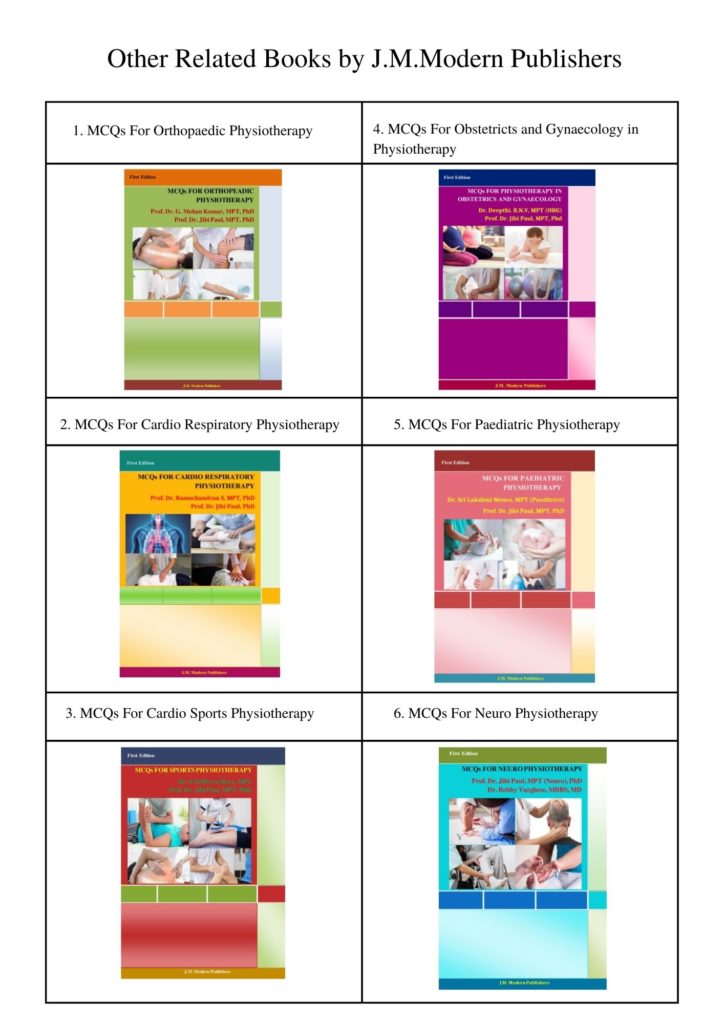
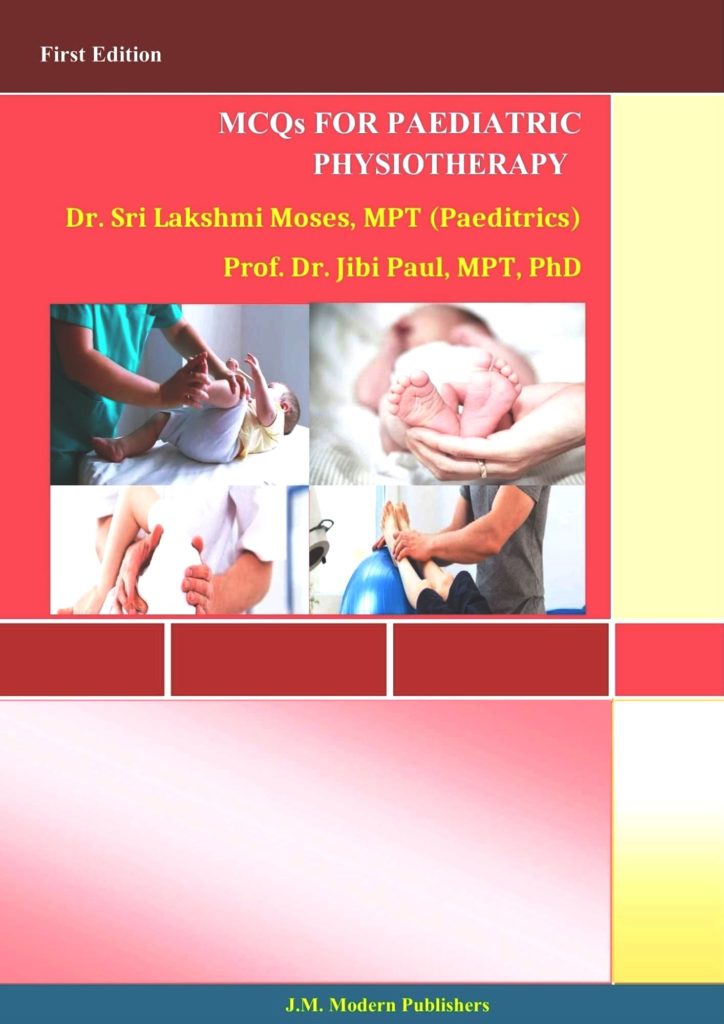
MCQs FOR PAEDIATRIC PHYSIOTHERAPY
MCQs FOR PHYSIOTHERAPY IN OBSTETRICS AND GYNAECOLOGY
MCQs FOR NEURO PHYSIOTHERAPY
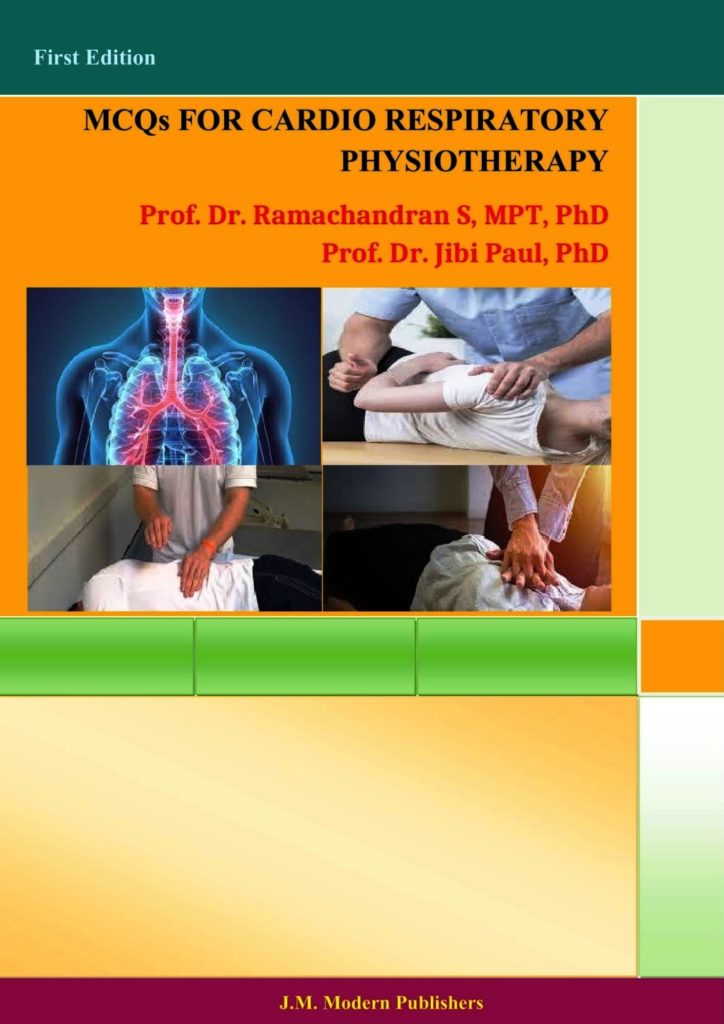
MCQs FOR CARDIO RESPIRATORY PHYSIOTHERAPY